
Understanding State of the Art: The Latest Technology Standards
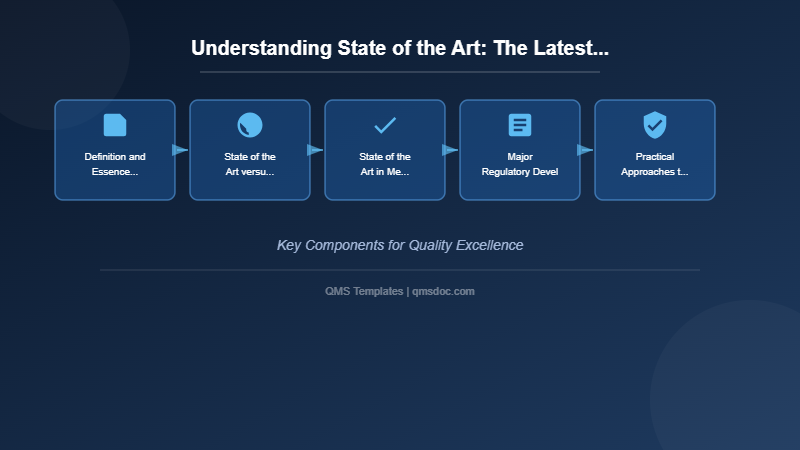
Definition and Essence of State of the Art
The phrase “State of the Art” is frequently encountered in technology and business contexts. While many may associate it with “new” or “superior,” it actually carries a very specific and important meaning in professional discourse.
The phrase “State of the Art” is frequently encountered in technology and business contexts. While many may associate it with “new” or “superior,” it …
“State of the Art” specifically refers to “the most current and available technology and knowledge at a given moment.” In other words, it represents the highest level of technology and expertise recognized by an industry or professional field at a particular point in time, embodying the most advanced practices currently established in the field.
Importantly, State of the Art encompasses more than just cutting-edge technology alone. It includes a broad spectrum of information such as adverse event cases, newly established safety standards, and market-proven knowledge. For instance, in the medical device industry, State of the Art comprises historical safety incident data, newly published international standards (ISO, IEC), the latest regulatory guidance from authorities, and safety design methodologies actively implemented in the industry—all of which collectively form the components of State of the Art.
State of the Art versus Academic Research
A critical distinction must be made: State of the Art does not necessarily refer to the most advanced research in academia. While academia prioritizes theoretical novelty, the industrial sector emphasizes practical implementation feasibility. The key difference lies in the criterion of importance: rather than whether something is theoretically the latest, what matters is the extent to which it can be implemented and utilized in the real market environment, and whether it genuinely contributes to improved business outcomes and safety.
Furthermore, State of the Art is limited to publicly available knowledge that is generally accessible. Proprietary technologies or knowledge protected by patents typically do not constitute State of the Art.
State of the Art in Medical Device Regulation
State of the Art holds particular significance in the medical device industry. Regulatory bodies such as the U.S. FDA, European EMA, and Japan’s PMDA require medical device manufacturers to reflect “State of the Art” in their product design, manufacturing, and quality management systems.
Specifically, State of the Art relates to several critical aspects of medical device development and compliance.
Safety Demonstration at the Design Stage: When proving the safety of a medical device design, manufacturers must utilize the most current available knowledge to conduct their design work and demonstrate its safety. Should a designer fail to adopt the latest safety standards or risk management methodologies at the time of design, the manufacturer risks regulatory criticism for “non-compliance with State of the Art” if problems are discovered later.
Risk Management and Design Change Justification: Under ISO 14971 (Medical Device Risk Management), the risk mitigation strategies adopted by manufacturers are evaluated to determine whether they are based on State of the Art or exceed its effectiveness. Simply relying on conventional approaches is insufficient; standards-based approaches recognized as best practices by the industry are expected.
Software and Cybersecurity: When medical devices incorporate software components, development and verification based on international standards such as IEC 62304 and IEC 80001-1 are required. Additionally, compliance with current industry standards for cybersecurity, such as AAMI TIR57 and the NIST Cybersecurity Framework, has become mandatory.
Clinical Evaluation and Post-Market Surveillance: When evaluating the efficacy and safety of medical devices, manufacturers must reference the latest clinical literature and guidance documents. After market introduction, manufacturers are expected to continuously collect new safety information and implement design modifications or user notifications as needed.
Major Regulatory Developments in 2024–2025
The medical device regulatory landscape has experienced several significant developments in recent years.
Full Implementation of EU MDR/IVDR: Since 2023, the requirements of the European Medical Device Regulation (EU MDR) and In Vitro Diagnostic Regulation (IVDR) have been progressively strengthened. Particularly, the requirements for technical documentation, clinical evaluation, and post-market surveillance have become stricter, rendering conventional review criteria insufficient for compliance.
FDA Quality Management System Regulation (QMSR): The FDA issued a revised QMSR proposal in December 2023, establishing more detailed requirements for software development and verification, risk management, and traceability. This regulation presumes the implementation of State of the Art practices.
AI/ML Device Guidance: The incorporation of artificial intelligence and machine learning technologies into medical devices has increased dramatically. Major regulatory bodies—the FDA, EMA, and PMDA—continuously publish and update guidance on the evaluation and verification methods for such devices, making development based on the latest guidance essential.
Enhanced Cybersecurity Requirements: As the cybersecurity risks facing medical devices grow, regulatory authorities demand security measures implemented at the design stage. The adoption of industry-recognized security standards such as NIST SP 800-113 and AAMI TIR57 is now expected.
UK Medical Device Regulation (UK MDR): Following the United Kingdom’s withdrawal from the European Union, it has established its own medical device regulatory framework. While UK MDR shares many similarities with EU MDR, differences exist, requiring up-to-date information for compliance in both markets.
Practical Approaches to Leveraging State of the Art in Operations
For organizations to maintain and effectively utilize State of the Art, continuous information gathering and internal knowledge sharing are essential.
Regulatory Trend Monitoring: It is critical to continuously review guidance documents, Q&A documents, and warning letters regularly issued by regulatory agencies such as the FDA, EMA, and PMDA. Additionally, current developments from industry associations (such as AdvaMedDx and EuropaBio) and standards bodies (ISO and IEC) must be tracked.
Conformity with International Standards: International standards related to medical device development—including ISO 13485 (Quality Management Systems), ISO 14971 (Risk Management), IEC 62304 (Software Development), and IEC 80001-1 (Cybersecurity)—are regularly updated. Operations based on the latest versions of these standards are essential.
Learning from Industry Cases: Examining product approval cases from competitors, warning letter content, and recall cases provides practical understanding of what constitutes State of the Art and helps organizations avoid similar regulatory issues.
Personnel Development: Staff across regulatory compliance, quality management, design engineering, and clinical evaluation departments must understand current regulatory requirements and technological trends. Implementing regular training programs and knowledge-sharing mechanisms proves effective.
Digital Technology Adoption: Proactively implementing cutting-edge digital technologies—such as data management systems, AI/ML tools, and digital quality management systems—enables simultaneous improvements in operational efficiency and regulatory compliance.
Conclusion
“State of the Art” does not simply mean “the latest technology”; rather, it represents “current best practices” that are implementable in industry and recognized by regulatory authorities. In the medical device sector, understanding and implementing this concept organization-wide leads to regulatory compliance, product safety assurance, and sustained competitive advantage.
The medical device industry in 2025 faces multiple concurrent regulatory changes: the full implementation of EU MDR/IVDR, FDA QMSR enforcement, expansion of AI/ML device regulations, and enhanced cybersecurity requirements. To respond swiftly to these changes, organizations must maintain continuous information collection, facilitate internal knowledge sharing, and cultivate an organizational culture committed to acquiring and applying the latest knowledge to business operations.
By strategically leveraging State of the Art, organizations can secure regulatory compliance advantages and build sustainable competitive strength in an increasingly complex regulatory environment.
Related Articles
- Understanding State of the Art: The Latest Technology Standards
- Understanding the Concept of “Organization” in ISO Standards
- Understanding “State of Control”
- Understanding Labeling Definitions in the United States: Navigating FDC Act, QSR, and QMSR Requirements
- Understanding “State of the Art” in Medical Device Risk Management
- Misunderstandings in Complaint Management: Ensuring Regulatory Compliance and Standards Adherence

Comment