

The Day When Pharmaceutical Companies Will Stop Selling Drugs
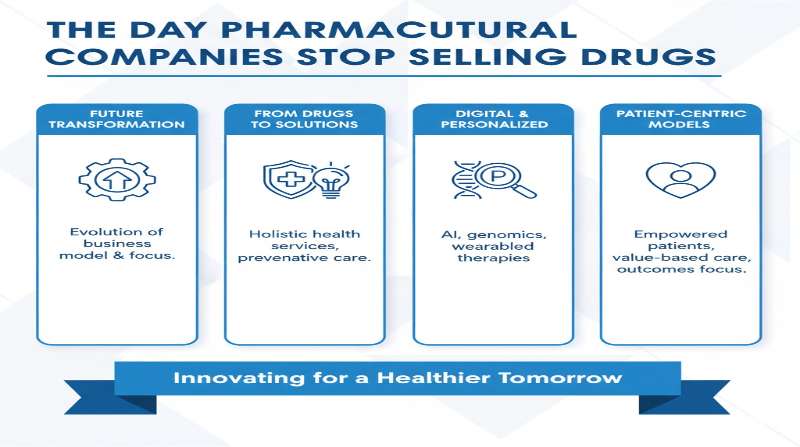
Last year, in a series published in Nikkei Digital Health, Keita Masui of Arthur D. Little Japan contributed an article titled “The Day When Pharmaceutical Companies Will Stop Selling Drugs ~Beyond the Pill~.”
A major paradigm shift is occurring in the pharmaceutical industry due to recent changes in the external environment and internal corporate situations surrounding pharmaceuticals. Under the rallying cry of “Beyond the Pills,” pharmaceutical companies are advancing the construction of new business models and investing in technical areas that transcend drug creation and sales.
The business model of developing new drugs over more than ten years at a cost of several tens of billions of yen or more, then developing another new drug before the patent expires, is no longer sustainable. Pharmaceutical companies that cling to traditional methods risk being weeded out.
In the pharmaceutical industry, in addition to intensified competition, companies are being forced to change their management strategies due to drug price reductions accompanying deteriorating healthcare finances, depletion of drug discovery targets (seeds), and declining profitability.
DTx (Digital Therapeutics)
In recent years, “Software as a Medical Device” (SaMD), where software functions independently as a medical device, has been attracting attention. It is also known as DTx (Digital Therapeutics).
Not only medical device companies but also pharmaceutical companies are moving into the DTx field. DTx uses smartphone applications and similar tools to provide therapeutic interventions for hypertension, diabetes, neuropsychiatric disorders, insomnia, smoking cessation, and other conditions.
In 2010, WellDoc, Inc. of the United States obtained the first FDA clearance (510(k) clearance) for “DiabetesManager” (later renamed “Bluestar”), a treatment support app for patients with type 2 diabetes (K100066). This app collects and analyzes blood glucose data and provides real-time educational and motivational coaching messages. Bluestar has obtained FDA clearance more than 11 times to date, with continuous functional expansions including insulin dose calculation capabilities and integration with CGM (Continuous Glucose Monitoring) data.
Furthermore, development of program medical devices equipped with artificial intelligence (AI) and machine learning (ML) is also progressing. Program medical devices equipped with AI/ML collect and analyze data while users and patients use them continuously, updating and reflecting the results in their functionality.
In the United States, there has been a history of back-and-forth regarding the definition and classification of SaMD. However, currently, systems (regulatory relaxation) and structures are being established to actively support the industry and enable early approval.
In July 2017, the FDA announced the “Digital Health Innovation Action Plan,” declaring its commitment to actively engage with digital health, a new medical field, ahead of the rest of the world. This action plan included the issuance of new guidance on implementing the 21st Century Cures Act, guidance on clinical decision support software, and the launch of the Software Pre-Certification (Software Pre-Cert) Pilot Program. In 2019, the Digital Health Center of Excellence (DHCoE) was established to function as a core organization for regulatory science research and innovation promotion in digital health technologies.
In comparison, it must be said that the establishment of review systems and issuance of regulatory requirements for program medical devices in Japan have been delayed. However, the situation has been improving significantly in recent years.
Latest Trends in Program Medical Device Regulation in Japan
In September 2023, Japan’s Pharmaceuticals and Medical Devices Agency (PMDA) announced the second SaMD strategy called “DASH for SaMD 2,” setting forth a policy to significantly strengthen the review process for digital health technologies.
In January 2024, as part of its five-year plan from fiscal year 2024 to 2028, PMDA set a goal of completing priority reviews of SaMD products within six months. This goal is an important measure to catch up with Japan’s lag behind major markets such as the United States and EU.
Furthermore, from March 2024, a review department dedicated to SaMD was established, and subscription-based consultation services were launched. This has enabled development companies to consult with PMDA continuously from early stages regarding regulatory requirements.
PMDA also decided at a meeting in May 2023 to consider a two-stage approval mechanism. Under this program, SaMD products with demonstrated efficacy would first receive initial approval, followed by more thorough evaluation based on safety and efficacy data obtained from clinical use and post-market surveillance. This aims to enable rapid access to urgently needed medical technologies while ensuring comprehensive safety evaluation through continuous monitoring.
On March 31, 2024, compliance with the national standard JIS T 62366-1:2022 (the Japanese version of the international standard IEC 62366-1) regarding usability engineering became mandatory. This standard provides a structured framework for identifying and mitigating risks related to device-user interaction, aiming to reduce use-related errors and improve the overall safety of medical devices in actual use environments.
In May 2025, the Pharmaceutical and Medical Device Act (PMD Act) was amended, significantly strengthening compliance obligations for Marketing Authorization Holders (MAH). The Ministry of Health, Labour and Welfare (MHLW) was granted authority to order the replacement of responsible personnel at MAHs when quality issues arise. Additionally, comprehensive establishment of adverse event collection systems and designation of Supply System Managers to ensure supply chain resilience were mandated.
From May 2026, the conditional approval pathway is scheduled to be expanded for devices and in vitro diagnostics that have strong clinical evidence but lack alternatives.
These developments mean that Japan is catching up with the United States and EU in the regulatory environment for digital health technologies, becoming a more attractive market for both domestic and international development companies.
Regulatory Requirements for Program Medical Devices
In DTx research and development, there are many challenges, including securing large amounts of funding and proving efficacy in clinical trials. Additionally, program medical devices are subject to regulations regarding medical device approval (or certification), sales, and safety monitoring.
First, to design program medical devices (software has no manufacturing process), registration as a medical device manufacturer is required. Also, to distribute products under one’s own brand in the domestic market, it is necessary to obtain a medical device marketing authorization.
To obtain medical device marketing authorization, one must meet personnel requirements in accordance with the System Ordinance and GVP Ordinance, establish an organization, and prepare procedure manuals and other documents. Furthermore, when selling program medical devices (via the internet or media), permission or registration for sales business is required.
In domestic approval (certification) applications for medical device software, it must be proven that the software was designed and developed in accordance with IEC-62304 (JIS T 2304). In many cases, design and development are not conducted in compliance with regulatory requirements and international standards, and specifications are not properly documented. Cases are frequently encountered where programs are created before specifications.
Design and development and medical device approval (certification) applications are closely related. In the design and development of medical device software, it is necessary to proceed with documentation with the premise of creating application documents.
Also, for medical device software to be approved (certified), its efficacy and safety must be proven. Medical devices carry certain risks. To avoid these risks, risk management in accordance with ISO 14971 and similar standards is necessary.
Many companies (startups, pharmaceutical companies, etc.) entering the medical device software field focus mainly on pursuing efficacy and are often lacking in safety considerations. A comprehensive approach to safety is required, including compliance with usability engineering requirements (JIS T 62366-1:2022).
Learning from the SpaceJet Failure
The SpaceJet (formerly Mitsubishi Regional Jet, MRJ) developed by Mitsubishi Aircraft Corporation was commercialized in 2008, challenging the manufacture of the first domestically produced passenger aircraft in half a century, but after being forced into six delivery delays, formal cancellation of development was announced in February 2023.
Initially, the first aircraft was scheduled to be delivered to ANA in 2013, but it was never delivered. Development costs ballooned from the initial 150 billion yen to approximately 850 billion yen (about 7.6 billion USD) in the end. Mitsubishi Heavy Industries (MHI) suspended development in October 2020, reduced 95% of employees in April 2021, and formally ended the plan in February 2023.
Flight test facilities in the United States were closed, and most prototypes were dismantled. Mitsubishi Aircraft Corporation (MITAC) itself was also decided to be dissolved. It became a large-scale project that ended without delivering a single aircraft more than 15 years after development began.
The author believes the main causes of failure are as follows.
1. Lack of Experience and Know-how in Passenger Aircraft Development
Although there was experience in manufacturing passenger aircraft parts, there was no experience in developing and manufacturing complete passenger aircraft. Necessary matters at the initial design stage were not sufficiently examined and reflected in the design. In particular, knowledge regarding system integration and complex supply chain management was insufficient.
2. Insufficient Knowledge of Regulatory Requirements
Due to the development team’s lack of knowledge about tests necessary to obtain “type certification” from regulatory authorities, the design process had to start over from scratch. They could not properly understand specifically what needed to be done to clear regulations by the Ministry of Land, Infrastructure, Transport and Tourism and the FAA.
Of the five delays, four were at least partially caused by failures in work documentation for certification or similar failures. Deficiencies in design change management processes necessitated large-scale reviews of wiring and electronic equipment placement, leading to further delays.
3. Failure to Address US Scope Clause Issues
The MRJ90 (later SpaceJet M90) did not meet the “scope clause” requirements (maximum takeoff weight of 39,010 kg or less) in pilot labor contracts at US regional airlines. This became the biggest barrier in the North American market.
An attempt was made to meet scope requirements by redesigning the smaller MRJ70 as the SpaceJet M100, obtaining approximately 500 memorandums of understanding (MOU) from US and European airlines including Mesa Airlines, but these did not result in firm orders because MHI management did not show clear support.
4. Personnel Shortage and Organizational Issues
There was a shortage of personnel with the experience, know-how, knowledge, and expertise to avoid the above issues. The Western expert team recruited from Bombardier, Embraer, Boeing, and others recognized the problems with the MRJ90 and recommended focusing on the more feasible M100, but MHI prioritized completing certification of the MRJ90 to save face, ultimately resulting in the failure of both programs.
5. Lack of Commitment to Long-term Investment
As of the end of 2019, MITAC executives estimated that an additional 3.5 billion USD would be needed to complete certification of the M100, but MHI refused additional investment. MHI itself has acknowledged that resources were insufficient to continue long-term development.
Implications for Medical Device Development
The same can be said for medical device development (including program medical devices). Management tends to easily venture into medical devices as a new business. However, it is not so easy for companies that have only experience in designing and manufacturing consumer products or companies that do not understand regulatory requirements to develop medical devices.
Devices must be appropriately designed for the intended use by users/patients. It is said that medical device accidents occur due to gaps between the user’s intended use and the designer’s design philosophy.
International standards such as ISO and IEC and regulatory requirements exist to design and develop effective and safe medical devices. In other words, international standards and regulatory requirements are best practices to guarantee the quality of medical device products and ensure safety. Design and development that ignores these may result in failure to obtain approval, findings during inspections, or accidents in the market.
Applying lessons learned from the SpaceJet project failure to medical device development yields the following.
| Failure Factors in SpaceJet | Implications for Medical Device Development |
| Lack of complete product development experience | Experience in consumer product development alone is insufficient. Understanding design control specific to medical devices (IEC 62304, etc.) is essential |
| Insufficient understanding of regulatory requirements | It is important to understand PMDA and FDA regulatory requirements from the early stages of development and reflect them in design |
| Inadequate documentation processes | Creating programs before specifications is fatal. Proper management of Design History File (DHF) is necessary |
| Delayed response to market requirements | Understanding both market and regulatory requirements, such as usability engineering (JIS T 62366-1:2022) |
| Shortage of specialized personnel | Securing personnel with specialized knowledge in regulatory compliance, quality control, and risk management (ISO 14971) is indispensable |
| Lack of commitment to long-term investment | Medical device development requires a long-term perspective and continuous investment. Particularly for AI/ML-equipped devices, continuous improvement is required post-market |
Particularly for program medical devices, it is necessary to understand and implement requirements for software development lifecycle (IEC 62304), risk management (ISO 14971), usability engineering (IEC 62366-1), and cybersecurity (IEC 81001-5-1, etc.) in an integrated manner.
Due to improvements in Japan’s regulatory environment from 2024 onward, barriers to entry into the digital health market have become clearer for companies with proper preparation and expertise, and in some ways, entry has become easier. However, it is by no means an easy path, and as the lessons of SpaceJet demonstrate, adequate preparation and long-term commitment are keys to success.
Conclusion
The pharmaceutical industry’s shift to “Beyond the Pills” and the rise of digital health technologies have the potential to significantly change the future of healthcare. However, as the failure of the SpaceJet project demonstrates, entry into new fields requires appropriate expertise, deep understanding of regulations, and commitment to long-term investment.
In Japan as well, through PMDA’s proactive efforts, the regulatory environment for digital health technologies is greatly improving. To take advantage of this opportunity, companies need to deeply understand international standards and regulatory requirements, secure appropriate personnel, and approach product development with a long-term perspective.
By learning from past failures and utilizing best practices, we hope that innovations that will lead the world will emerge in Japan’s medical device industry, particularly in the digital health field.
Related Articles
- Is Senior Management Responsible for GMP Compliance?
- The Importance of Supplier Management (Revised Edition)
- The Future of Japan’s GDP (Good Distribution Practice)
- Revision of Japan’s GMP Ministerial Ordinance
- Quality Manuals in Pharmaceutical Manufacturing: A Comprehensive Guide
Related FDA QMSR Templates
Streamline your FDA QMSR compliance with our professionally crafted templates:

Comment