
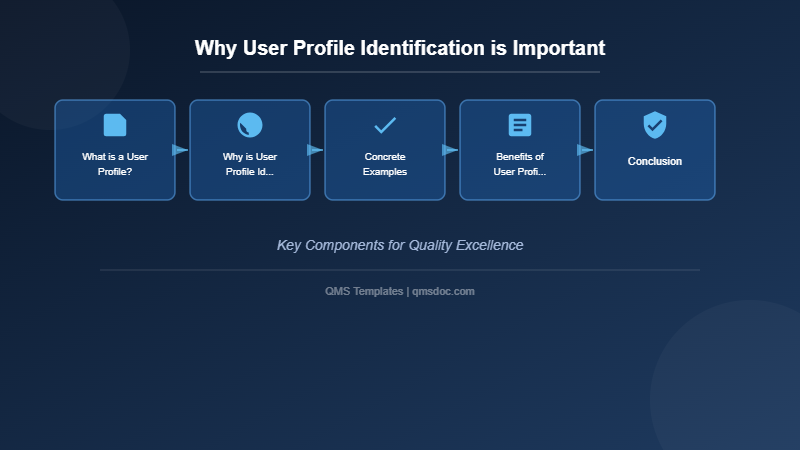
Why User Profile Identification is Important
A Message to Those in the Design Field: The Importance of User Profile Identification
Have you heard the term “user profile” frequently mentioned in design practices? This column explains the importance of user profile, a concept with a clear and specific definition. The explanation is designed to be understandable even for beginners, with professional terminology appropriately explained and supplemented with concrete examples.
Have you heard the term “user profile” frequently mentioned in design practices? This column explains the importance of user profile, a concept with a…
What is a User Profile?
A user profile is a clear definition of the characteristics of users. It encompasses a wide variety of elements including the age, gender, physical characteristics, cultural background, habits, abilities, and interests of the people who will be users. These detailed descriptions enable designers to position themselves from the user’s perspective.
In the design of medical devices and products, user profiles carry even deeper significance. International standards such as IEC 62366-1 (Usability of Medical Devices) and ISO 13485 (Quality Management Systems for Medical Device Manufacturers) require that designers clearly identify who the users are, in what environments the devices will be used, and what the knowledge and skill levels of the users are. This requirement exists to ensure the safety and effectiveness of medical devices.
Why is User Profile Identification Important?
So why is this important?
Consider the following: some children have small hands, and some elderly individuals have difficulty seeing. People with disabilities have special accessibility needs, and foreigners may not understand Japanese. These are all things that must be considered when designing.
If user profiles are not identified in detail at the design stage, there is an increased risk that unanticipated user groups will face difficulties during use. The consequences extend beyond mere product usability issues to potential safety concerns. In the case of medical devices in particular, user error can affect patient health and life, making user profile identification not merely a matter of improving convenience but rather a regulatory requirement.
Concrete Examples
Consider the design of websites and software. Once dominated by small fonts and complex interfaces, usability is now recognized as a critical consideration. Usability refers to the degree to which a product is easy to use. Modern design practices include navigation that is easy to follow even for first-time users or those with vision impairments.
Accessibility, on the other hand, means that all users, including those with disabilities, can equally access products and services. In recent years, standardization and legislation have advanced in many countries. For example, in Japan, compliance with the JIS X 8341 series (standards for web accessibility) is recommended. Internationally, WCAG 2.1 (Web Content Accessibility Guidelines) is widely adopted. Regulatory frameworks with legal force, such as the European Union’s European Accessibility Act and the United States’ ADA (Americans with Disabilities Act), are increasing. Beyond these regulatory requirements, from an ethical perspective as well, understanding and implementing user profiles are demanded.
The same applies in the medical device industry. The FDA‘s (Food and Drug Administration) Design Control Guidance requires that users be identified during the device development stage and that user needs and the context of use be clearly defined. The PMDA (Pharmaceuticals and Medical Devices Agency) similarly emphasizes the importance of human factors validation in the approval process for medical devices. User profiles serve as the foundation for this evaluation.
Benefits of User Profile Identification
Identifying user profiles yields multiple benefits. First, it enables designers to deeply understand user needs and create designs that meet those needs. Second, it allows the establishment of metrics for design evaluation and improvement. Usability testing and usability validation conducted on the basis of user profiles become a means to objectively demonstrate the validity of the design.
In the context of medical devices, user profiles hold particular value in the following respects. In risk analysis, possible risks that each user group may face can be identified. In the development of training materials, educational resources appropriate to the user’s knowledge level can be created. In post-market adverse event reporting and surveillance, problems occurring in specific user populations can be analyzed and used for improvement.
Conclusion
With the content covered in this column in mind, we hope that your designs will be usable, safe, and satisfactory to as many people as possible. In particular, when developing medical devices or products related to human health and safety, we recommend positioning user profile identification and verification at the core of the design process and continuously reviewing and improving it.
Related Articles
- The Relationship Between URS (User Requirements Specification) and PQ (Performance Qualification)
- Software Category Classification: Focus on User Requirements, Not Labels
- Is Data Integrity Important?
- Why Supplier Utilization is Important in Pharmaceutical Quality Assurance
- Understanding “Users” in CSV Implementation
- Why ALCOA is Important
