
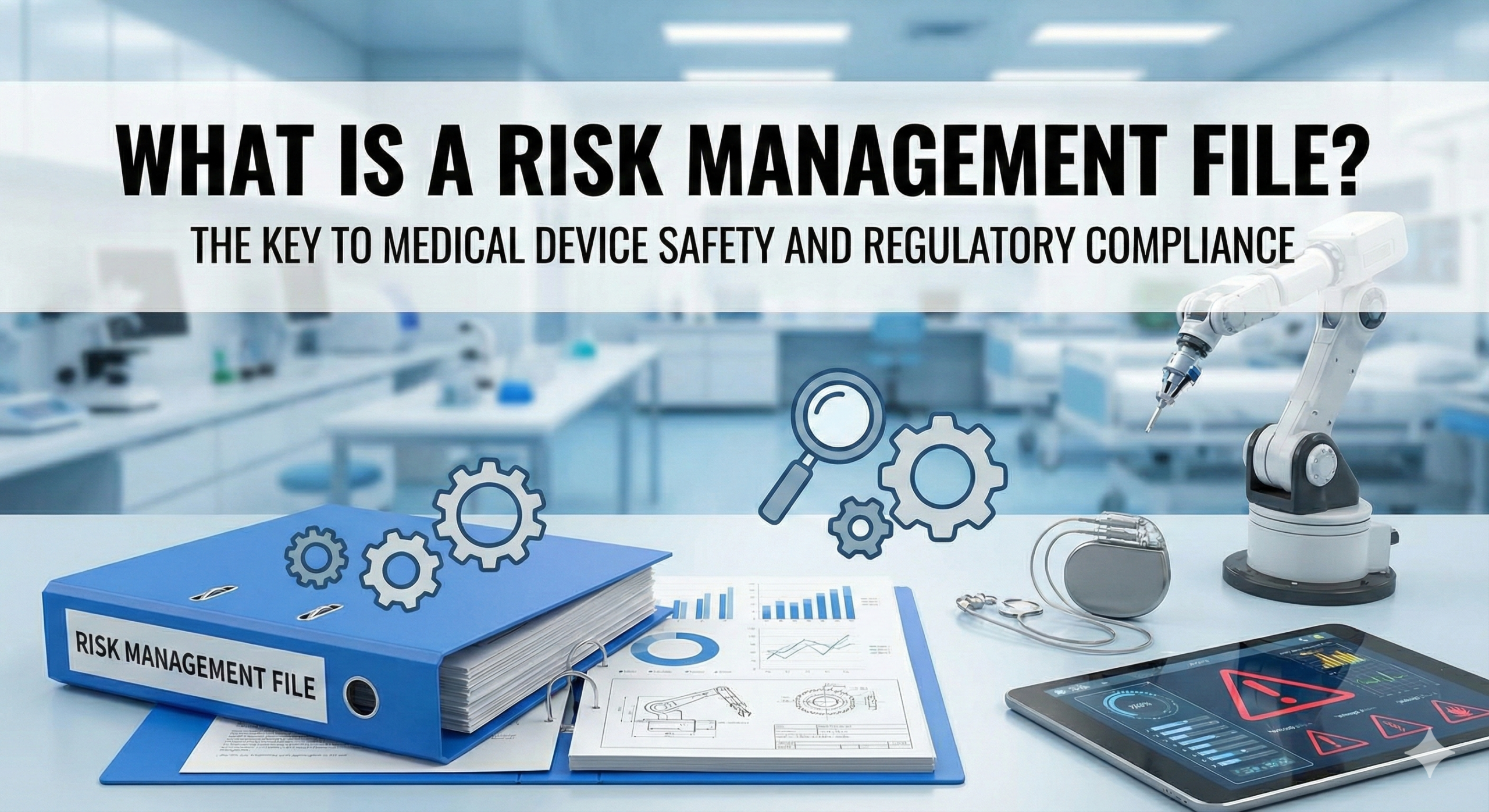
What is a Risk Management File?
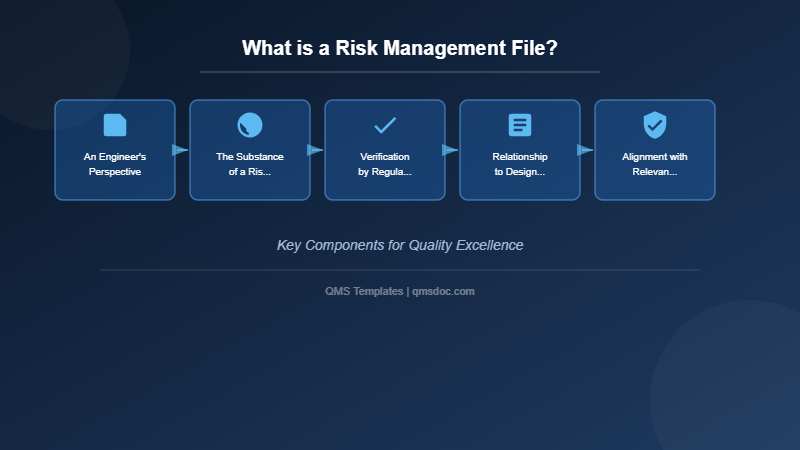
An Engineer’s Perspective
As an engineer developing new medical devices, product safety is one of the most critical concerns. Because the device directly affects human life, risk management becomes an essential element of development. In this article, we will explore the true nature of the Risk Management File (RMF).
As an engineer developing new medical devices, product safety is one of the most critical concerns. Because the device directly affects human life, ri…
The Substance of a Risk Management File
A Risk Management File is generally understood as a compilation of records related to risk management activities associated with a product. However, it is not a physical folder or a single book. From a practical engineering perspective, it is more accurately described as a catalog or index that indicates where the records of risk management activities exist.
According to ISO 14971:2019 “Risk Management for Medical Devices,” an RMF is defined as “ensuring that the location of information records related to risk management activities can be identified.” In other words, the RMF is not merely a collection of documents but rather a navigation system for tracing the evidence of risk management throughout the entire product development process.
Verification by Regulatory Authorities
Regulatory authorities and Notified Bodies (conformity assessment bodies under EU MDR) can verify risk management across the entire product development by reviewing multiple documents cross-referenced through the Risk Management File. This thorough examination enables comprehensive validation of product safety.
Relationship to Design History Files
A specific example is the Design History File (DHF). The DHF consolidates all information generated during the product design process, including information directly related to safety. The Risk Management File can be understood as a file that extracts safety-related portions from the DHF and indexes them for easy reference.
It is important to note that under EU MDR and IVDR, an equivalent concept is referred to as “Technical Documentation.” Under Japanese medical device regulations based on PQM (Pharmaceutical and Medical Device Regulatory Information), document management requirements during the design and development phases have become increasingly stringent. The 2024 PMDA notification has further emphasized the transparency of risk management activities, even for software-enabled devices incorporating machine learning.
Alignment with Relevant International Standards
Effective operation of a Risk Management File requires alignment with the following international standards:
ISO 14971:2019 — Basic requirements for risk management of medical devices
IEC 62304 — Medical device software lifecycle standard (particularly for software-enabled devices)
ISO 13485 — Quality Management System requirements for medical device manufacturers (organization of risk management)
Based on these standards, the RMF should serve not merely as a repository of records but as a guarantee of traceability for detailed analytical activities such as FMEA (Failure Mode and Effects Analysis), HFMEA (Human Failure Mode and Effects Analysis), and Software Bill of Materials (SBoM).
Adapting to Evolving Regulatory Landscapes
From 2024 through 2025, medical device regulations continue to evolve. The FDA Quality Management System Regulation (QMSR) implementation deadline (June 2025), amendments to EU MDR Annex I (addressing artificial intelligence and machine learning), and Japan’s medical device regulatory reforms are all proceeding simultaneously. In light of these regulatory trends, strengthening the management of Risk Management Files and documentation control systems is increasingly important. Manufacturers must record change control and traceability with greater precision and reflect these within the RMF.
As an engineer, it is essential to fully understand these points and conduct product development accordingly.
Making Risk Management Approachable
Risk management is not inherently complicated. Many seemingly complex technical terms actually refer to concepts that are fundamentally practical. By understanding the role and function of each component, you can apply them more effectively to your work.
To better understand the substance of a Risk Management File, consider the following key points:
- RMF as a “map showing what is where” — Not a physical document, but a mechanism enabling access to information
- A unified tool meeting multiple regulatory requirements — Used to simultaneously comply with FDA, EU, and Japanese regulations
- Comprehensive coverage of the product lifecycle — Documentation of risk management from design phase through manufacturing, commercialization, and post-market surveillance
- A dynamic system responding to changes and updates — Regular updates are essential in response to product modifications and regulatory changes
Recommended Practical Implementation
To ensure the safe development of medical devices while meeting regulatory requirements, effective utilization of the Risk Management File is essential. Clarifying the position of the RMF within the company’s QMS framework and ensuring communication and documentation consistency between relevant departments (design, quality, manufacturing, regulatory affairs) are critical to achieving both regulatory compliance and product safety.
Staying current with the latest regulatory information and best practices in risk management enables manufacturers to build robust systems that protect both patients and the organization throughout the device’s lifecycle.
Related Articles
- What is Quality Risk Management (QRM)?
- ISO 14971:2019 Revisions – Part 2: Management Responsibility, Risk Analysis, and Risk Management File
- Understanding the Risk Management File (RMF)
- Preventive Action as Risk Management: Understanding CAPA in Pharmaceutical and Medical Device Industries
- Quality Risk Management: Understanding ICH Q9 and the Revised GMP Regulations
- Quality Risk Management in the Pharmaceutical Industry
