

Infrastructure Resource Operational Management (Part 2)
Infrastructure Overview
ISO 13485:2016 introduced specific requirements for infrastructure to ensure compliance with medical device product requirements, prevent product confusion (mix-ups), and guarantee proper product handling. This represents a significant enhancement compared to ISO 13485:2008.
ISO 13485:2016 introduced specific requirements for infrastructure to ensure compliance with medical device product requirements, prevent product conf…
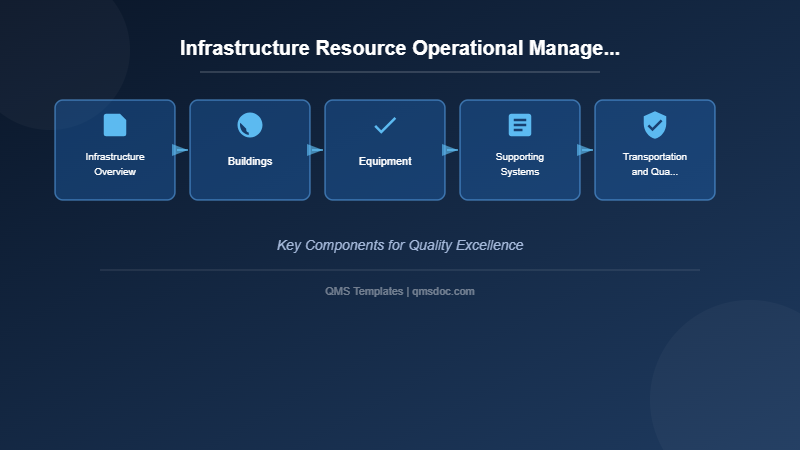
Infrastructure comprises three essential components:
a) Buildings, workplaces, and related utilities (electrical power, gas, water, drainage, air conditioning, and similar systems) b) Equipment (encompassing both hardware and software, including manufacturing apparatus, tools, fixtures, and measuring devices) c) Supporting systems (transportation systems, communication channels, and information systems)
Organizations bear the responsibility to ensure that these infrastructure elements are appropriate and sufficient to meet product quality requirements. The design and management of infrastructure is critically important, particularly for preventing product mix-ups and ensuring proper product handling throughout the manufacturing process.
Buildings
Buildings must provide adequate space to prevent product mix-ups and maintain a suitable manufacturing environment.
Product mix-up refers to situations where products of different lots, different types, or different specifications are inadvertently combined. Specific examples include the introduction of non-conforming items (components, units, semi-finished products, work-in-progress, or finished products) into the manufacturing line. When mix-ups occur, non-conforming products may reach end-users, creating significant risks to product safety and effectiveness.
Physical building components include clearly separated work areas, adequate floor space, appropriate lighting, temperature and humidity control, and clean working environments. For medical devices requiring cleanroom manufacturing environments, building infrastructure plays an especially critical role in product quality assurance.
Equipment
Equipment encompasses manufacturing apparatus (tools, fixtures, devices, and automation systems), measuring instruments (meters, inspection devices, etc.), and associated computer systems.
In recent years, automated systems incorporating software have become widely prevalent. Typical examples include automated soldering equipment, automated inspection systems, robotic arms, and process control systems. Automated systems controlled by computers or microprocessors are generally referred to as “computerized systems.”
A crucial requirement is that equipment—encompassing both hardware and software components—must undergo validation. Validation is the process of demonstrating and documenting that a system consistently meets its intended requirements. For automated systems incorporating software, organizations must verify that the software functions correctly and achieves the intended performance for manufacturing processes. This validation process should comply with relevant standards including IEC 62304 (Medical Device Software Lifecycle Processes) and IEC 61508 (Functional Safety).
Additionally, continuous maintenance and calibration of equipment are essential to maintain specifications over time.
Supporting Systems
Supporting systems represent the foundational infrastructure—including systems and organizational structures—necessary to realize manufacturing processes and quality assurance.
Transportation and Quality Assurance
Product quality assurance extends beyond the manufacturing process. Following production, organizations must maintain medical device quality during transportation (including reagents, device components, accessories, etc.). Environmental factors during transportation—including temperature, humidity, vibration, and light—can adversely affect products. Appropriate packaging methods, storage conditions, and transportation condition management are required. For medical devices requiring temperature control (such as diagnostic reagents and biological products), cold chain management becomes essential.
Information Systems and Software Validation
Information systems (also called computer systems) refer to software that manages and maintains manufacturing records and quality records (including complaint processing, CAPA [corrective and preventive actions], training records, and audit reports). In medical device manufacturing and quality management, these records serve as important documents subject to regulatory inspection.
Software incorporated in information systems must undergo software validation in accordance with ISO 13485 requirements. Software validation is the process of demonstrating and documenting that computer systems consistently meet their intended requirements. This encompasses verification at three critical stages: the Installation Qualification (IQ) stage, the Operational Qualification (OQ) stage, and the Performance Qualification (PQ) stage.
Regulatory requirements concerning computer system reliability—including the 2023 ICH E11(R2) revision and FDA 21 CFR Part 11—continue to become increasingly stringent. Data integrity (the completeness and reliability of data) has become a critical concern in regulatory compliance.
Maintenance Activities
Maintenance of infrastructure is directly linked to product quality. When maintenance activities (preventive maintenance) or their absence may impact product quality, organizations must document and implement the following in their Quality Management System (QMS):
- Specific maintenance activities to be performed
- Frequency and intervals of implementation
- Designated responsible personnel
- Methods of record-keeping
Maintenance activities include the following categories:
Daily Inspection: Simple inspections, cleaning, and abnormality detection performed by equipment operators
Preventive Maintenance: Periodic inspection, parts replacement, and performance verification as recommended by manufacturers
Calibration: The process of confirming that measuring instrument accuracy falls within specified ranges and adjusting as necessary
Measuring instruments are particularly critical tools for verifying that products meet requirements. Calibration intervals should be established based on product type, measuring instrument characteristics, and historical usage patterns. Calibration should preferably be performed by accredited calibration facilities that maintain traceability to national standards.
Maintenance activities apply not only to manufacturing equipment but also to equipment used for workplace environment monitoring and control (such as temperature and humidity monitors, air cleanliness measurement devices) and instruments used for monitoring and measurement (inspection devices, measuring instruments, etc.). Establishing appropriate maintenance systems for all these equipment types is an essential requirement for achieving consistent product quality.
Organizations must maintain records of maintenance activities. When deviations occur—such as planned maintenance not being performed as scheduled—the potential impact on product quality must be evaluated. Where appropriate, CAPA (Corrective and Preventive Actions) must be implemented.
Related FDA QMSR Templates
Streamline your FDA QMSR compliance with our professionally crafted templates:

Related Articles
- Resource Operational Management (Part 1)
- Lack of Management Understanding and IT Department Resistance: Key Challenges for Japanese Companies
- ISO 14971:2019 Revisions – Part 2: Management Responsibility, Risk Analysis, and Risk Management File
- 【medical equipment】Risk Management Course Part 1.
- 【translation into Japanese】FDA Part 820 QMSR(Quality Management System Regulation)revised plan
- The Birth of 21 CFR Part 11: A Historical Perspective
