
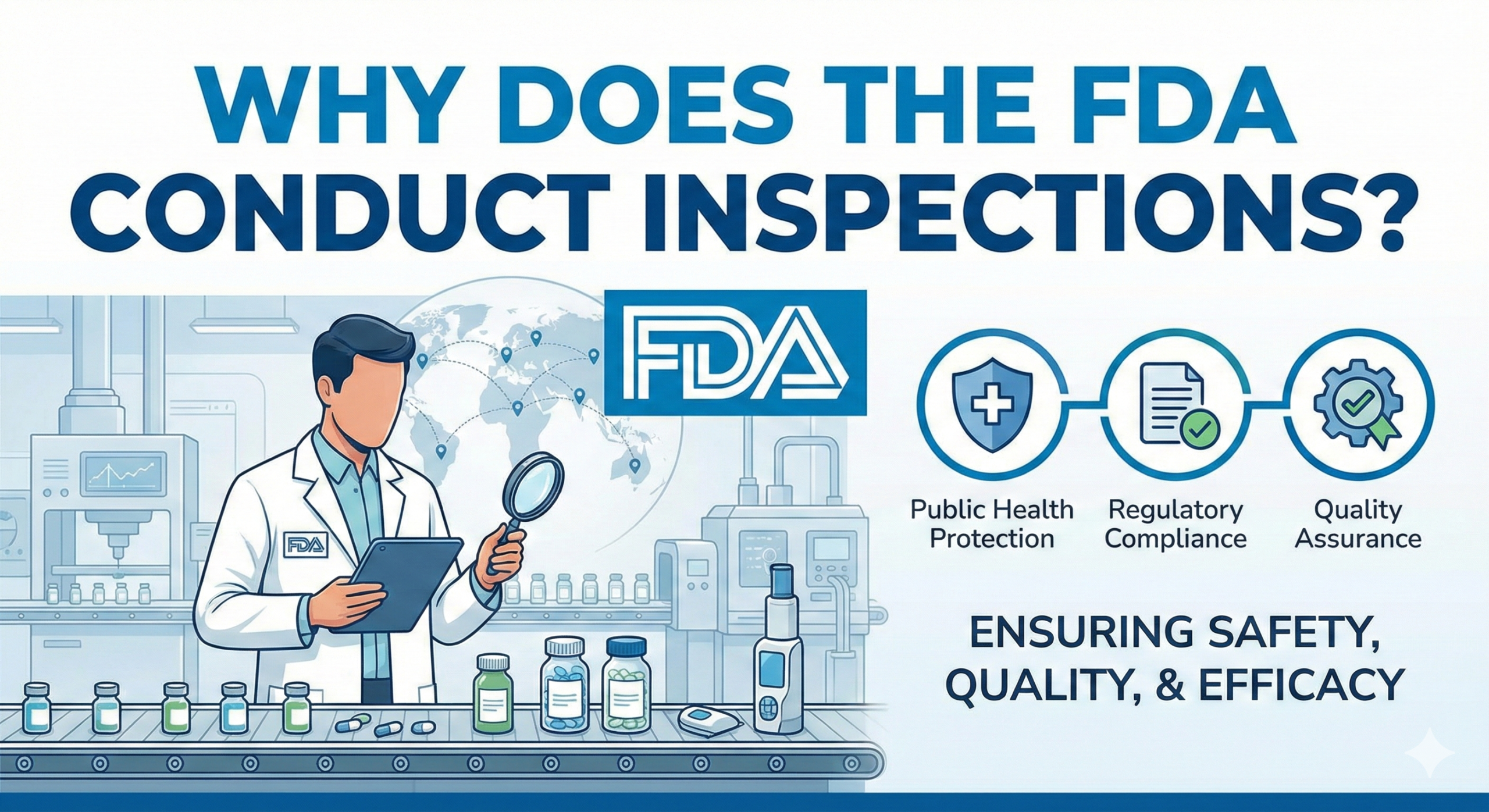
Pharmaceuticals purchased at American pharmacies, medical devices used in hospitals, and food products lining supermarket shelves—the guardian protecting the safety of all these products is the FDA (Food and Drug Administration). This article provides a detailed explanation of why FDA inspectors visit manufacturing facilities around the world and the legal framework that makes it impossible for companies to refuse inspections.
FD&C Act Section 704: The Legal Basis for Inspections
Codification of Inspection Authority
Section 704 of the Federal Food, Drug, and Cosmetic Act (FD&C Act) is the provision that grants the FDA powerful inspection authority. Under this provision, the FDA possesses the following powers:
Right of Entry to Facilities: FDA inspectors have the authority to enter facilities that manufacture, process, package, or store pharmaceuticals, medical devices, food, and other regulated products. This authority can be exercised without prior notice. For domestic facilities, unannounced inspections are the standard practice. Historically, foreign facilities typically received advance notice of inspections. However, in May 2025, the FDA announced a significant policy shift to expand the use of unannounced inspections at foreign manufacturing facilities, building upon pilot programs previously conducted in India and China. This change aims to ensure that foreign companies receive the same level of regulatory scrutiny as domestic manufacturers.
Right to Inspect Records: The authority to inspect records related to product safety is clearly defined, including manufacturing records, quality control records, and complaint handling records. Section 704(a)(4) of the FD&C Act, as amended by the Food and Drug Administration Safety and Innovation Act (FDASIA) of 2012 and further strengthened by the Food and Drug Omnibus Reform Act (FDORA) of 2022, authorizes the FDA to request records in advance of or in lieu of an inspection. This authority applies to drug and device establishments and certain other facilities subject to FDA regulation.
Right to Collect Samples: The authority also includes the right to collect samples of products and raw materials and take them for analysis. Sample collection is governed by Section 702 of the FD&C Act and is a critical component of FDA’s inspectional and regulatory activities.
Cross-Border Authority and Justification for Taxpayer Investment
What is particularly significant is that this authority extends across international borders. The FDA uses American taxpayer funds to dispatch inspectors to foreign countries, including Japan. Why go to such lengths? The answer is straightforward: to protect American citizens from substandard foreign products.
When a Japanese pharmaceutical company manufactures drugs intended for the American market, that Japanese factory also becomes subject to FDA inspection. This is not because the FDA doubts Japan’s quality control capabilities. Rather, the FDA has a responsibility to verify the safety of any product—regardless of its country of origin—that will be consumed by or used on American citizens, according to American standards.
According to FDA testimony before Congress, as of 2019, approximately 72% of establishments manufacturing active pharmaceutical ingredients (APIs) for FDA-regulated drugs were located outside the United States, and 53% of establishments producing finished dosage forms were foreign. This global distribution of pharmaceutical manufacturing underscores the critical importance of FDA’s international inspection program.
Why Inspections Are Necessary: What Taxpayer Investment Protects
Responsibility to American Citizens
FDA foreign inspections are funded by American taxpayer dollars. The costs of inspectors’ international travel, accommodation, and local activity expenses are not insignificant. Nevertheless, the FDA conducts foreign inspections because of its grave responsibility to protect the health and safety of American citizens.
Regardless of where a product is manufactured, if it is to be sold in the American market, it must meet American safety standards. The FDA operates without any presumption that “Japanese products are safe” or “European products are acceptable.” The agency approaches all products with equal scrutiny and equal verification. This is the FDA’s fundamental stance.
Recent executive orders and policy changes, including President Trump’s May 5, 2025, executive order directing the FDA to increase user fees and the number of inspections of foreign manufacturing plants, reflect the continued emphasis on strengthening oversight of the global pharmaceutical supply chain. These initiatives are part of a broader strategy to encourage domestic pharmaceutical manufacturing while ensuring rigorous international oversight.
Limitations of Post-Incident Response and Border Interdiction
Responding after substandard products have already entered the American market is too late. Particularly in the case of pharmaceuticals, once health damage occurs, the consequences can be irreversible. Inspections of foreign manufacturing facilities are positioned as preventive measures to intercept problematic products at the border.
There have been past cases where quality problems were discovered in pharmaceuticals manufactured overseas, resulting in large-scale recalls. To prevent such situations from occurring in the first place, it is essential to verify quality control at the manufacturing stage.
The COVID-19 pandemic created significant disruptions to FDA’s inspection program. Beginning in March 2020, the FDA suspended most inspections, conducting only three foreign inspections from March to October 2020, compared to over 600 during the same period in previous years. As of May 2024, approximately 2,000 pharmaceutical manufacturing firms had not been inspected by FDA staff since before the pandemic, including over 340 plants in India and China. The agency has been working to address this backlog while implementing new approaches such as Remote Regulatory Assessments (RRAs) and increased reliance on foreign inspection reports from recognized authorities under Mutual Recognition Agreements (MRAs).
The Reality That Paper Reviews Cannot Reveal
Even if documents submitted by companies appear perfect, the actual manufacturing site may present a different reality. When inspectors visit the site in person, they can grasp the true situation that cannot be understood from paperwork alone.
For example, there may be issues that can only be discovered on-site, such as workers in manufacturing areas requiring cleanliness controls not wearing appropriate protective clothing, storage temperatures for raw materials differing from specifications, or records being falsified.
According to FDA data, during fiscal year 2023, nearly 90% of foreign inspections were pre-announced, in contrast to the typically unannounced inspections conducted at U.S. facilities. Despite advance notice, FDA investigators have consistently uncovered serious deficiencies at foreign facilities at more than twice the rate of domestic inspections, including instances where documents were destroyed during inspections. This disparity highlights the critical need for expanded unannounced foreign inspections.
The Absolute Requirement: Inspections Cannot Be Refused
Market Access Conditions
For companies wishing to enter the American market, accepting FDA inspection is not an option—it is a mandatory requirement. Refusing inspection leads to the following serious consequences:
Import Stoppage: The FDA has the authority to stop the importation into the United States of products manufactured at facilities that refuse inspection. This measure is called an “Import Alert” and constitutes a de facto export ban. Specifically, facilities that refuse FDA inspection are placed on Import Alert 99-32 (for food establishments) or Import Alert 66-79 (for drug establishments), resulting in Detention Without Physical Examination (DWPE) of all products from those facilities. Section 807 of the FD&C Act, added by the Food Safety Modernization Act (FSMA), provides explicit authority for the FDA to refuse admission of food from foreign establishments that refuse inspection.
Revocation of Existing Approvals: Even for products that have already received approval, the approval may be revoked on the grounds of inspection refusal. Under Section 501(j) of the FD&C Act, as added by Section 707 of FDASIA and extended to devices by the FDA Reauthorization Act of 2017 (FDARA), a drug or device is deemed adulterated if the establishment delays, denies, limits, or refuses an FDA inspection.
Loss of Corporate Credibility: Refusing inspection creates the impression that the company is hiding something, leading to a loss of international credibility. The placement of a company on an FDA Import Alert is publicly available information, allowing competitors and potential customers to see that the firm has been red-listed for automatic detention.
According to FDA guidance, facilities that refuse inspection must petition for an FDA inspection to be removed from an Import Alert. The FDA has indicated that it may take at least one year before the agency can return to inspect a facility that initially refused. This extended timeline emphasizes the critical importance of cooperation with FDA inspection requests from the outset.
Inspection Cooperation as a Legal Obligation
Section 704 of the FD&C Act stipulates cooperation with inspections as a legal obligation. This obligation applies not only to companies within the United States but also to foreign companies that export products to America.
Refusing inspection is a violation of federal law and may be subject to criminal prosecution. Since corporate management may be held personally legally responsible, the option of refusing inspection effectively does not exist in practice.
The FDA’s guidance document “Circumstances that Constitute Delaying, Denying, Limiting, or Refusing a Drug or Device Inspection” (finalized in 2024, superseding the 2014 guidance for drugs) provides detailed examples of conduct that the agency considers to constitute interference with an inspection. These include:
- Preventing FDA entry at reasonable times
- Claiming falsely that the facility does not engage in regulated activities
- Limiting access to facilities, processes, or equipment
- Restricting photography without valid reasons
- Impeding sample collection
- Delaying or limiting access to records
- Failing to respond to FDA attempts to schedule an inspection within 24 hours (or within an agreed-upon timeframe)
The guidance emphasizes that the FDA will consider reasonable explanations for behaviors that might otherwise be deemed obstructive, recognizing that genuine operational or safety concerns may occasionally necessitate accommodation. However, the burden rests on the facility to provide legitimate justifications.
The Significance of Inspections in the Era of Globalization: Verification, Not Trust
Risks Brought About by Supply Chain Internationalization
In the modern pharmaceutical industry, the supply chain spans the globe, from raw material procurement to final product manufacturing. It is not uncommon for the active ingredient in a pharmaceutical sold in the United States to be manufactured in China, processed into tablets in India, and packaged in Japan.
While such complex international division of labor is effective for cost reduction, it poses significant risks from a quality control perspective. Regulatory standards and management levels vary by country, and if a problem occurs at any stage of the process, the safety of the entire final product is threatened.
The FDA is intensifying foreign inspections with taxpayer investment to respond to this reality. The notion that “it’s safe because another country’s regulatory authority approved it” does not apply. For products used by American citizens, the FDA verifies safety according to American standards. This is the FDA’s unwavering policy.
The FDA has strengthened its global presence through foreign offices and international partnerships. The agency participates in the Pharmaceutical Inspection Co-operation Scheme (PIC/S) and has established Mutual Recognition Agreements with the European Union and other regulatory authorities. These arrangements allow the FDA to leverage inspection reports from trusted foreign partners, focusing agency resources on higher-risk facilities. However, such collaborative mechanisms supplement rather than replace FDA’s direct inspection authority.
The Principle of “Verification, Not Trust”
There is a phrase used during the Cold War arms control negotiations between the United States and the Soviet Union: “Trust, but verify.” The FDA’s foreign inspections are based precisely on the principle of “verification, not trust.”
No matter how trustworthy a country or company may be, written reports alone are insufficient. Inspectors must actually travel to the site and verify with their own eyes. This thoroughgoing verification approach serves as the last line of defense in protecting the safety of American citizens.
The expanded use of unannounced foreign inspections announced in May 2025 represents a strengthening of this verification principle. FDA Commissioner Marty Makary stated that the policy change is designed to address a “double standard” and to expose facilities that might falsify records or conceal violations when given advance warning. This development marks a new era in FDA enforcement, reflecting a commitment to ensuring that foreign manufacturers are held to the same rigorous standards as their domestic counterparts.
Inspections for Companies: A Critical Opportunity to Build Trust
The Essence of Inspection Response: Demonstrating That You Are a Safe and Trustworthy Company
For companies, FDA inspection is not merely regulatory compliance. It is an extremely important opportunity to give the FDA the impression that “this is a company whose designed, developed, and manufactured products are safe to import into the United States and can be trusted.”
Inspectors visit companies as guardians of American citizens’ health. What they most want to know is, “Can this company truly be trusted?” Meeting technical standards is only the minimum requirement. Beyond that, the company’s overall reliability is evaluated, including its attitude toward quality, its capability to respond to problems, and its commitment to continuous improvement.
Factors That Influence Inspectors’ Impressions
Companies that make a good impression during inspections share common characteristics:
Highly Transparent Communication: Companies that do not attempt to hide problems, discuss discovered issues candidly, and can specifically explain improvement measures are highly valued.
Proactive Quality Management: It is important to demonstrate an attitude of not merely meeting the minimum regulatory requirements but voluntarily setting higher standards and engaging in continuous improvement.
Organization-Wide Quality Awareness: Organizations where everyone, from management to shop floor workers, understands the importance of quality and fulfills their respective roles give inspectors a strong sense of security.
Completeness and Accuracy of Records: Having all activities properly recorded and being able to explain them at any time is an important indicator of a company’s reliability.
The FDA’s risk-based inspection approach means that facilities demonstrating strong compliance histories and quality management systems may be inspected less frequently. Conversely, facilities with concerning compliance records or those in higher-risk product categories face more frequent scrutiny. The classification system for inspection findings—No Action Indicated (NAI), Voluntary Action Indicated (VAI), and Official Action Indicated (OAI)—directly impacts regulatory consequences and future oversight.
The Value of Being Recognized as a “Trustworthy Company”
If a company can make a good impression during inspection, the effect continues after the inspection ends. Companies recognized by the FDA as “trusted partners” can enjoy the following benefits:
Reduced Inspection Frequency: There is a possibility of being classified as a low-risk company and having longer intervals between inspections. Under the FDA’s risk-based inspection program, facilities with consistent compliance records and strong quality systems may be subject to less frequent surveillance inspections.
Smooth New Product Approval: If a company’s reliability is established, the approval process for new products tends to proceed more smoothly. Pre-approval inspections for applications from well-regarded manufacturers may receive priority scheduling and more efficient review.
Cooperative Response When Problems Occur: Even if a problem does occur, there is an increased likelihood that the FDA will respond cooperatively based on past track record. Facilities with strong compliance histories are more likely to receive opportunities for voluntary correction before formal enforcement action.
Competitive Advantage in the Market: The reputation of being “a company trusted by the FDA” also leads to gaining trust from customers and investors. This reputational value can translate into tangible business advantages, including preferred supplier status and enhanced market positioning.
Fostering a Culture of Compliance
To be recognized as a “trustworthy company” during inspection, overnight preparation is insufficient. It is necessary to cultivate a compliance culture on a daily basis and continuously improve the quality management system.
While this involves short-term costs, it leads to enhanced corporate competitiveness in the long term. By constructing an appropriate quality management system, product quality improves and customer satisfaction increases. Furthermore, early detection and response to problems become possible, allowing companies to avoid major risks.
Modern quality management approaches, such as the quality management maturity (QMM) concept promoted by the FDA, emphasize proactive quality assurance through robust pharmaceutical quality systems. The FDA encourages manufacturers to move beyond reactive compliance toward integrated, risk-based quality management that prevents problems before they occur. Facilities demonstrating advanced quality maturity may benefit from regulatory flexibilities and enhanced collaboration with the agency.
Inspection as a Driver of Continuous Improvement
Inspection is also a valuable opportunity for companies to objectively evaluate their own quality management systems. The observations of inspectors, who are external experts, help discover problem areas that might not be noticed internally.
What is important is not treating issues pointed out during inspection as mere “forced compliance tasks” but rather adopting an attitude of connecting them to quality improvement for the entire company. Such proactive efforts are the key to being evaluated by the FDA as “a trustworthy company that continuously improves.”
The Form FDA 483 (Inspectional Observations) issued at the conclusion of inspections provides formal documentation of objectionable conditions or practices. Companies’ written responses to Form 483 observations are critical opportunities to demonstrate commitment to quality and compliance. A well-crafted response should address all observations, explain root causes, describe corrective and preventive actions (CAPA), and provide realistic timelines for implementation. Companies may request that the FDA post their responses on the agency’s website alongside the Form 483, providing transparency to stakeholders.
Conclusion: The Critical Role of FDA Inspections in Global Public Health
FDA inspections represent a cornerstone of the agency’s mission to protect and promote public health. For American taxpayers, these inspections justify the substantial investment required to maintain a global oversight program. For foreign manufacturers seeking access to the U.S. market, cooperation with FDA inspection is not optional but an absolute prerequisite.
The evolution of FDA’s inspection program—including the expansion of unannounced foreign inspections, the development of alternative oversight tools such as Remote Regulatory Assessments, and strengthened international collaborations—reflects the agency’s commitment to adapting its regulatory approach to the realities of a globalized pharmaceutical supply chain. Companies that embrace these requirements and view inspection as an opportunity to demonstrate their commitment to quality will position themselves for long-term success in the U.S. market.
As the pharmaceutical landscape continues to evolve, with increasing complexity in manufacturing processes, growing reliance on international suppliers, and emerging technologies, the fundamental principles underlying FDA inspection authority remain constant: verification over trust, transparency over concealment, and an unwavering commitment to protecting public health. Companies that internalize these principles and build them into their quality culture will find that regulatory compliance and business success are not competing objectives but mutually reinforcing goals.

Comment