
Background and Context
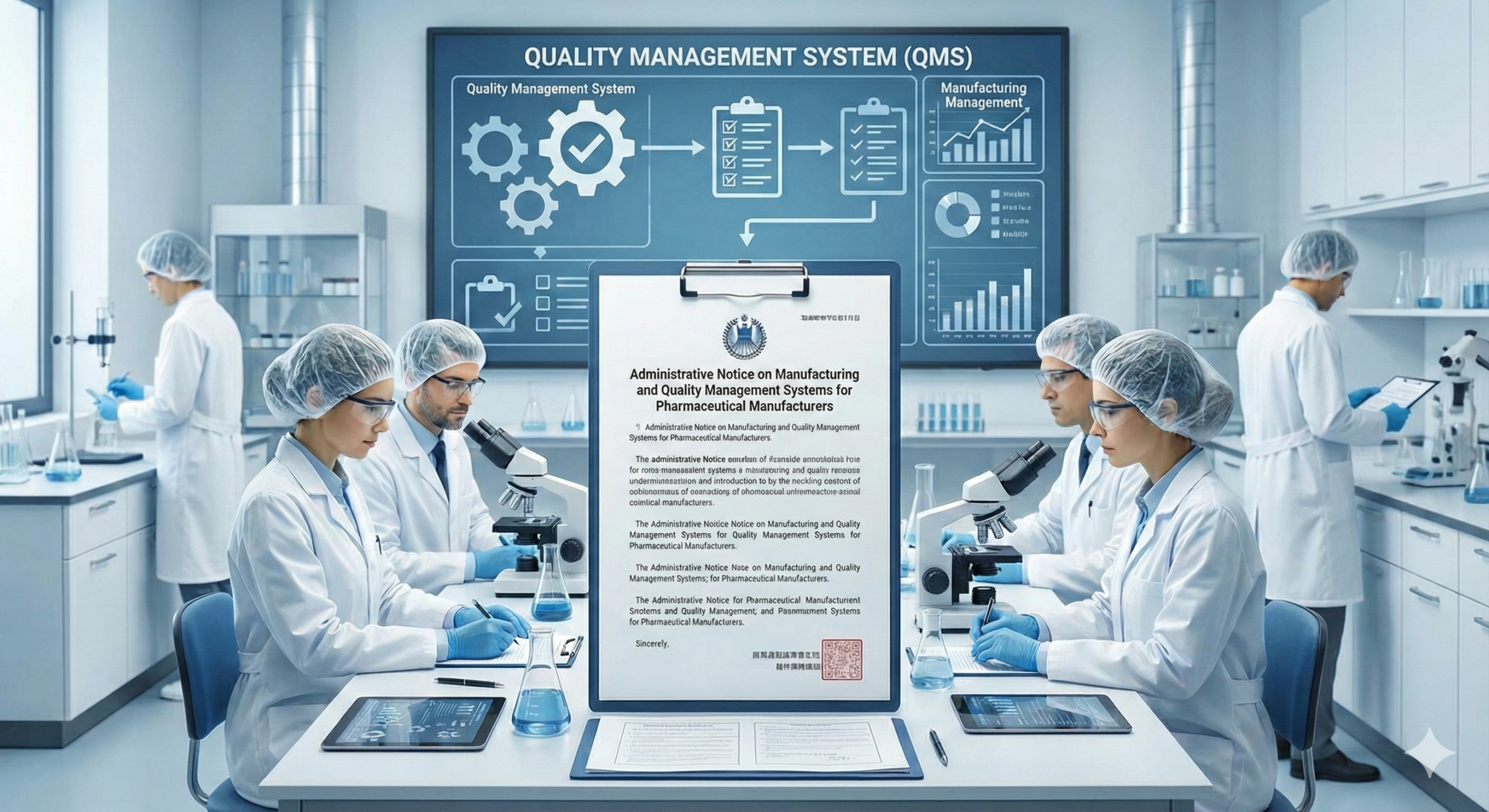
On January 31, 2022 (Reiwa 4), the Ministry of Health, Labour and Welfare (MHLW) issued an administrative notice titled “Manufacturing and Quality Management Systems for Pharmaceutical Manufacturers.” This notice was developed in response to a series of quality issues that had emerged in the pharmaceutical manufacturing sector, with inadequate personnel allocation at manufacturing sites identified as one of the root causes.
The Japan Pharmaceutical Manufacturers Association (JPMA), representing pharmaceutical industry organizations in Japan, conducted a comprehensive survey among its member companies. Based on the survey results, they developed the document “Approach to Personnel Securing at Manufacturing Sites” (dated January 31, 2022, JPMA No. 70). The MHLW subsequently disseminated this guidance as an administrative notice to ensure appropriate implementation across the industry.
Regulatory Requirements for Personnel Securing
GMP Ministerial Ordinance Requirements
The requirements for personnel securing at pharmaceutical manufacturing sites are stipulated in Article 6, Paragraph 3 of the GMP Ministerial Ordinance (Ministerial Ordinance on Standards for Manufacturing Control and Quality Control for Pharmaceuticals and Quasi-drugs) as follows:
Article 6 (Personnel) (Previous paragraphs omitted) Paragraph 3: Manufacturing business operators and others must secure sufficient personnel with the capability to appropriately carry out manufacturing and quality-related operations.
This provision establishes the fundamental obligation for pharmaceutical manufacturers to maintain adequate staffing levels. The term “personnel with the capability to appropriately carry out manufacturing and quality-related operations” encompasses not only the number of staff members but also their qualifications, experience, and competencies.
Recent Quality Issues and Root Causes
Recent quality problems in the pharmaceutical manufacturing sector have been attributed to various factors, with inadequate personnel allocation at manufacturing sites being identified as a significant contributing factor. These quality issues have included:
- Manufacturing deviations due to insufficient oversight
- Quality control failures stemming from inadequate testing capacity
- Documentation errors resulting from workload pressure
- Delayed responses to deviations and out-of-specification results
In response to these concerns, regulatory authorities have intensified their focus on verifying that manufacturers maintain personnel systems commensurate with their manufacturing scale and complexity.
Verification Through Conformity Assessment
For generic pharmaceutical products (後発医薬品), verification of whether manufacturers have established manufacturing and quality management systems appropriate to their number of products manufactured and production volume is conducted during conformity assessments at the time of marketing authorization review. This requirement is based on the notification “New Measures for Marketing Authorization Review of Generic Pharmaceutical Products for Medical Use” (dated July 2, 2021, PSEHB/PED Notification No. 0702-5 and PFSB/SID Notification No. 0702-5, jointly issued by the Directors of the Pharmaceutical Evaluation Division and the Safety and Surveillance Division of the Pharmaceutical Safety and Environmental Health Bureau, MHLW).
During these conformity assessments, regulatory inspectors evaluate:
- The organizational structure and reporting lines
- The number of personnel assigned to each functional area
- The qualifications and training records of key personnel
- The workload distribution and capacity utilization
- The effectiveness of quality oversight mechanisms
Manufacturers are required to review and revise their personnel systems with reference to the current administrative notice to ensure compliance with regulatory expectations.
Approach to Personnel Securing at Pharmaceutical Manufacturing Sites
Classification of Personnel Functions
The administrative notice “Manufacturing and Quality Management Systems for Pharmaceutical Manufacturers” classifies personnel engaged in manufacturing and quality-related operations (including non-regular employees) into four major categories:
-
Manufacturing Department
- Personnel directly involved in production operations
- Personnel responsible for in-process controls
- Personnel handling raw materials and packaging materials
-
Quality Assurance (QA) Department
- Personnel responsible for product release decisions
- Personnel conducting deviation investigations
- Personnel managing change control processes
- Personnel overseeing supplier qualification
- Personnel responsible for complaint management
-
Quality Control (QC) Department / Testing and Inspection
- Personnel performing analytical testing
- Personnel conducting method validation and verification
- Personnel managing laboratory equipment and instruments
- Personnel handling reference standards and reagents
-
Technical Support Personnel
- Personnel involved in manufacturing process changes
- Personnel responsible for testing method development and changes
- Personnel managing facility and equipment modifications
- Personnel conducting equipment maintenance and calibration
Reference Values for Workload Distribution
The administrative notice provides reference values for the annual number of products and lots that should be assigned per person in each functional category. These reference values serve as benchmarks for manufacturers to assess whether their current staffing levels are appropriate.
It is important to note that these values are intended as general guidance rather than absolute requirements. Manufacturers should adjust their actual staffing needs based on several factors including:
- Product complexity (e.g., sterile products, biologics, highly potent compounds)
- Manufacturing process characteristics (e.g., degree of automation, batch size)
- Regulatory classification and risk profile
- Manufacturing site configuration and layout
- Technological capabilities and systems maturity
Quality Department Staffing Ratios
In addition to workload distribution metrics, the administrative notice also presents reference ratios for quality department personnel relative to total manufacturing and quality-related personnel:
- The proportion of combined QA and QC personnel relative to total personnel
- The proportion of QA personnel alone relative to total personnel
These ratios are designed to ensure that adequate resources are devoted to quality oversight functions. The emphasis on QA staffing reflects the critical importance of having sufficient personnel dedicated to ensuring that products are manufactured in accordance with approved specifications and regulatory requirements before they are released to the market.
International Harmonization and Recent Developments
PIC/S GMP Guidelines
Japan joined the Pharmaceutical Inspection Co-operation Scheme (PIC/S) in July 2015, along with the MHLW, the Pharmaceuticals and Medical Devices Agency (PMDA), and prefectural authorities. PIC/S GMP guidelines represent international standards for pharmaceutical manufacturing and quality management.
The Japanese GMP Ministerial Ordinance has been progressively revised to achieve greater international harmonization with PIC/S GMP guidelines. The most recent major revision of the GMP Ministerial Ordinance occurred on April 28, 2021 (Reiwa 3) through PSEHB/SID Notification No. 0428-2, further aligning Japanese requirements with international standards.
ICH Quality Guidelines
The International Council for Harmonisation of Technical Requirements for Pharmaceuticals for Human Use (ICH) has developed several quality guidelines that are relevant to pharmaceutical quality systems:
ICH Q9(R1) – Quality Risk Management (Revised January 2023) The revision of ICH Q9 was adopted in January 2023 and addresses four key areas for improvement:
- Reducing subjectivity in risk assessments and quality risk management outputs
- Better management of supply chain and product availability risks
- Clarifying what constitutes appropriate formality in quality risk management work
- Improving risk-based decision-making processes
ICH Q9(R1) emphasizes the importance of objective risk assessment, incorporating scientific knowledge and data, and ensuring that quality risk management supports both product quality and availability. The revised guideline provides enhanced guidance on hazard identification (terminology changed from “risk identification”), risk analysis, risk evaluation, and risk control.
ICH Q10 – Pharmaceutical Quality System ICH Q10 describes a comprehensive model for an effective pharmaceutical quality system that is based on quality management system concepts, includes Good Manufacturing Practice (GMP) requirements, and complements ICH Q8 (Pharmaceutical Development) and ICH Q9 (Quality Risk Management).
The pharmaceutical quality system should ensure that:
- Product realization is achieved through the product lifecycle
- Product quality is maintained through continual improvement
- Knowledge management facilitates continuous improvement
Recent PIC/S GMP Guideline Updates (2025)
PIC/S is currently undertaking significant revisions to its GMP guidelines, with several chapters undergoing stakeholder consultation in 2025:
Chapter 1 – Pharmaceutical Quality System (Consultation period: September 3 to December 3, 2025) The revised Chapter 1 incorporates changes that reflect ICH Q9(R1), strengthening knowledge management and risk management across the product lifecycle. Key enhancements include:
- Greater emphasis on risk-based decision-making
- Enhanced requirements for scientific rationale and proportionality in risk assessment
- Improved alignment with international best practices
- Adaptation to industry advancements including digital technologies
Chapter 4 – Documentation (Consultation period: July 7 to October 7, 2025) The revised Chapter 4 has nearly doubled in size (from 9 to 17 pages) and incorporates:
- Enhanced guidance on data integrity across all documentation formats (paper, electronic, and hybrid)
- Integration of risk management principles within data governance systems
- Clarification of requirements for electronic records and signatures
- Support for new technologies including artificial intelligence and cloud services
- Consistency with concurrent revision of Annex 11 (Computerized Systems)
Annex 1 – Manufacture of Sterile Medicinal Products PIC/S published the revised Annex 1 in August 2023, which entered into force on August 25, 2023. This revision provides comprehensive guidance on contamination control strategies, environmental monitoring, and validation of sterilization processes.
Annex 3 – Manufacture of Radiopharmaceuticals (Concept Paper Consultation: December 15, 2025 to February 15, 2026) A concept paper has been released outlining the planned revision of Annex 3, addressing areas not covered in the current 2008 version and supporting innovative pharmaceutical manufacturing approaches.
Compliance Obligations and Best Practices
Legal Compliance Framework
Under the Pharmaceuticals and Medical Devices Act (薬機法, Yakuji-hou), as amended in 2021, pharmaceutical manufacturers and marketing authorization holders are required to establish robust legal compliance systems. The “Guidelines for Manufacturers and Marketing Authorization Holders on Compliance Systems” (issued February 8, 2021, as administrative notice by PSEHB/SID) provides detailed guidance on constructing effective compliance frameworks.
Key elements of the compliance system include:
- Designation of executives responsible for pharmaceutical affairs (責任役員)
- Selection of qualified General Manager of Manufacturing Control and Quality Control (総括製造販売責任者) or Manufacturing Manager (製造管理者)
- Establishment of quality assurance systems independent from manufacturing operations
- Implementation of management review processes
- Maintenance of appropriate records and documentation systems
Personnel Competency and Training
Beyond simply maintaining adequate personnel numbers, manufacturers must ensure that their staff possess appropriate qualifications and receive ongoing training. The GMP Ministerial Ordinance requires:
- Initial training for new personnel covering GMP principles, relevant SOPs, and their specific responsibilities
- Continuing education to maintain and enhance technical competencies
- Training records documenting all training activities
- Periodic assessment of training effectiveness
- Specialized training for personnel in critical roles (e.g., qualified persons, manufacturing managers)
Pharmaceutical Quality System Elements
A comprehensive pharmaceutical quality system should incorporate:
Quality Management System Structure:
- Clear organizational structure with defined roles and responsibilities
- Independence of quality units from production pressures
- Adequate resource allocation for quality activities
- Management commitment and leadership
Process Performance and Product Quality Monitoring:
- Establishment of quality objectives and indicators
- Trending and analysis of quality metrics
- Timely identification and investigation of adverse trends
- Implementation of corrective and preventive actions
Corrective Action and Preventive Action (CAPA):
- Systematic investigation of deviations and non-conformances
- Root cause analysis methodologies
- Effectiveness verification of corrective actions
- Sharing of lessons learned across the organization
Change Management:
- Formal evaluation of proposed changes
- Risk assessment of potential impacts on product quality
- Appropriate approval mechanisms
- Verification of successful implementation
Management Review:
- Periodic evaluation of quality system effectiveness
- Review of quality metrics and performance indicators
- Assessment of resource adequacy including personnel
- Identification of opportunities for improvement
Practical Implementation Guidance
Self-Assessment Framework
Pharmaceutical manufacturers should conduct regular self-assessments of their personnel systems, evaluating:
Quantitative Factors:
- Current staffing levels in each functional area compared to workload
- Ratio of quality department personnel to total personnel
- Turnover rates and trends
- Use of overtime and temporary staff
- Backlog of quality activities (e.g., pending deviations, overdue changes)
Qualitative Factors:
- Personnel competency and qualification levels
- Training effectiveness and coverage
- Employee satisfaction and engagement
- Quality culture and reporting behaviors
- Management commitment to quality
Risk-Based Approach to Staffing Decisions
Following the principles of ICH Q9(R1), manufacturers should apply quality risk management to personnel allocation decisions. This involves:
Hazard Identification:
- Identifying areas where insufficient staffing could impact product quality or availability
- Recognizing scenarios where personnel capability gaps could lead to errors
- Considering external factors (e.g., regulatory changes, new product launches) that may increase workload
Risk Analysis:
- Assessing the likelihood of quality impacts from staffing limitations
- Evaluating the severity of potential consequences
- Considering detectability of quality issues before product release
Risk Evaluation and Control:
- Prioritizing staffing needs based on risk assessment outcomes
- Implementing controls such as additional training, process improvements, or technology solutions
- Establishing monitoring systems to verify control effectiveness
Documentation and Record Keeping
To demonstrate compliance with GMP requirements and regulatory expectations, manufacturers should maintain comprehensive documentation of their personnel systems, including:
- Organizational charts showing reporting relationships and functional responsibilities
- Position descriptions defining roles, responsibilities, and required qualifications
- Personnel files containing qualification documentation and training records
- Staffing assessments and justifications for current personnel levels
- Records of management review discussions regarding resource adequacy
Conclusion and Ongoing Obligations
The administrative notice on manufacturing and quality management systems for pharmaceutical manufacturers reflects a continued regulatory emphasis on ensuring that companies maintain adequate resources to fulfill their GMP obligations. The reference values provided in the notice serve as useful benchmarks, but manufacturers should develop staffing models tailored to their specific circumstances, considering product complexity, manufacturing scale, technological capabilities, and regulatory risk profile.
As international standards continue to evolve, particularly with ongoing revisions to PIC/S GMP guidelines and ICH quality guidelines, manufacturers must remain vigilant in monitoring regulatory developments and adapting their quality systems accordingly. The integration of quality risk management principles, as emphasized in ICH Q9(R1), provides a framework for making risk-based decisions about resource allocation, including personnel deployment.
Regular self-assessment, management review, and continuous improvement activities are essential to maintaining an effective pharmaceutical quality system that ensures both compliance with regulatory requirements and delivery of high-quality products to patients. The personnel system is a fundamental element of this quality system, and manufacturers should prioritize efforts to attract, develop, and retain qualified personnel capable of supporting their manufacturing and quality operations.
Key References:
- Administrative Notice “Manufacturing and Quality Management Systems for Pharmaceutical Manufacturers” (January 31, 2022, MHLW)
- Japan Pharmaceutical Manufacturers Association “Approach to Personnel Securing at Manufacturing Sites” (January 31, 2022, JPMA No. 70)
- GMP Ministerial Ordinance (Ministerial Ordinance on Standards for Manufacturing Control and Quality Control for Pharmaceuticals and Quasi-drugs)
- “New Measures for Marketing Authorization Review of Generic Pharmaceutical Products for Medical Use” (July 2, 2021, PSEHB/PED Notification No. 0702-5 and PFSB/SID Notification No. 0702-5)
- ICH Q9(R1) Quality Risk Management (Adopted January 18, 2023)
- ICH Q10 Pharmaceutical Quality System
- PIC/S GMP Guide (PE 009-17, current edition with revised Annex 1 effective August 25, 2023)
- Draft revisions of PIC/S GMP Guide Chapter 1 and Chapter 4 (under consultation in 2025)

Comment