
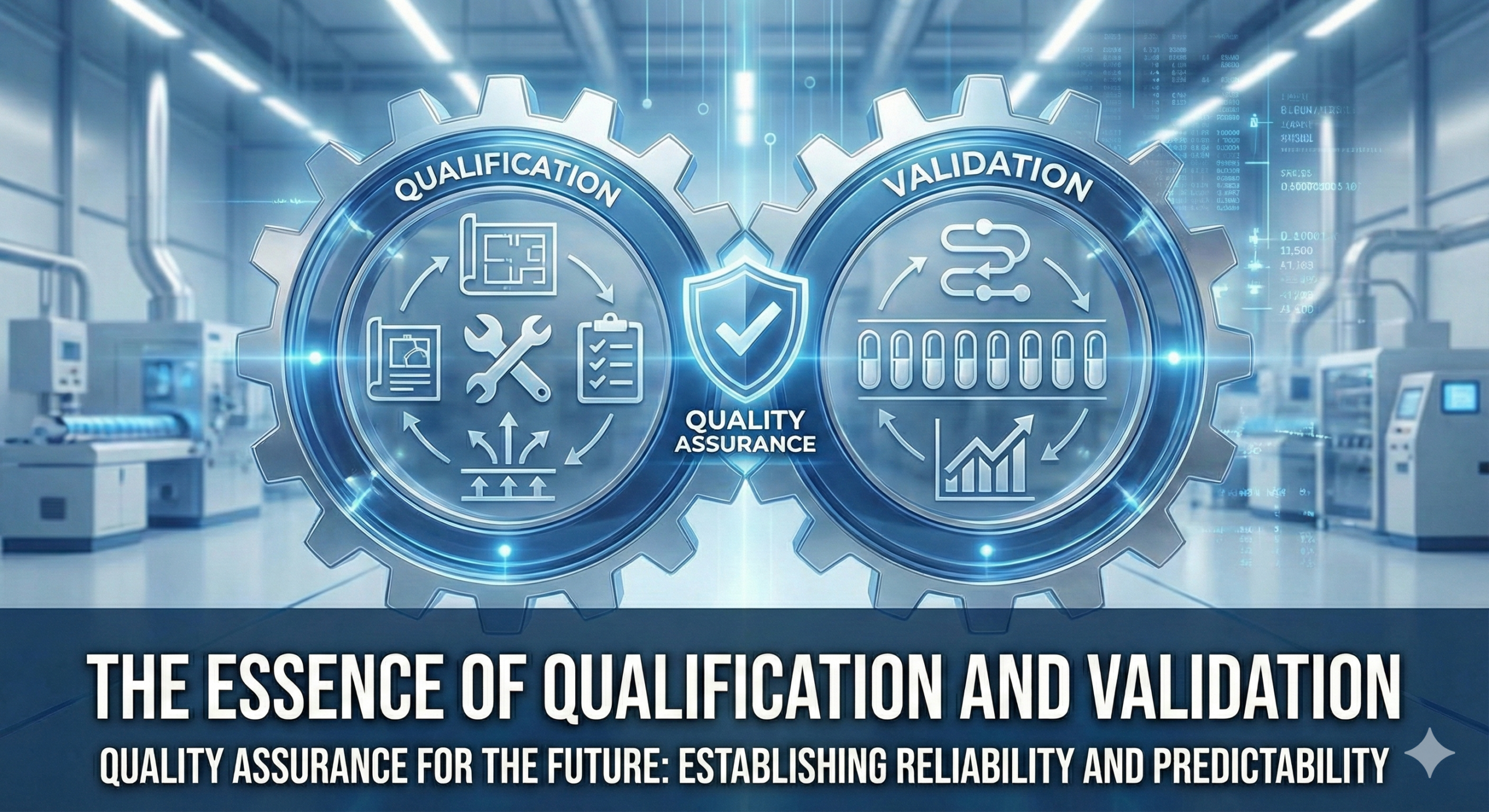
The Essence of Qualification and Validation
The Essence of Suitability: Fitness for Purpose
Imagine an unlikely scenario where a surgical scalpel is unavailable during an operation. Suppose you purchase the finest knife from a prestigious cutlery shop nearby. Being a premium knife, its product quality is undoubtedly excellent. However, there is a critical point to consider here. Despite the exceptional quality of this premium knife, it is wholly unsuitable for performing surgery.
Why is this the case? It is because this knife does not conform to the intended purpose of surgery. It is not applicable. Even though the knife itself may be of excellent product quality, it does not possess the quality required for the specific task at hand.
In the healthcare industry, it is imperative that the specifications of materials used or products manufactured properly match the intended purpose and User Requirement Specifications (URS). This concept is expressed in English as “Fitness for Purpose” or “Fit for Intended Use.” It is critically important to use items that are properly suited to the purpose and to ensure they are appropriately matched to that purpose. This is also a fundamental principle of quality management systems such as ISO 9001.
The Importance of Suitability: Risks of Non-Conformity
Let us consider another example. Suppose you want to tighten a Phillips-head screw at home. However, you cannot find a Phillips screwdriver. As often happens, it is possible to temporarily tighten a Phillips screw with a flathead screwdriver. However, this requires careful consideration. Fundamentally, a flathead screwdriver does not conform to a Phillips-head screw. If you continue tightening screws with a non-conforming tool, the screw head will eventually become stripped. Repeating this action multiple times may result in damage to the screwdriver itself, potentially leading to accidents.
To illustrate this in pharmaceutical manufacturing, when cleaning and sterilizing laboratory equipment with a steam sterilizer, using a steam nozzle with a slightly larger or smaller diameter than specified may result in damage to the test equipment. Additionally, if the set temperature or pressure does not match the product’s requirement specifications, sterilization may be incomplete or containers may be damaged. Thus, when the specifications of manufacturing equipment do not align with the requirements of the product being manufactured, product quality issues or accidents can occur.
Therefore, as repeatedly emphasized, it is critically important to align the specifications of equipment and systems with the User Requirement Specifications (URS) and to verify that they actually function according to those specifications.
Definitions of Validation and Qualification
The activity of ensuring that something definitely conforms is called Validation. Validation refers to the work of confirming that processes and operational procedures properly match user requirements. In Japanese, this is called “confirmation of appropriateness” (妥当性の確認).
On the other hand, the activity of confirming that equipment and systems themselves function according to design specifications is called Qualification. Qualification is conducted in the following stages:
| Stage | English Term | Description |
| Design Qualification | DQ (Design Qualification) | Confirms that the design meets User Requirement Specifications |
| Installation Qualification | IQ (Installation Qualification) | Confirms that equipment has been installed according to specifications |
| Operational Qualification | OQ (Operational Qualification) | Confirms that equipment operates normally within specification ranges |
| Performance Qualification | PQ (Performance Qualification) | Confirms that required performance is met under actual use conditions |
These concepts are specified in international guidelines such as ICH Q7 (Good Manufacturing Practice Guide for Active Pharmaceutical Ingredients), ICH Q9 (Quality Risk Management), and ICH Q10 (Pharmaceutical Quality System), and are also required by Japan’s GMP ministerial ordinance (Standards for Manufacturing Control and Quality Control of Pharmaceuticals).
Risk-Based Approach and Quality Assurance Levels
Consider another example. Suppose there is a wooden stick. The risk varies depending on how this stick is used. For instance, if this stick is used as an ice candy stick, the risk is relatively low. On the other hand, if this stick is used as a medical device, such as a tongue depressor, the risk increases because it comes into direct contact with the human body.
In other words, risks vary significantly depending on the intended use, and the level of quality assurance also changes accordingly. This is called a Risk-Based Approach and is systematized in ICH Q9. To put it simply, if the pharmaceutical product being manufactured and marketed is a vitamin preparation, nutritional supplement, or general gastrointestinal medicine, the risk is not particularly high. Even when manufactured in the same facility with the same structural equipment, the risk is relatively low, so the quality assurance level may be managed at a relatively standard level.
Conversely, even for pharmaceutical products manufactured with the same structural equipment and the same formulation devices, anticancer drugs, antiviral drugs, psychotropic drugs, blood products, vaccines, and biological products carry very high risks of health hazards to patients. In such cases, a more stringent quality assurance system must be established.
Specifically, risk levels and quality assurance levels vary based on the following factors:
Factors that increase risk:
- Drugs with narrow therapeutic windows (small difference between effective dose and toxic dose)
- Parenteral formulations such as injections
- Biological products and cell/gene therapy products
- Drugs used by immunosuppressed patients, children, or elderly patients
- Products where contamination can lead to severe health hazards
For these high-risk products, more detailed qualification assessments, more frequent validation, and more stringent monitoring are required.
Summary: The Essence of Quality and the Responsibility of Continuous Supply
As previously mentioned, it is important to align the product itself with requirements, and to align manufacturing processes and manufacturing equipment with requirements. However, another crucial point is that risks differ depending on the therapeutic area and the disease for which the pharmaceutical product is intended, and the levels of quality assurance and quality control also vary accordingly.
What exactly is quality? Quality is first and foremost the requirement standard in relation to the customer’s payment, and good quality means a state that meets customer requirements. The ISO 9000 series defines quality as “the degree to which a set of inherent characteristics of an object fulfills requirements.”
Conversely, what manufacturers and pharmaceutical companies must do is to continuously manufacture and supply products that meet user requirements with the same specifications and the same quality. This is called Consistency or Reproducibility and constitutes the core concept of GMP (Good Manufacturing Practice).
Qualification and validation are scientific and systematic approaches to achieving this quality assurance and are indispensable activities for ensuring patient safety and product efficacy. The latest ICH Q12 (Technical and Regulatory Considerations for Pharmaceutical Product Lifecycle Management) emphasizes the importance of conducting these activities continuously throughout the product lifecycle.

Comment