
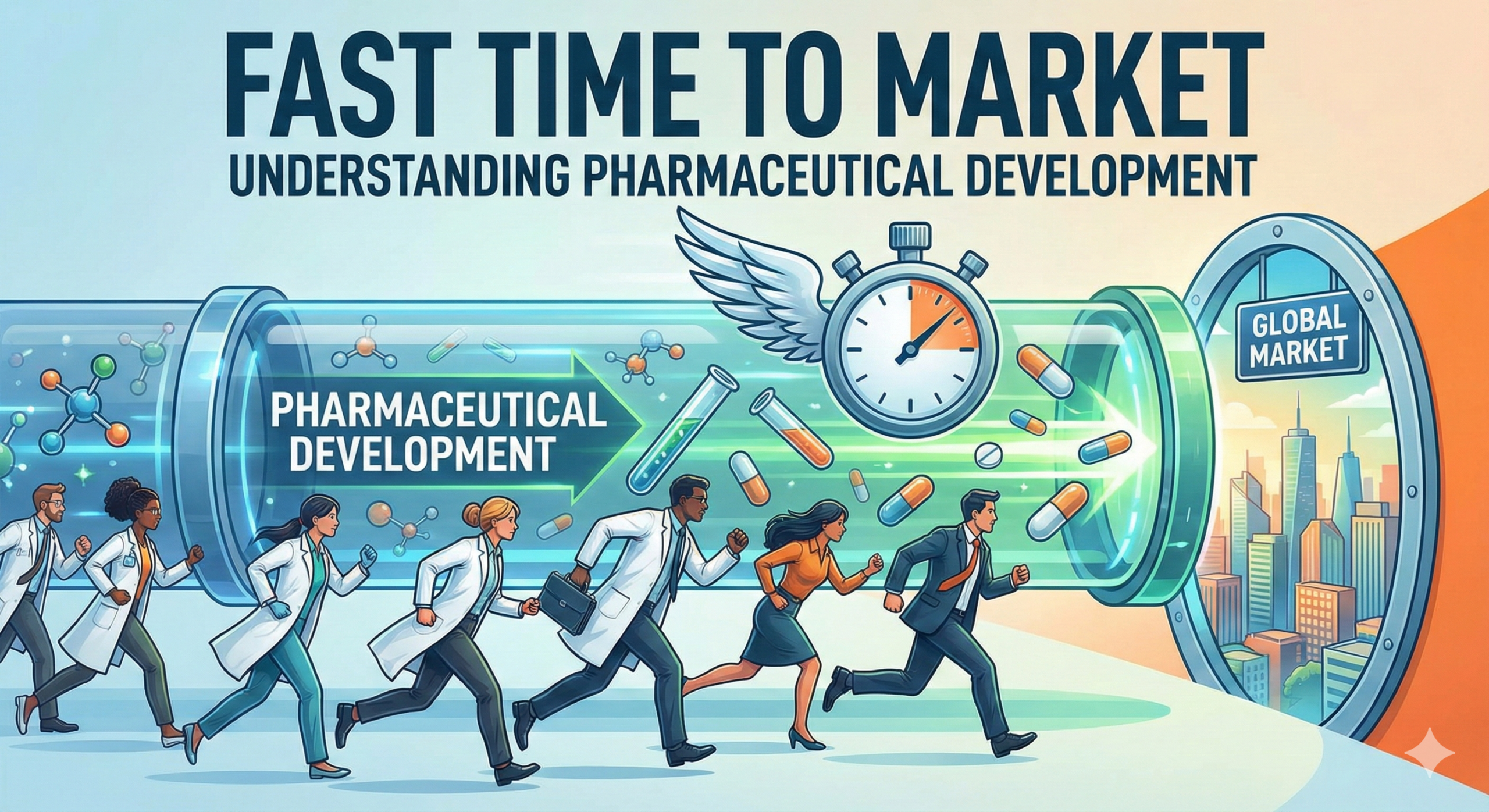
Understanding “Fast Time to Market” in Pharmaceutical Development
In the world of pharmaceutical development, the concept of “Fast time to Market” (reducing time to market launch) represents far more than a mere corporate strategy—it is a critical concept directly tied to patients’ lives. This article explores the importance and current state of this concept.
The Mechanism of Pharmaceutical Patents and Their Economic Impact
Pharmaceutical products are granted patent protection. While the basic patent term is 20 years from the filing date, the actual period during which a drug can be sold exclusively is typically around 10-15 years, as considerable time is required for clinical trials and regulatory approval processes before the drug can be marketed. In some countries, including the United States, European Union (EU), and Japan, patent term extension systems exist to compensate for the time lost during regulatory review, potentially adding up to 5 years to the patent life in certain jurisdictions.
When this patent period expires, generic drugs (post-patent medicines) enter the market, causing the price and sales of the original branded drug to decline dramatically. This phenomenon is known as the “patent cliff,” and it significantly impacts pharmaceutical companies’ revenues. Typically, within six months of generic drug entry, sales of the original branded drug can decrease by 50-80%.
Representative Cases of Patent Cliff
| Drug Name | Generic Name | Indication | Annual Sales Before Patent Expiry | Impact After Patent Expiry |
| Lipitor | Atorvastatin | Hyperlipidemia | Approx. $13 billion (2011) | Decreased to approx. $3.9 billion in 1 year (approx. 70% decline) |
| Plavix | Clopidogrel | Antiplatelet | Approx. $7 billion (2012) | Decreased by approx. 90% in several months |
| Seroquel | Quetiapine | Schizophrenia | Approx. $6 billion (2012) | Decreased to approx. $1.5 billion in 1 year (approx. 75% decline) |
For instance, Lipitor (generic name: atorvastatin), once the world’s top-selling drug for treating hyperlipidemia, saw its annual sales plummet from approximately $13 billion to about $3.9 billion within a year following patent expiration in 2011-2012. Such dramatic shifts in revenue structure have profound effects on pharmaceutical companies’ research and development investment cycles.
To illustrate the daily economic impact: a pharmaceutical product generating annual sales of 36 billion yen translates to approximately 100 million yen per day in simple calculation. In other words, launching this drug even one day earlier could potentially generate an additional 100 million yen in revenue. This economic impact underscores the critical importance of Fast time to Market.
The Reality of Global Competition
Competition in pharmaceutical development is extraordinarily intense. When one researcher discovers a promising new drug candidate, numerous research teams worldwide may be working on similar discoveries. While the exact number varies by therapeutic area and target, the principle holds true: no matter how original the research appears, there is a high likelihood that similar research is being conducted in parallel elsewhere around the globe.
This reality demonstrates that minimizing the time from “discovery” to “market launch” is critically important. The first company to bring a product to market secures the patent, and subsequent companies are restricted from market entry even with similar compounds due to patent infringement concerns. It truly is a “first-come, first-served” environment.
Strategies for Achieving Fast Time to Market
Strategy 1: Streamlining the Research and Development Process
Traditional pharmaceutical development required 10-15 years from basic research through preclinical studies, clinical trials (Phase I-III), regulatory submission, and review to market launch. However, in recent years, the following initiatives have been employed to shorten this timeline:
Application of high-throughput screening technology: Automated systems can test hundreds of thousands of compounds rapidly, accelerating the identification of promising drug candidates.
AI-driven drug target discovery: Machine learning algorithms analyze vast biological datasets to identify novel therapeutic targets and predict drug-target interactions with greater accuracy than traditional methods.
In silico drug efficacy and toxicity prediction: Computer simulations and molecular modeling enable researchers to predict a compound’s behavior before extensive laboratory testing, reducing the number of compounds that need to be physically synthesized and tested.
Utilization of omics analysis technologies: Genomics, proteomics, and metabolomics approaches provide comprehensive biological insights that help identify biomarkers and patient populations most likely to benefit from specific therapies.
Implementation of platform technologies: Modular drug development approaches, such as antibody-drug conjugate (ADC) platforms or mRNA vaccine platforms, allow for faster development of multiple products using proven technological frameworks.
Strategy 2: Accelerating Clinical Development
Clinical trials are the most time-consuming and costly process in pharmaceutical development. To shorten this period, the following methodologies have been introduced:
Adaptive design: A method that analyzes data during the trial’s progress and flexibly modifies the trial design based on emerging results. This approach, endorsed by regulatory authorities including the FDA and EMA, allows for dose adjustments, sample size modifications, or early termination for futility or overwhelming efficacy.
Seamless clinical trials: Conducting Phase II/III consecutively or combining them into a single adaptive trial to save time. This approach eliminates the gap between phases and allows for continuous enrollment and data collection.
Biomarker utilization: Using indicators that can predict efficacy and safety at early stages. Companion diagnostics and predictive biomarkers enable enrichment strategies that select patients most likely to respond to treatment, thereby increasing trial success rates and reducing required sample sizes.
Real-world data utilization: Leveraging post-marketing data for regulatory submissions. Real-world evidence (RWE) derived from electronic health records, claims data, and patient registries is increasingly accepted by regulatory authorities to support drug approvals, label expansions, and post-marketing safety assessments.
Decentralized clinical trials (DCTs): Utilizing telemedicine, home health visits, and wearable devices to conduct trials remotely, which accelerates patient recruitment, improves retention, and reduces geographic barriers. This approach gained significant momentum following the COVID-19 pandemic and is now a standard consideration in trial design.
Master protocols: Implementing basket and umbrella trial designs that allow multiple therapies or patient populations to be studied simultaneously within a single protocol framework, improving efficiency and accelerating time to results.
Strategy 3: Strengthening Collaboration with Regulatory Authorities
To expedite the drug approval process, early collaboration with regulatory authorities is crucial. Modern regulatory frameworks offer several pathways to accelerate development and review:
Fast Track designation: A system that prioritizes review of drugs addressing serious conditions or unmet medical needs. In the United States, this designation facilitates more frequent meetings with the FDA and enables rolling review of application sections as they are completed.
Breakthrough Therapy designation: An expedited review system for innovative therapeutics demonstrating substantial improvement over existing treatments based on preliminary clinical evidence. This designation, introduced by the FDA in 2012 and adopted by other agencies, provides intensive guidance from regulatory authorities throughout development.
Conditional early approval systems: Approval based on limited data with requirements for post-marketing data collection. The European Medicines Agency’s (EMA) conditional marketing authorization and Japan’s conditional early approval system allow earlier patient access while ensuring continued evidence generation.
Priority Review: Shortened review timelines (typically 6 months instead of 10 months in the US) for drugs that offer significant improvements in treatment.
Accelerated Approval: Based on surrogate or intermediate endpoints that are reasonably likely to predict clinical benefit, with confirmation of benefit required in post-marketing studies.
Utilizing pre-submission consultations with regulatory authorities: The Pharmaceuticals and Medical Devices Agency (PMDA) in Japan, the Food and Drug Administration (FDA) in the United States, and the European Medicines Agency (EMA) all offer various consultation mechanisms. These include Type B meetings, scientific advice, and protocol assistance that help align development programs with regulatory expectations early in the process.
ICH (International Council for Harmonisation) harmonization: The ICH continues to develop guidelines that harmonize regulatory requirements across regions. Recent guidelines such as ICH E6(R3) for Good Clinical Practice and ICH E17 for multi-regional clinical trials facilitate global drug development strategies.
ORBIS program: An initiative led by the FDA that allows concurrent submission and review of oncology drugs among international partners (including Australia, Canada, Switzerland, Singapore, and the UK), enabling near-simultaneous approvals across multiple countries.
Comparison of Expedited Approval Systems by Major Regulatory Authorities
| Regulatory Authority | Program Name | Target | Key Features | Review Time Reduction |
| FDA (US) | Fast Track | Serious conditions & unmet needs | Rolling review possible | Earlier than standard |
| FDA (US) | Breakthrough Therapy | Drugs showing remarkable improvement | Intensive guidance | Eligible for Priority Review |
| FDA (US) | Priority Review | Significant improvement | 6-month review | 4 months shorter |
| FDA (US) | Accelerated Approval | Use of surrogate endpoints | Post-market confirmation required | Several years possible |
| EMA (Europe) | Conditional Marketing Authorization | Unmet needs | Approval with limited data | 1-2 years shorter |
| EMA (Europe) | PRIME Scheme | Breakthrough treatments | Early scientific advice | Shortens entire development |
| PMDA (Japan) | Sakigake Designation System | Innovative drugs | Priority consultation & review | Approx. 6 months shorter |
| PMDA (Japan) | Conditional Early Approval System | Serious diseases | Early approval followed by data collection | 1-3 years shorter |
Challenges and Future Outlook for Fast Time to Market
Fast time to Market is essential for enhancing corporate competitiveness, but balancing this with ensuring safety and efficacy remains a significant challenge. If development timeline reduction leads to easy compromises, serious adverse effects may be discovered post-marketing, ultimately resulting in loss of corporate credibility and patient trust. Notable examples include the withdrawal of Vioxx (rofecoxib) in 2004 and, more recently, issues with certain expedited approvals that subsequently failed to demonstrate clinical benefit in confirmatory trials.
The future of pharmaceutical development requires not merely time reduction but a “trinity approach” of “faster, safer, and more effective.” Advances in digital technology are improving clinical trial efficiency through electronic data capture, remote monitoring, and artificial intelligence-driven safety signal detection. The evolution of regulatory science, including the development of complex innovative trial designs and adaptive pathways, is paving the way to achieve both Fast time to Market and quality assurance of pharmaceutical products.
Key Approaches to Achieving Fast Time to Market
| Approach Category | Specific Methods | Expected Time Savings | Key Considerations |
| R&D Process Optimization | AI-driven target discovery, High-throughput screening | 1-3 years in discovery phase | Requires significant upfront investment in technology and infrastructure |
| Clinical Trial Innovation | Adaptive designs, Master protocols, DCTs | 1-2 years in clinical development | Must maintain scientific rigor and regulatory acceptance |
| Regulatory Strategy | Expedited pathways, Early agency engagement | 6-18 months in review process | Requires robust benefit-risk profile and unmet medical need |
| Technology Integration | Real-world data, Digital biomarkers | Ongoing efficiency gains | Must ensure data quality and patient privacy protection |
As global drug discovery competition intensifies, Japanese pharmaceutical companies are also accelerating efforts to achieve Fast time to Market to maintain international competitiveness. Looking ahead, strengthening collaboration among industry, government, and academia is expected to build an ecosystem that delivers innovative pharmaceuticals to patients more rapidly. The Japan Agency for Medical Research and Development (AMED) plays a crucial role in coordinating these efforts and promoting translational research.
Furthermore, emerging technologies such as quantum computing for drug design, organs-on-chips for preclinical testing, and blockchain for supply chain integrity promise to further transform the pharmaceutical development landscape in the coming years.
Conclusion
Fast time to Market in pharmaceutical development holds significant meaning not only for corporate profits but also for patients eagerly awaiting innovative treatments. Delivering new drugs even one day earlier can improve patients’ quality of life and, in some cases, save lives. The COVID-19 pandemic vividly demonstrated this reality, with vaccines developed and authorized in record time—approximately 11 months from sequence identification to emergency use authorization—compared to the typical 10-15 year timeline.
Within the constraints of patent terms, how can companies shorten development periods while ensuring quality? This remains one of the greatest challenges facing modern pharmaceutical companies. Through continued technological innovation and regulatory evolution, we can expect new solutions to emerge for this challenge. The successful integration of cutting-edge science, pragmatic regulatory frameworks, and patient-centered approaches will define the next generation of pharmaceutical development, ultimately benefiting patients worldwide who depend on timely access to life-saving and life-improving medicines.
As we move forward, the concept of Fast time to Market must evolve beyond speed alone to encompass efficiency, quality, and patient value, creating a sustainable model for innovation that serves the needs of patients, healthcare systems, and society as a whole.

Comment