
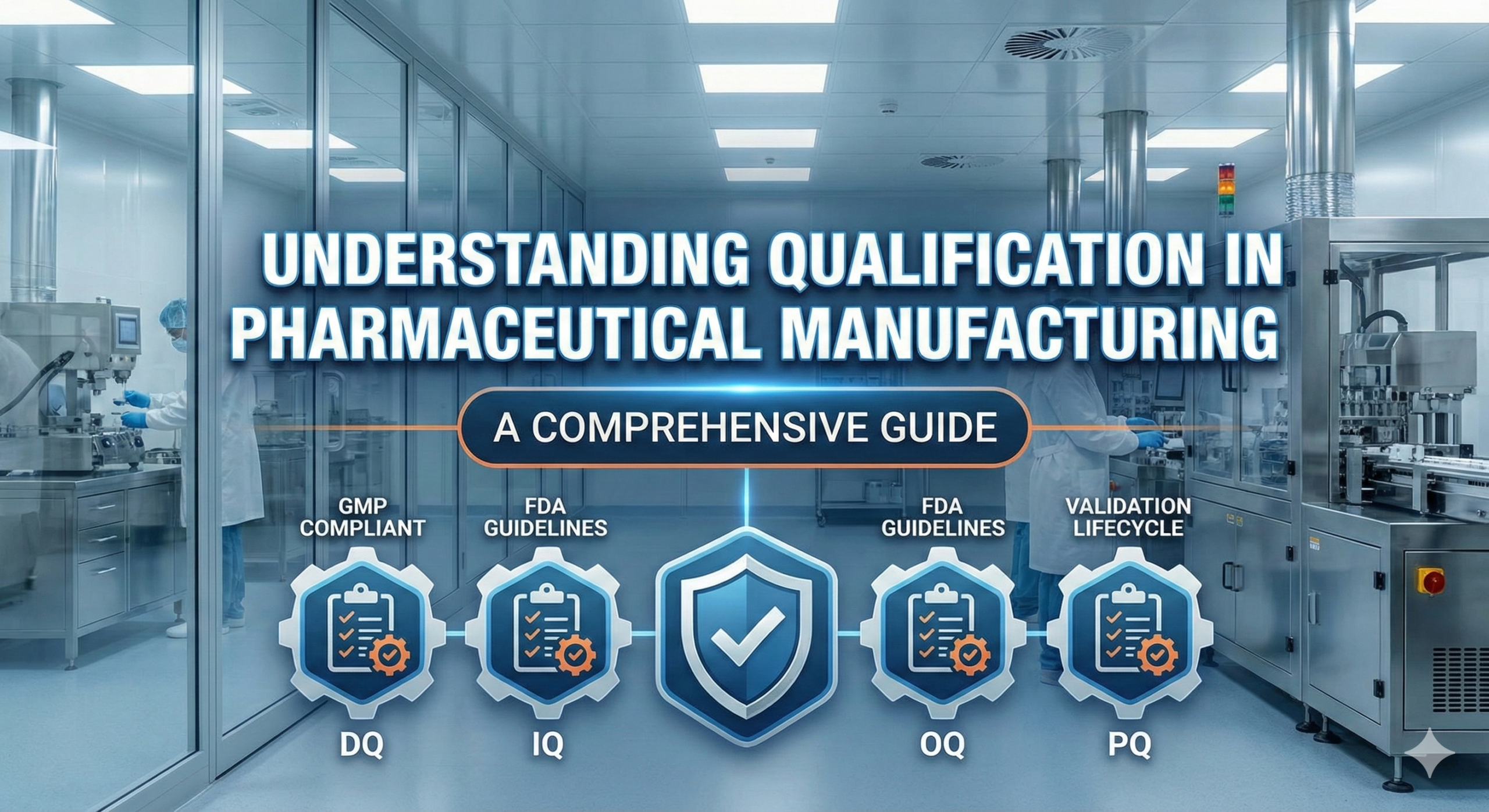
Understanding Qualification in Pharmaceutical Manufacturing: A Comprehensive Guide
The Fundamental Concept: Fitness for Purpose
Imagine an unlikely scenario: a surgeon needs to perform an operation but doesn’t have a scalpel. Instead, they purchase the highest-quality knife from a premium cutlery store. While this knife undoubtedly represents excellent quality in terms of craftsmanship and materials, one critical question remains: is this high-quality knife suitable for surgical procedures? The answer is definitively no.
If a surgeon were to attempt an operation with such a knife, the consequences could be catastrophic. This example illustrates a fundamental principle: when the specifications of a tool do not match its intended use, accidents and failures become inevitable.
Let’s consider another relatable example. Suppose you need to tighten a Phillips (cross-head) screw at home but cannot find a Phillips screwdriver. Technically, it is possible to turn a Phillips screw using a flathead screwdriver. However, this approach carries significant risks. Using an incompatible tool may strip the screw head, rendering it unusable, and could also damage the screwdriver itself.
These examples demonstrate a critical principle in pharmaceutical manufacturing: it is essential to ensure that equipment, facilities, and systems conform to required specifications and are fit for their intended use. This fundamental concept applies equally to the structural equipment and facilities used in pharmaceutical manufacturing.
Regulatory Foundation: ICH Q7 Guideline on Active Pharmaceutical Ingredient GMP
The “Guideline on Good Manufacturing Practice for Active Pharmaceutical Ingredients” (commonly known as ICH Q7, originally ICH Q7A) was issued in Japan on November 2, 2001, by the Ministry of Health, Labour and Welfare (notification number: Iyakuhatsu No. 1200). This guideline represents a harmonized international standard developed through the International Council for Harmonisation of Technical Requirements for Pharmaceuticals for Human Use (ICH).
Section 12.3 of ICH Q7 addresses qualification and contains the following critical requirements:
12.30 Prior to initiating process validation activities, qualification of critical equipment and ancillary systems should be completed. Qualification is typically conducted by performing the following activities, individually or in combination:
- Design Qualification (DQ): Documented verification that the proposed design of facilities, equipment, or systems is suitable for the intended purpose.
- Installation Qualification (IQ): Documented verification that the equipment or systems, as installed or modified, comply with the approved design and the manufacturer’s recommendations.
- Operational Qualification (OQ): Documented verification that the equipment or systems, as installed or modified, perform as intended throughout the anticipated operating ranges.
- Performance Qualification (PQ): Documented verification that the equipment and ancillary systems, as connected together, can perform effectively and reproducibly based on the approved process method and specifications.
This ICH Q7 guideline clearly established that validation of structural equipment and facilities means “conducting qualification.” In other words, validation applied to structural equipment and facilities (hardware) is specifically termed “qualification.”
Components and Structure of Qualification
Qualification comprises four essential stages:
| Stage | Full Name | Purpose | Key Focus |
| DQ | Design Qualification | Verify suitability of design | Confirm design meets intended use |
| IQ | Installation Qualification | Verify correct installation | Confirm equipment installed per specifications |
| OQ | Operational Qualification | Verify operational performance | Confirm equipment operates within design parameters |
| PQ | Performance Qualification | Verify consistent performance | Confirm equipment performs effectively in actual use |
Importantly, qualification must be completed before initiating process validation activities. This sequential relationship is fundamental to ensuring pharmaceutical quality.
Understanding Hardware, Software, and Computerized Systems
Qualification applies to hardware (equipment, facilities, systems, and utilities). Hardware consists primarily of physical components—mechanical, electrical, and structural elements. When hardware is controlled by software (including firmware, programmable logic controllers, or other automated control systems), it becomes a computerized system (also called an automated system).
For computerized systems, Computer System Validation (CSV) is conducted as an integral component of the qualification process. CSV cannot be performed effectively in isolation; it must be integrated within the broader qualification framework.
Integration with Process Validation and Quality Systems
Once hardware has been qualified—meaning its suitability for intended use has been verified—process validation can proceed. Process validation combines the qualified hardware with “software” elements (in this context, meaning standard operating procedures, training programs, calibration protocols, maintenance procedures, and other operational controls) to verify that the complete manufacturing process consistently produces products meeting predetermined specifications.
Contemporary Regulatory Context and Risk-Based Approaches
The pharmaceutical regulatory landscape has evolved significantly since ICH Q7 was first published. Several important updates and complementary guidelines now inform qualification practices:
ICH Q9(R1) Quality Risk Management (adopted January 2023, effective July 2023): This revised guideline addresses quality risk management principles that should be integrated throughout qualification and validation activities. The revision emphasizes:
- Reducing subjectivity in risk assessments
- Implementing risk-based decision-making
- Managing product availability risks related to manufacturing quality issues
- Applying appropriate formality levels based on complexity, uncertainty, and importance
Risk-based approaches enable companies to apply qualification efforts proportionate to the risk that equipment or systems pose to product quality and patient safety.
Computer Software Assurance (CSA): The U.S. FDA introduced CSA guidance in 2022 as a risk-based alternative to traditional CSV approaches. CSA encourages:
- Leveraging vendor evidence and documentation
- Using unscripted testing where appropriate
- Focusing validation efforts on critical functionality
- Reducing documentation burden while maintaining compliance
Data Integrity Principles: Modern qualification must address data integrity throughout the equipment lifecycle. Regulatory authorities worldwide emphasize ALCOA+ principles (Attributable, Legible, Contemporaneous, Original, Accurate, plus Complete, Consistent, Enduring, and Available).
Practical Application: Equipment Classification
Modern qualification approaches employ risk-based classification systems, such as the GAMP 5 (Good Automated Manufacturing Practice) framework, which categorizes systems by complexity:
Category 1: Infrastructure systems (e.g., operating systems) Category 2: Non-configured products (standard instruments) Category 3: Configured products (e.g., configured LIMS) Category 4: Customized products (customized applications) Category 5: Custom applications (internally developed systems)
Higher category systems require more extensive qualification documentation and testing, reflecting their greater complexity and associated risk.
The Qualification Lifecycle
Qualification is not a one-time event but an ongoing process throughout the equipment lifecycle:
- Planning Phase: Define qualification strategy, scope, and acceptance criteria
- Execution Phase: Conduct DQ, IQ, OQ, and PQ according to approved protocols
- Operational Phase: Maintain qualified state through change control, preventive maintenance, calibration, and periodic review
- Decommissioning Phase: Document proper retirement when equipment is replaced or discontinued
Change Management and Requalification
When changes occur to qualified equipment—whether modifications, upgrades, or repairs—a documented change control process must evaluate the impact on the qualified state. Depending on the nature and extent of changes, partial or full requalification may be necessary to ensure continued suitability for intended use.
Global Harmonization and Future Directions
While ICH Q7 provides harmonized international guidance, qualification practices must also comply with regional requirements such as:
- 21 CFR Part 11 (FDA electronic records and signatures)
- EU GMP Annex 11 (Computerised Systems)
- PIC/S GMP Guide (Pharmaceutical Inspection Convention)
Emerging technologies—including continuous manufacturing, process analytical technology (PAT), artificial intelligence, and cloud-based systems—present new challenges for qualification strategies. Regulatory authorities continue to develop guidance addressing these innovations while maintaining fundamental principles of ensuring fitness for intended use.
Conclusion: The Essential Role of Qualification
Qualification serves as the documented foundation demonstrating that pharmaceutical manufacturing equipment and facilities are suitable for their intended purpose and capable of consistently operating within required parameters. By establishing this foundation before process validation, qualification helps ensure that pharmaceutical products meet quality standards that protect patient safety and health.
Just as we would never accept surgery performed with an inappropriate tool, pharmaceutical manufacturing cannot proceed with unqualified equipment. Qualification provides the documented assurance that our manufacturing tools are truly fit for their critical purpose: producing safe, effective, high-quality medicines for patients worldwide.
Key Takeaways:
The essence of qualification is ensuring that equipment, facilities, and systems are demonstrably fit for their intended use in pharmaceutical manufacturing. Through the systematic execution of DQ, IQ, OQ, and PQ, qualification provides documented evidence that hardware meets required specifications. When integrated with contemporary risk-based approaches and quality risk management principles from ICH Q9(R1), qualification serves as an essential prerequisite to process validation and ongoing pharmaceutical quality assurance.

Comment