
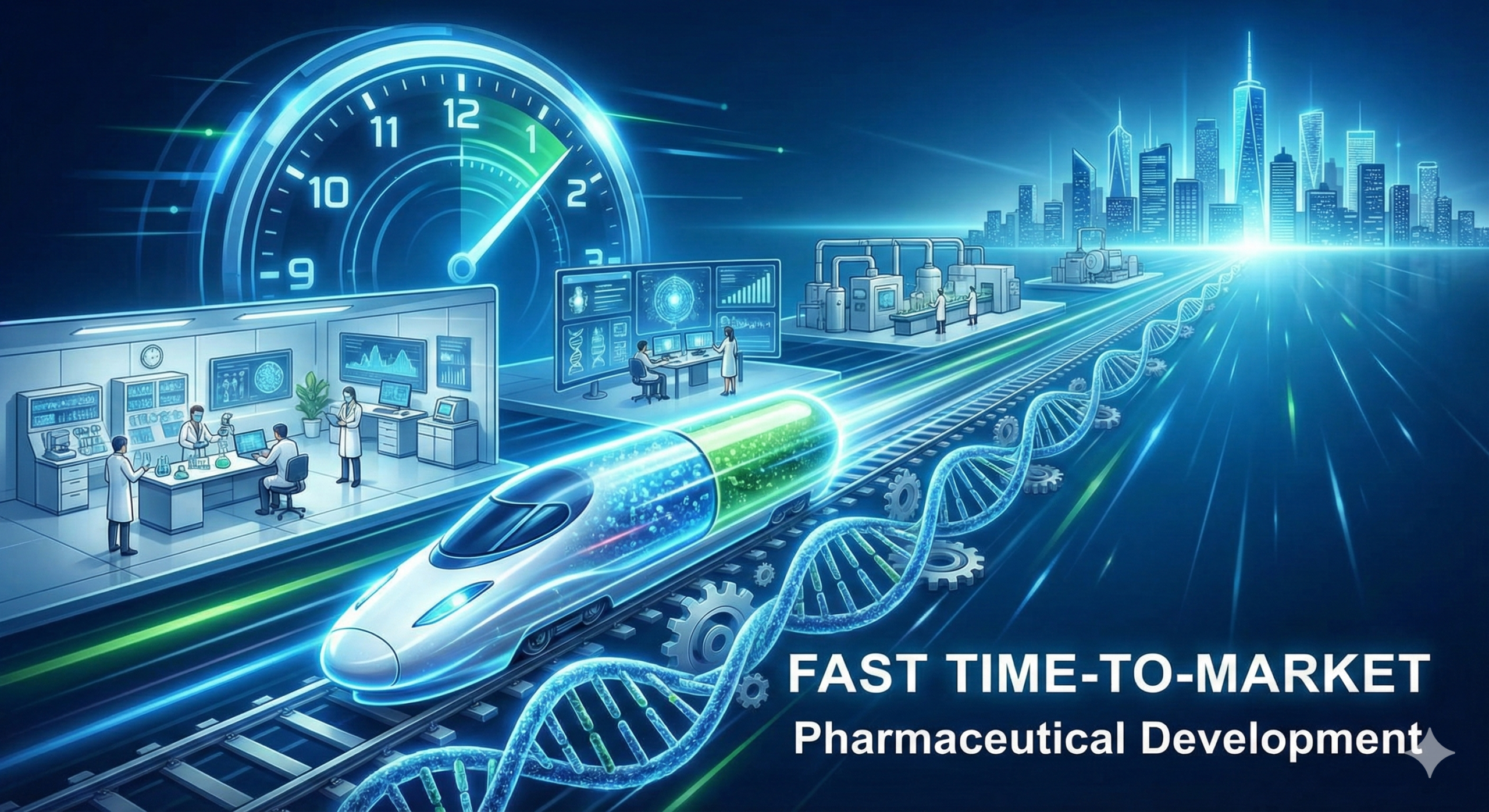
When I first began working in the pharmaceutical industry approximately 28 years ago, I learned about the concept of “Fast Time to Market” – the imperative to bring new drugs to market as quickly as possible.
In pharmaceutical development, Fast Time to Market is critically important.
For general consumer products, premature market entry can sometimes be detrimental. There are cases where timing the product launch appropriately is essential for success.
However, in the case of pharmaceuticals, the goal is to complete development and bring new drugs to market even one day earlier.
Consider a scenario where a researcher discovers a new compound. It is often said that approximately 100 other researchers worldwide have likely noticed the same thing.
The Cost and Timeline of New Drug Development
New drug development requires substantial investment, with costs ranging from several hundred billion yen (approximately $2-10 billion USD) and development periods spanning 10 to 15 years or more. Recent research indicates that the median cost of bringing a new drug to market is approximately $985 million, with an average of $1.3 billion, though these figures vary significantly depending on the therapeutic area and development complexity.
In pharmaceutical market entry, there can be a significant difference in drug pricing depending on whether a product is first or second to market.
The Components of Drug Development Timeline
The period until a new drug reaches the market includes both the research and development period at the pharmaceutical company (including application preparation) and the review period by regulatory authorities. Shortening both of these periods is an urgent priority.
In the diagram referenced in the original text, Area A represents the research and development phase (pre-marketing), while Area B represents the post-marketing phase. The profit for pharmaceutical companies is derived from subtracting Area A (research and development costs) from Area B (sales revenue).
The Economic Impact of Development Time Reduction
Shortening the development period is critically important for profit maximization.
For example, for a drug that generates annual sales of 36 billion yen (approximately $240 million USD), reducing the research and development time by just one day translates to an additional profit of 100 million yen (approximately $670,000 USD).
This is why Fast Time to Market is so important.
Key Factors in Accelerating Time to Market
The period until a new drug reaches the market includes the research and development period at the pharmaceutical company (including application preparation) and the review period by regulatory authorities. Both must be shortened as an urgent priority.
(1) Shortening the Period for Creating Various Reports Through Research and Development
This involves ensuring compliance with various regulations and guidelines:
Good Laboratory Practice (GLP): Standards for conducting non-clinical laboratory studies that ensure the quality and integrity of data generated during the testing of pharmaceutical products.
Good Clinical Practice (GCP): International ethical and scientific quality standards for designing, conducting, recording, and reporting clinical trials that involve human participants. GCP provides assurance that the rights, safety, and well-being of trial subjects are protected, and that clinical trial data are credible.
Good Manufacturing Practice (GMP): Quality management system covering the manufacture and testing of pharmaceutical products to ensure they are consistently produced and controlled according to quality standards appropriate for their intended use.
These regulations also include proper document management systems to maintain data integrity throughout the development process.
(2) Shortening the Period for Creating New Drug Applications
Key elements include:
Dossier Management: Systematic compilation and organization of all regulatory submission documents.
Publishing: Preparation of submission-ready documentation packages.
Global Simultaneous Submissions: Coordinating regulatory submissions across multiple regions (US, EU, Japan, etc.) to minimize time-to-market differences between regions.
Electronic Submission: Digital submission of regulatory applications to streamline the review process.
eCTD (Electronic Common Technical Document): An international standard format for submitting regulatory information to health authorities. The eCTD specification was developed by the International Council for Harmonisation of Technical Requirements for Pharmaceuticals for Human Use (ICH).
| eCTD Version | Implementation Status | Key Features |
|---|---|---|
| eCTD v3.2.2 | Current standard (as of 2024) | Established electronic submission format |
| eCTD v4.0 (ICH M8) | Accepted since April 2022 in Japan; Mandatory from April 2026 | Enhanced data structure, improved lifecycle management, better global harmonization |
The transition to eCTD v4.0 represents a significant advancement in regulatory submission efficiency, offering improved data organization, enhanced traceability, and better support for lifecycle management of pharmaceutical products.
(3) Regulatory Review Period
Factors affecting review time include:
- Reduction in the number of queries: Comprehensive and well-organized initial submissions reduce back-and-forth communication.
- Speed of responses to queries: Rapid turnaround on regulatory authority questions accelerates the overall timeline.
- Quality of submissions: High-quality initial submissions that anticipate potential concerns can significantly reduce review cycles.
Challenges Facing the Pharmaceutical Industry
However, new drug development faces numerous challenges that continue to evolve:
Accelerated Generic Competition: The time until generic drugs enter the market has become progressively shorter. After patent expiration, the market share of branded drugs typically erodes rapidly as generic manufacturers introduce lower-cost alternatives.
Biosimilar Competition: For biologic drugs, biosimilar competition is accelerating, creating additional pricing pressure on innovative products.
Next-Generation Therapies: New therapeutic modalities such as gene therapies, cell therapies, RNA-based therapeutics, and antibody-drug conjugates are continuously being developed, raising the bar for competitive differentiation.
Increasing Development Complexity: Modern drug development increasingly targets diseases with complex or unknown mechanisms, leading to higher development costs and extended timelines.
These evolving market dynamics continue to compress profit margins and intensify the need for efficient development processes.
Patent Protection and Effective Market Exclusivity
Under current patent law, the duration of patent rights is set at 20 years from the filing date. Typically, patent applications are filed before clinical trials begin. Given that subsequent development and review processes take 10-15 years, pharmaceutical companies can effectively maintain exclusive sales periods of only 5-10 years.
Patent Term Extension
However, recognizing that new drug development and review require considerable time to ensure safety, governments have established patent extension systems. In Japan, pharmaceutical companies can apply for patent extensions of up to 5 years for “periods during which the patented invention could not be practiced,” partially compensating for the time lost during regulatory approval processes.
| Jurisdiction | Maximum Extension Period | Key Considerations |
|---|---|---|
| Japan | 5 years | Based on the period from clinical trial initiation to regulatory approval |
| United States | 5 years | Limited to half the investigational period plus full approval review period; total effective patent life cannot exceed 14 years from approval |
| European Union | 5 years (via SPC system) | Supplementary Protection Certificate (SPC) system provides similar protection |
The patent term extension system is designed to balance innovation incentives with public access to medicines. It compensates for regulatory delays while ensuring that patent protection does not extend indefinitely.
Generic Drug Entry
After the substance patent for a new drug expires, generic drug manufacturers typically launch products with the same active ingredients, efficacy, effects, and dosage regimens as the original drug, but at lower prices. These are commonly known as “generic drugs” (for small molecule drugs) or “biosimilars” (for biologic products).
The competitive landscape has evolved significantly:
- Authorized generics: Some brand manufacturers now launch their own generic versions.
- Patent challenge strategies: Generic manufacturers may challenge patents before expiration, potentially entering the market earlier.
- Regulatory pathways: Abbreviated approval pathways (ANDA in US, Article 10(1) in EU) allow generics to enter with minimal additional testing.
The Evolution to Fast Time to Peak Sales
Currently, many pharmaceutical companies have shifted their strategic focus from Fast Time to Market to Fast Time to Peak Sales. This evolution reflects a more sophisticated understanding of commercial success – it’s not just about reaching the market quickly, but about how rapidly a product can achieve its maximum sales potential.
Key Drivers of Fast Time to Peak Sales
Market Access Strategy: Securing reimbursement approvals and favorable formulary placement in key markets.
Commercial Launch Excellence: Effective marketing, medical education, and sales force deployment to rapidly build market awareness and adoption.
Real-World Evidence Generation: Quickly generating post-marketing data that demonstrates value and supports expanded indications or label changes.
Manufacturing Scale-Up: Ensuring adequate supply to meet demand as market penetration accelerates.
Global Launch Coordination: Executing near-simultaneous launches in major markets to maximize the period of peak sales before patent expiration.
Patient Access Programs: Implementing programs that reduce barriers to patient access, particularly for high-cost specialty pharmaceuticals.
Implications for Development Strategy
This strategic shift has several implications:
The emphasis on speed to peak sales encourages pharmaceutical companies to invest in:
- Earlier manufacturing preparation and capacity building
- Pre-approval market access negotiations
- Real-world evidence strategies that begin during clinical development
- Post-marketing study designs that can rapidly support label expansions
- Global clinical development programs that support simultaneous or near-simultaneous regulatory submissions
The focus on peak sales achievement also highlights the importance of:
- Differentiation from competitors in the same therapeutic class
- Building a compelling value proposition for payers and healthcare providers
- Developing companion diagnostics or biomarkers that identify optimal patient populations
- Creating combination therapy opportunities that enhance therapeutic benefit
Current Industry Trends and Future Outlook
Digital Transformation: The pharmaceutical industry is increasingly leveraging artificial intelligence (AI) and machine learning in drug discovery and development. AI-assisted drug design can reduce the time to identify promising compounds from years to months, potentially cutting development costs by 30-50%.
Regulatory Innovation: Regulatory agencies worldwide are implementing expedited pathways for breakthrough therapies, including:
- FDA’s Breakthrough Therapy designation
- EMA’s PRIME scheme (PRIority MEdicines)
- Japan’s SAKIGAKE designation for innovative medicines
Adaptive Clinical Trials: Innovative trial designs that allow for protocol modifications based on interim results can accelerate development while maintaining scientific rigor.
Decentralized Clinical Trials: The adoption of remote monitoring, telemedicine, and home healthcare delivery in clinical trials, accelerated by the COVID-19 pandemic, is reducing patient burden and enrollment times.
Conclusion
The pharmaceutical industry’s journey from “Fast Time to Market” to “Fast Time to Peak Sales” represents a maturing understanding of what drives commercial success in drug development. While the urgency to bring new medicines to patients quickly remains paramount, success is increasingly measured not just by approval dates, but by how effectively companies can maximize the value of their innovations within the limited window of market exclusivity.
As development costs continue to rise and generic competition intensifies, the ability to compress timelines while maintaining quality and regulatory compliance becomes ever more critical. Companies that can successfully integrate cutting-edge technologies, streamlined processes, and strategic commercial planning throughout the development lifecycle will be best positioned to deliver value to patients, healthcare systems, and shareholders.
The future of pharmaceutical development lies in the intelligent application of emerging technologies, adaptive regulatory frameworks, and collaborative approaches that can further compress development timelines while ensuring the safety and efficacy that patients depend upon.

Comment