
What Kind of Companies Provide Confidence to FDA Inspectors?
Since the introduction of ISO 9001:2000, and further strengthened in ISO 9001:2015, management responsibility has been emphasized as a cornerstone of quality management systems. This principle applies not only to pharmaceutical and medical device companies but reflects a fundamental reality: regulatory authorities have limited resources for conducting inspections.
The errors that an inspector can identify during a brief inspection of just a few days represent merely the tip of the iceberg. Correcting only these surface-level findings is insufficient to ensure comprehensive quality assurance. Therefore, regulatory authorities expect that management—rather than relying solely on external inspections—will proactively establish robust Quality Systems (QS), develop comprehensive quality manuals, and demonstrate genuine commitment to quality throughout the organization.
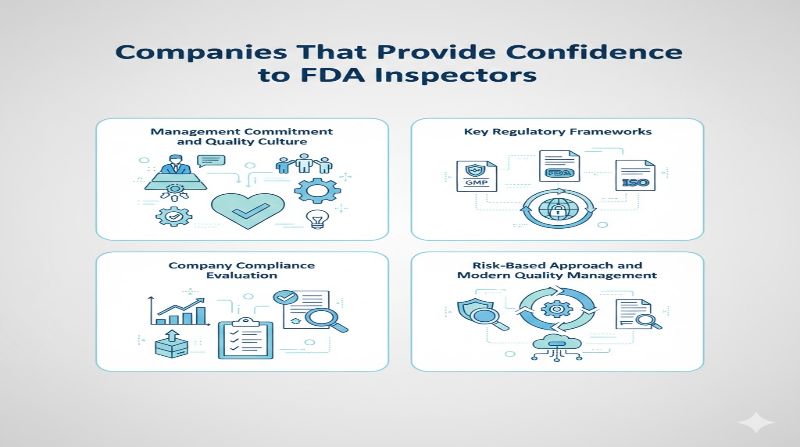
Management Commitment and Quality Culture
The quality manual created under management’s direction must be thoroughly disseminated throughout every corner of the organization. This systematic communication and implementation process constitutes internal control and quality governance. Modern quality management also emphasizes the establishment of a strong quality culture, where every employee understands their role in maintaining product quality and patient safety.
Regulatory inspectors, whether from the FDA, EMA, or other authorities, conduct system-based inspections to verify that the quality system is properly established, effectively implemented, and continuously maintained. This approach, known as system-based inspection or systems inspection, focuses on evaluating the entire quality management framework rather than simply checking individual compliance points.
Key Regulatory Frameworks
Companies must align their quality systems with relevant regulatory requirements and international standards, including:
- 21 CFR Part 820 (Quality System Regulation for Medical Devices)
- 21 CFR Part 211 (Current Good Manufacturing Practice for Pharmaceuticals)
- ISO 13485:2016 (Medical Devices – Quality Management Systems)
- ICH Q10 (Pharmaceutical Quality System)
- ISO 9001:2015 (Quality Management Systems – Requirements)
These frameworks share common principles: management leadership, risk-based thinking, process approach, and continuous improvement through the Plan-Do-Check-Act (PDCA) cycle.
What Kind of Companies Provide Confidence to FDA Inspectors?
Regulatory inspectors gain confidence in companies that demonstrate the following characteristics:
1. Effective Quality System with Documented Evidence
The quality system must be functioning effectively, with comprehensive documentation and objective evidence demonstrating compliance. This includes:
- Well-defined procedures and work instructions that are followed in practice
- Complete and accurate records that provide traceability
- Data integrity maintained throughout the product lifecycle, ensuring that data is Attributable, Legible, Contemporaneous, Original, and Accurate (ALCOA principles)
- Risk management documentation showing systematic identification, evaluation, and mitigation of quality risks
- Clear evidence of process validation and verification activities
2. Competent Internal Auditors and Robust Self-Inspection Program
The presence of highly skilled auditors with technical expertise and strong analytical capabilities is essential. These auditors must:
- Conduct thorough and objective internal audits (self-inspections) on a planned schedule
- Possess both deep technical knowledge and the ability to identify systemic issues
- Continuously verify that the quality system remains effective and compliant
- Use risk-based approaches to focus audit activities on high-risk areas
- Maintain independence and objectivity in their assessments
- Stay current with evolving regulatory requirements and industry best practices
Internal audits should cover all aspects of the quality system, including design controls, manufacturing processes, supplier management, complaint handling, and post-market surveillance.
3. Effective CAPA System and Continuous Improvement
When internal audits or other quality monitoring activities identify problems or potential areas for improvement, the company must demonstrate:
- Prompt issuance of improvement directives and corrective action preventive action (CAPA) plans
- Thorough root cause analysis to address underlying systemic issues, not just symptoms
- Effective implementation of CAPA with appropriate timelines and accountability
- Verification of CAPA effectiveness to ensure problems do not recur
- A commitment to continuous improvement that goes beyond mere compliance
- Trend analysis to identify patterns and implement preventive measures proactively
- Management review of quality metrics and CAPA effectiveness
The CAPA system should be truly preventive in nature, identifying potential issues before they impact product quality or patient safety.
4. Confident and Well-Documented Responses to Inspector Questions
During inspections, company representatives must be able to:
- Answer inspector questions with confidence, backed by solid evidence and rationale
- Provide appropriate documentation promptly and efficiently
- Explain the scientific and regulatory basis for decisions and procedures
- Demonstrate understanding of both the “what” and the “why” behind quality practices
- Show transparency and willingness to discuss both successes and challenges
- Present data and information in a clear, organized manner
- Escalate questions appropriately to subject matter experts when needed
The ability to respond effectively reflects not just good preparation for the inspection, but genuine understanding and ownership of the quality system throughout the organization.
Risk-Based Approach and Modern Quality Management
Modern quality management emphasizes a risk-based approach, as required by ISO 9001:2015, ISO 13485:2016, and ICH Q10. Companies should:
- Identify and evaluate risks throughout product lifecycle
- Implement controls proportionate to the level of risk
- Focus resources on high-risk areas
- Continuously monitor and reassess risks as circumstances change
This approach demonstrates to inspectors that the company understands its critical quality attributes and has implemented appropriate controls where they matter most.
Building Inspector Confidence Through Quality Culture
Ultimately, regulatory inspectors gain the greatest confidence from companies that demonstrate a genuine culture of quality—one where quality is not merely a compliance obligation but a core organizational value embedded in daily operations and decision-making at all levels. This culture is reflected in management commitment, employee engagement, continuous improvement, and an unwavering focus on patient safety and product quality.
Companies that embody these principles are not merely prepared for inspection; they are genuinely committed to quality excellence in everything they do.
Related Articles
- Why Software Category Classification is Necessary
- Understanding CFR: The Foundation of U.S. Regulatory Framework
- The Birth of 21 CFR Part 11: A Historical Perspective
- The Four Unsolvable Challenges of Part 11
- Understanding the “Typewriter Excuse” in FDA 21 CFR Part 11 Compliance
Related FDA QMSR Templates
Streamline your FDA QMSR compliance with our professionally crafted templates: