
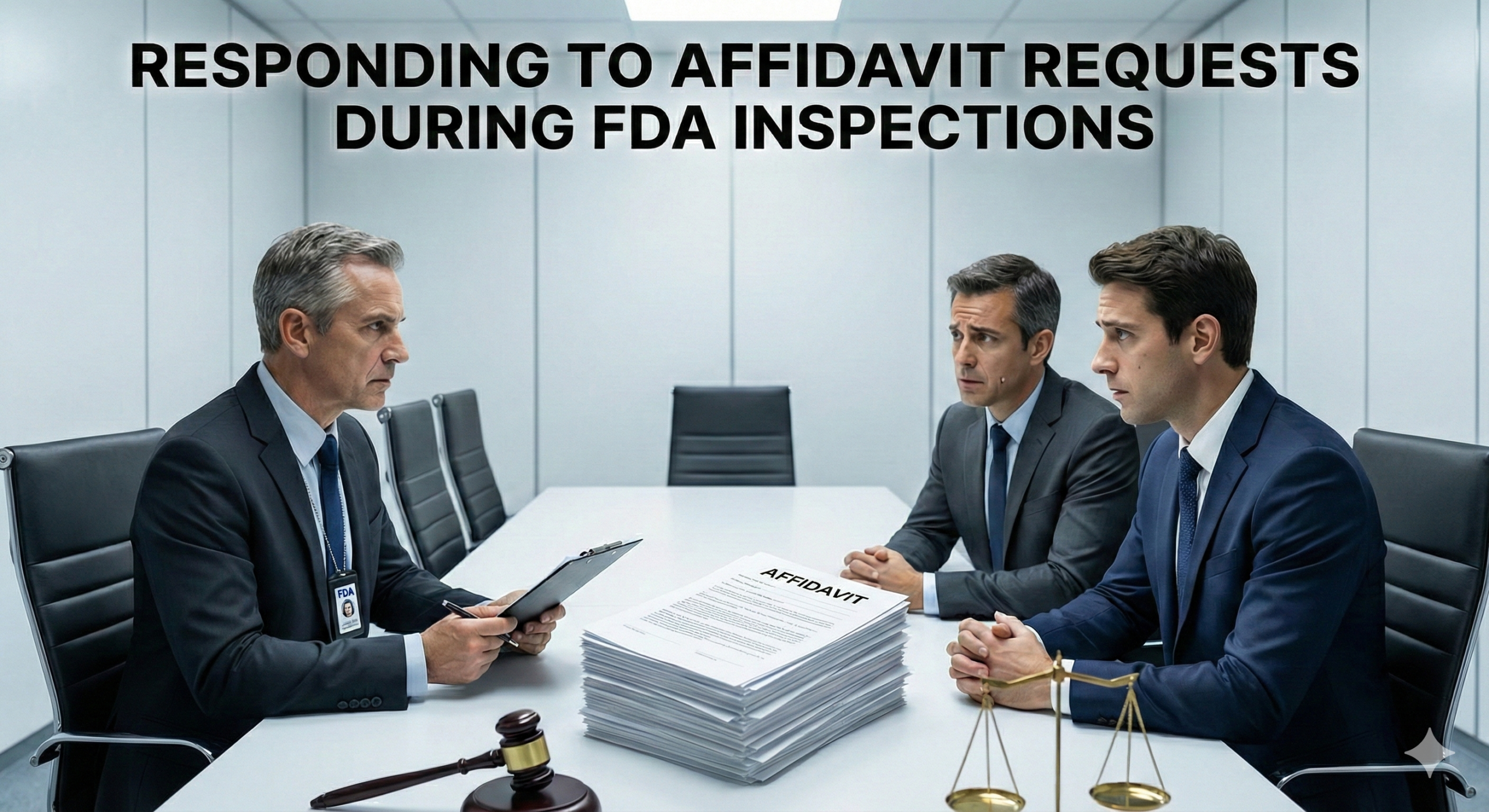
When introducing pharmaceuticals or medical devices to the U.S. market, inspections by the Food and Drug Administration (FDA) represent a critical and unavoidable process. During these inspections, investigators may request signatures on affidavits—a practice that carries significant legal risks if approached carelessly. This article examines the fundamental nature of affidavits, analyzes the risks associated with signing them during FDA inspections, and provides guidance on appropriate response strategies.
When introducing pharmaceuticals or medical devices to the U.S. market, inspections by the Food and Drug Administration (FDA) represent a critical and…
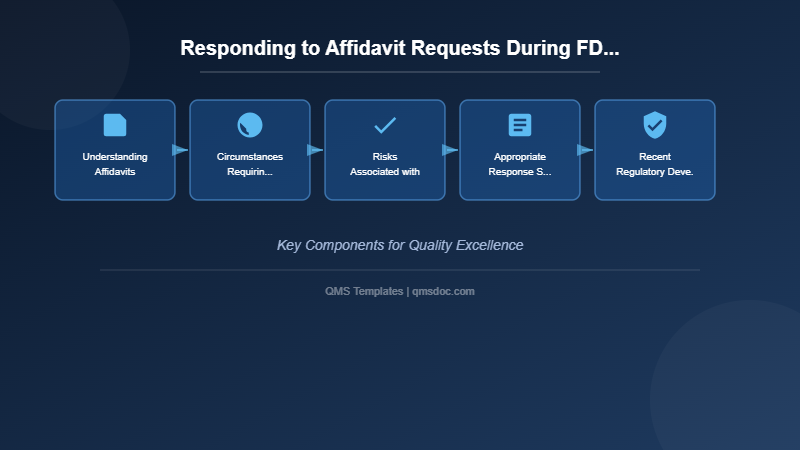
Understanding Affidavits
An affidavit is a formal written document used as legal evidence, in which the affiant (the person making the statement) legally swears that the contents are true and accurate. These documents are utilized when submitting factual circumstances and background information as evidence to courts or regulatory authorities, and they carry substantial legal weight under U.S. law. If the contents prove false, the affiant may face charges of perjury. The significance of a signature on an affidavit far exceeds that of typical confirmation documents in Japan, requiring careful consideration before execution.
Under U.S. federal law, perjury—making false statements under oath—is punishable by imprisonment for up to five years under 18 U.S.C. § 1621 and § 1623. Similar penalties apply to false statements made to federal agencies under 18 U.S.C. § 1001, which can result in five to eight years of imprisonment depending on the nature of the violation. The materiality standard for both perjury and false statements is identical: the statement must have “a natural tendency to influence, or be capable of influencing the decision-making body to which it is addressed,” with no requirement to demonstrate actual influence on the decision-maker.
Circumstances Requiring Affidavit Signatures During FDA Inspections
During the concluding phases of FDA inspections, or when violations or concerns have been identified, investigators may request affidavit signatures. Common scenarios include:
- The company’s position regarding cited observations
- Circumstances and root causes surrounding problematic incidents
- Details of internal corrective actions
These matters are often documented in the form of sworn statements (affidavits), with signatures requested from appropriate company representatives. The most commonly used form is FDA Form 463a, though investigators may also present specially prepared affidavits tailored to specific situations.
It is important to note that affidavits serve distinct purposes during FDA inspections. FDA Form 463 (or 463a) is typically used to document the chain of custody and material facts relating to product samples collected during inspections, particularly concerning interstate commerce and the receipt and use of raw materials in manufacturing. These affidavits help FDA establish jurisdiction and document evidence that may be used in subsequent regulatory or legal proceedings.
Risks Associated with Signing Affidavits and Risk Management Considerations
Signing an affidavit means legally attesting that the statement’s contents are factual and acknowledging that this testimony may be treated as immutable evidence in future litigation or administrative proceedings. Should errors or misunderstandings in the facts emerge after signature, not only does correction become impossible, but the company and individuals involved may face legal liability.
Under U.S. law, explanations such as “I didn’t know” or “it was a clerical error” receive minimal acceptance. Even well-intentioned mistakes can escalate into serious penalties. Additionally, signing documents in English without full comprehension or making hasty decisions creates substantial regret potential—a critical consideration.
The legal consequences of signing a false affidavit are severe and multifaceted. Beyond criminal perjury charges, individuals and companies may face civil liability including dismissal of favorable evidence, contempt of court proceedings, and substantial monetary damages. For legal professionals, involvement in submitting false affidavits can result in professional discipline including suspension or disbarment. Furthermore, a pattern of false statements or affidavits may trigger FDA’s Fraud Policy, potentially resulting in application integrity actions, product seizures, or consent decrees that can fundamentally impact business operations.
Appropriate Response Strategies
To mitigate risks, on-site signatures on affidavits should generally be avoided. When investigators request signatures, the following approach is recommended:
- Request permission to take the document for thorough internal review
- Commit to consulting with the company’s legal department or specialized counsel (such as U.S. attorneys)
- If signature becomes unavoidable, clearly define the signer’s position and scope of the statement, limiting content to the minimum necessary
In certain circumstances, defensive measures prove effective, such as restricting content strictly to factual matters while avoiding opinions, evaluations, or future commitments. Alternatively, annotating at the time of signature that “English proficiency is limited” or that “signature does not constitute admission of liability” can provide additional protection.
According to current FDA guidance and best practices documented in academic and professional sources, there exists no regulatory requirement compelling signature of an affidavit during an inspection. Refusal to sign cannot legitimately be characterized as failure to cooperate with the inspection, although investigators may attempt to create such an impression. FDA’s Investigations Operations Manual instructs investigators on proper procedures for obtaining affidavits, emphasizing that affiants must read and understand statements before signing. However, this places no obligation on the company representative to sign.
The recommended best practice, as established in multiple regulatory guidance documents and legal precedents, involves politely declining to sign on-site and requesting time to consult legal counsel. Many organizations, including major research institutions, have formal policies requiring consultation with general counsel before any affidavit is signed during FDA inspections. This approach balances cooperation with the inspection while protecting the organization’s legal interests.
Recent Regulatory Developments
Understanding the broader FDA enforcement landscape provides important context for affidavit decisions. The Food and Drug Omnibus Reform Act of 2022 (FDORA) expanded FDA’s inspection authority, including provisions allowing the agency to request records and information in advance of or in lieu of inspections for drug establishments, device manufacturers, and bioresearch monitoring sites. While these provisions don’t directly address affidavits, they demonstrate FDA’s enhanced enforcement capabilities and the importance of careful documentation practices.
Recent FDA enforcement trends (2022-2025) show continued focus on quality system violations, data integrity issues, and inadequate corrective action responses. Warning letters and consent decrees frequently cite repeated violations that could have been addressed at earlier stages. For instance, the 2024 Philips consent decree followed warning letters issued in 2011 and 2014 regarding similar quality system failures, ultimately resulting in severe restrictions on device sales and unprecedented remedial requirements.
The Escalating Enforcement Pathway
Companies should understand FDA’s typical enforcement escalation: Form FDA 483 (inspection observations) → Warning Letter → Consent Decree/Injunction. Each stage provides opportunities for remediation, but also increases legal stakes. Affidavits signed during initial inspections may become critical evidence if enforcement escalates. Statements made under oath during early inspections can limit defensive options in subsequent proceedings.
FDA Form 483 observations, while not final determinations of non-compliance, trigger a 15-business-day response period. Companies must address not only cited violations but also conduct thorough internal audits, as warning letters often note that cited instances are “representative” of broader systemic issues. Inadequate or incomplete responses increase the risk of warning letter issuance.
Warning Letters represent formal notification of significant violations requiring corrective action. Failure to adequately address Warning Letter concerns can lead to consent decrees—legal agreements between companies and FDA involving ongoing agency oversight, substantial financial penalties, and potentially business-halting restrictions. The consequences can be devastating, as evidenced by recent high-profile cases involving food safety (Vulto Creamery, Freshy Foods), pharmaceutical quality (multiple generic drug manufacturers), and medical devices (Philips, BD).
Conclusion
Signing affidavits carries irreversible and significant legal risks, demanding thoughtful consideration rather than hasty compliance. Fundamental risk management for both corporations and responsible individuals requires thorough understanding of content, comprehensive risk assessment, and professional counsel—particularly from attorneys familiar with U.S. regulatory law and FDA enforcement practices.
When preparing for FDA inspections, companies should establish clear internal policies regarding affidavit requests, designate appropriate spokespersons with authority to make such decisions, and maintain access to experienced legal counsel. Training inspection coordinators and quality personnel on proper responses to affidavit requests proves essential. Companies should document all inspection interactions meticulously while being careful not to volunteer information beyond what is required.
The principle remains constant: approach affidavit requests with appropriate caution, ensure complete understanding before signing any sworn statement, consult qualified legal experts, and maintain this vigilance throughout the inspection process. This measured, professional approach to affidavit requests represents a cornerstone of effective regulatory compliance and corporate risk management in dealings with FDA inspections.
In today’s heightened enforcement environment, with expanded FDA authorities under FDORA and executive orders emphasizing supply chain security through more aggressive inspection practices, the stakes for proper affidavit management have never been higher. Companies must balance cooperation with inspections against protection of legal rights—a balance best achieved through preparation, professional guidance, and adherence to established response protocols.
Related Articles
- FDA Inspections During Government Shutdown
- Key Points to Focus on During FDA Inspections: A Practical Guide for Success
- Challenges in Electronic Record Retention Requirements: Maintaining Authenticity During Long-term Preservation and System Migration
- The Commencement of ER/ES Inspections by Regulatory Authorities: Historical Context and Current Practices
- Understanding Part 11 in FDA Inspections: Key Considerations for Pharmaceutical and Medical Device Companies
- Have Part 11 Inspections Disappeared? Understanding Current Regulatory Trends

Comment