
The New Wave of Quality Management

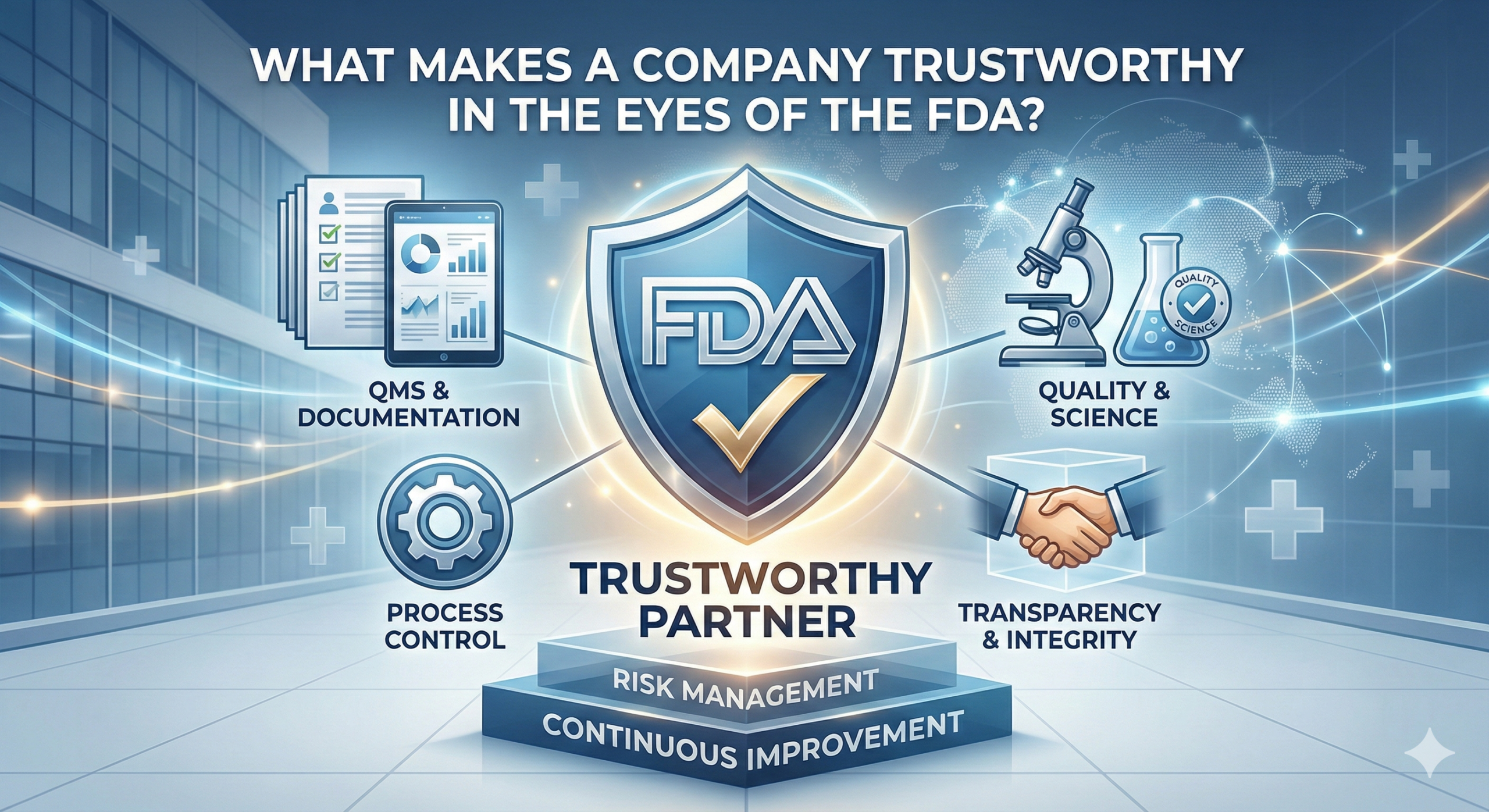
Regulatory and quality management practices in the medical device and pharmaceutical industries continue to evolve. A company deemed “trustworthy” by the U.S. Food and Drug Administration (FDA) is not merely one that complies with regulations, but one that embeds a genuine quality culture throughout its organization.
Regulatory and quality management practices in the medical device and pharmaceutical industries continue to evolve. A company deemed “trustworthy” by …
A Fresh Approach to Quality Management
The Changing Regulatory Landscape
For medical devices, the FDA published the final Quality Management System Regulation (QMSR) on January 31, 2024 (published in the Federal Register on February 2, 2024), which will take effect on February 2, 2026. This regulation represents a significant shift from traditional form-based compliance toward a more comprehensive and dynamic evaluation of quality management systems. The QMSR incorporates by reference ISO 13485:2016, harmonizing U.S. requirements with international standards used by regulatory authorities worldwide, thereby promoting consistency in medical device regulation globally.
For pharmaceuticals, the FDA’s Center for Drug Evaluation and Research (CDER) has been developing its Quality Management Maturity (QMM) program since the early 2020s. Following pilot programs conducted in 2023 and 2024, CDER announced in April 2025 the continuation of a voluntary QMM Prototype Assessment Protocol Evaluation Program, accepting applications through June 9, 2025. This program encourages drug manufacturers to implement quality management practices that exceed current good manufacturing practice (cGMP) requirements, with the goal of cultivating a “robust quality culture mindset.”
The Importance of Quality Culture
The QMM program has four primary objectives:
- Recognize establishments with advanced quality management practices and acknowledge those striving for continuous improvement
- Identify areas where quality management practices can be enhanced and provide suggestions for growth opportunities
- Encourage manufacturers to implement quality management practices beyond cGMP requirements
- Foster the development of mature quality management systems that enhance supply chain reliability
This program evaluates quality management across five key practice areas: quality culture and leadership, supply planning and continuity, quality systems and risk management, data governance and analytics, and continual improvement and knowledge management. It is important to note that QMM assessments are qualitative evaluations of behaviors, practices, and quality culture—distinct from mandatory cGMP compliance inspections and not used to determine cGMP compliance itself.
Specific Elements That Build Trust
1. Continuous Internal Audits and Quality Monitoring Systems
The FDA values internal audit systems that go beyond formalistic auditing. Companies are expected to not only identify problems but also analyze root causes and implement systemic improvements. Under the new QMSR, previous exemptions from FDA inspection for management review reports, internal audit reports, and supplier quality audit reports have been eliminated. The FDA now has authority to inspect these documents to ensure comprehensive quality system oversight.
2. Data Integrity and Transparency
Data integrity has been a major focus of FDA enforcement. Research analyzing FDA warning letters from 2005 to 2018 reveals a dramatic increase in data integrity citations. The percentage of warning letters citing data integrity issues rose from negligible levels before 2014 to approximately 24% by 2016, and remained around 49% in 2018. From 2005 to 2017, approximately 23% of regulatory warning letters cited the deletion or destruction of good manufacturing practice (GMP) original records.
Rather than concealing quality issues discovered internally, companies are expected to proactively disclose and address them. This includes maintaining proper controls over both paper and electronic records, implementing adequate access controls, conducting regular review of audit trails, and ensuring complete documentation of data modifications.
3. Quality Management Maturity (QMM) Program
The QMM program, which began pilot testing in 2023, represents a new framework for evaluating quality management practices that exceed regulatory requirements. The 2025 iteration of the voluntary program seeks up to nine participating establishments and uses a refined assessment protocol based on feedback from previous years. Participants receive detailed assessment reports highlighting strengths and areas for improvement. Notably, 99% of over 400 stakeholders polled at the 2022 CDER QMM Workshop agreed that purchasers of drug products or active pharmaceutical ingredients (APIs) should consider the QMM of the manufacturing facility.
This program aims to build true quality culture rather than mere compliance, representing a shift toward proactive quality management that may ultimately result in regulatory flexibility for high-performing manufacturers.
Practical Approaches to Gaining Trust
Step 1: Cultivating Quality Culture
Organizations must instill a deep understanding of and commitment to quality throughout the entire enterprise. A corporate culture where all employees recognize the importance of quality management and engage proactively is essential. Leadership commitment, employee engagement, and continuous quality improvement must become core organizational values.
Step 2: Continuous Learning and Improvement
Implementation of ongoing educational programs covering the latest regulatory trends, scientific knowledge, and quality management methodologies is crucial. Companies must not simply be satisfied with the status quo but constantly pursue improvement through training, knowledge sharing, and adoption of best practices.
Step 3: Proactive Risk Management
Rather than reacting to problems after they occur, companies must develop the capability to predict potential risks and implement preventive measures. This includes implementing robust risk management systems, conducting failure mode and effects analysis (FMEA), and establishing early warning systems for supply chain disruptions and quality issues.
Current State of AI and Quality Management
On January 7, 2025, the FDA issued draft guidance titled “Artificial Intelligence-Enabled Device Software Functions: Lifecycle Management and Marketing Submission Recommendations” for medical devices. This comprehensive guidance provides recommendations for the design, development, implementation, and documentation of AI-enabled devices throughout the Total Product Life Cycle (TPLC), emphasizing transparency, bias mitigation, and continuous performance monitoring.
Additionally, on the same date, the FDA published draft guidance titled “Considerations for the Use of Artificial Intelligence To Support Regulatory Decision-Making for Drug and Biological Products,” addressing the use of AI in drug development and manufacturing support.
While these guidance documents show the FDA’s commitment to addressing AI technology, they remain in draft form and are not yet formal requirements. The comment period for the device-related guidance extends through April 7, 2025, with finalization expected in late 2025 or early 2026. Although the potential for AI in predictive quality management is garnering attention, it has not yet been positioned as a mandatory requirement. The FDA is also seeking public comment through December 1, 2025, on best practices for measuring and evaluating AI-enabled medical device performance in real-world settings.
Summary
A company that the FDA considers “trustworthy” views regulations not merely as obligations but as opportunities for quality improvement. The shift from formalistic compliance to genuine quality culture represents continuous evolution.
What matters most is the organizational capability and trustworthiness that emerge through regulatory response. The pursuit of true quality excellence rather than mere compliance will be the key to thriving in the medical industry going forward.
For medical device manufacturers, the transition to QMSR by February 2, 2026, represents both a challenge and an opportunity to align with international standards and demonstrate commitment to comprehensive quality management. For pharmaceutical manufacturers, voluntary participation in the QMM program offers a pathway to distinguish themselves as leaders in quality culture and potentially benefit from regulatory recognition and flexibility.
The common thread across all these initiatives is clear: the FDA increasingly values organizations that embed quality deeply into their culture, continuously improve their systems, maintain rigorous data integrity, and proactively manage risks—not because regulations demand it, but because it represents the right approach to ensuring patient safety and product quality.

136908 415774Glad to be one of numerous visitors on this awing website : D. 138228