

A Critical Mechanism for Safeguarding Pharmaceutical and Medical Device Quality
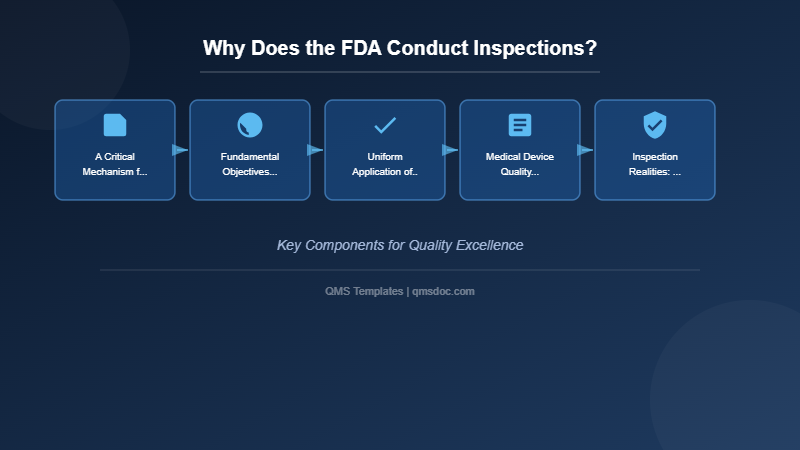
In 2025, inspections by the U.S. Food and Drug Administration (FDA) continue to evolve as a vital system for ensuring the quality and safety of pharmaceuticals and medical devices. These inspections represent far more than routine regulatory activities—they constitute a scientific and systematic approach to protecting patient health.
In 2025, inspections by the U.S. Food and Drug Administration (FDA) continue to evolve as a vital system for ensuring the quality and safety of pharma…
The Essence of FDA Inspections: Multi-Layered Verification of Quality and Safety
Fundamental Objectives of FDA Inspections
FDA inspections primarily aim to verify compliance with Current Good Manufacturing Practice (cGMP) requirements. Specifically, products are examined from multiple perspectives, including the following areas:
- Quality control of manufacturing processes
- Soundness of quality systems
- Validity of risk assessments
- Integrity and transparency of data
The cGMP requirements are codified in 21 CFR Parts 210, 211, and 212 for drug products, and provide flexible frameworks that allow manufacturers to implement scientifically sound design, monitoring, and control systems tailored to their specific operations.
Uniform Application of Global Standards
All overseas manufacturing facilities supplying products to the U.S. market must meet equivalently high standards. Manufacturing facilities in Japan and other countries are subject to the same rigorous inspection processes without exception. The FDA conducts inspections of pharmaceutical manufacturing facilities worldwide, including those that manufacture active pharmaceutical ingredients and finished products, to ensure compliance regardless of geographic location.
Medical Device Quality Management System Regulation
For medical devices, a significant regulatory transition is underway. On February 2, 2026, the FDA’s new Quality Management System Regulation (QMSR) will become effective, replacing the previous Quality System Regulation (QSR). The QMSR incorporates by reference ISO 13485:2016, “Medical devices – Quality management systems – Requirements for regulatory purposes,” representing a major step toward global harmonization with international standards already used by many other regulatory authorities.
Key aspects of the QMSR include:
- International Alignment: The regulation harmonizes FDA requirements with those used globally, including in the European Union, Japan, and Australia, where quality regulations are substantially based on ISO 13485
- Additional FDA Requirements: While incorporating ISO 13485, the QMSR includes additional requirements to ensure consistency with the Federal Food, Drug, and Cosmetic Act (FD&C Act)
- Expanded Inspection Scope: Unlike the previous QSR, the QMSR eliminates exceptions for FDA inspection of management reviews, quality audits, and supplier audit reports, bringing U.S. practices in line with other regulatory jurisdictions
- Enhanced Risk Management: ISO 13485:2016 emphasizes risk-based approaches throughout the quality management system, with the word “risk” appearing over 25 times in the standard compared to only once in the previous QSR
Medical device manufacturers have a two-year transition period to align their internal processes, procedures, and documentation with the QMSR requirements before the February 2026 effective date.
Inspection Realities: Classifications and Responses
FDA inspection results are classified into three categories based on findings:
- NAI (No Action Indicated): No significant violations found—the facility is in an acceptable state of compliance
- VAI (Voluntary Action Indicated): Minor issues identified; voluntary corrective action expected by the manufacturer
- OAI (Official Action Indicated): Serious violations requiring regulatory action
According to recent data, approximately 74% of food and cosmetic inspections in 2024 resulted in NAI classifications, while less than 2% resulted in OAI classifications. For clinical investigator inspections, data from a multi-year study showed that NAI letters constituted 56% of post-inspectional correspondence, followed by VAI letters at 39%, and OAI letters at 5%. Importantly, most cases can be resolved through appropriate corrective actions, and follow-up inspections of facilities that received OAI letters demonstrate that a significant proportion successfully achieve NAI status after implementing proper remediation measures.
The FDA typically communicates the final inspection classification to firms within 45-90 days following the close of an inspection, depending on the inspection type. Firms are encouraged to respond in writing within 15 days of receiving a Form FDA-483 (Inspection Observations) by submitting their corrective action plan with supporting documentation and promptly implementing corrective actions to address cited objectionable conditions.
Evolution of FDA Inspections: Toward More Strategic Approaches
The Critical Importance of Data Integrity
In recent years, FDA inspections have evolved toward more scientific and strategic approaches. Data integrity and transparency verification have become particularly prominent areas of focus. The agency has observed an increasing number of cGMP violations involving data integrity during inspections, leading to numerous regulatory actions including warning letters, import alerts, and consent decrees.
FDA published final guidance titled “Data Integrity and Compliance With Drug CGMP: Questions and Answers” to clarify the role of data integrity in current good manufacturing practice. The guidance emphasizes that all data must be reliable and accurate, and that CGMP regulations allow for flexible and risk-based strategies to prevent and detect data integrity issues. Key principles include ensuring that data are:
- Attributable: Clear identification of who performed each action and when
- Legible: Data must be readable and permanent
- Contemporaneous: Recorded at the time of performance
- Original or true copy: Preservation of original records or certified true copies
- Accurate: Data must correctly represent the facts
The guidance also clarifies that all records required under cGMP are subject to FDA inspection, including records generated and maintained on computerized systems and electronic communications that support cGMP activities. For example, an email authorizing batch release constitutes a cGMP record that FDA may review. Metadata—the contextual information required to understand data—and audit trails documenting the “who, what, when, and why” of records are integral components of data integrity.
In April 2024, FDA published additional draft guidance on “Data Integrity for In Vivo Bioavailability and Bioequivalence Studies,” providing recommendations for achieving and maintaining data integrity throughout the clinical and bioanalytical portions of studies submitted in support of regulatory applications.
Risk-Based Inspection Methodology
Traditional uniform inspection approaches have evolved toward methodologies that focus on higher-risk areas. This transformation enables more efficient and effective quality management. The FDA increasingly utilizes risk-based strategies to prioritize facilities for inspection, considering factors such as product type, manufacturing complexity, compliance history, and potential public health impact.
In January 2025, the FDA released draft guidance titled “Consideration for Complying with 21 C.F.R. 211.110,” which explains the agency’s interpretation of general requirements for drug product manufacturing and addresses considerations specific to the use of advanced manufacturing technologies. The guidance emphasizes flexibility in the cGMP requirements and supports the adoption of innovative manufacturing technologies, including process analytical technology (PAT), continuous manufacturing, and real-time release testing.
2025 Developments and Enhanced Oversight
AI-Driven Inspection Targeting
One of the most significant developments in 2025 is the FDA’s deployment of an internal artificial intelligence system named “Elsa,” launched in June 2025. This system analyzes internal FDA data—including adverse event reports, compliance data anomalies, Form FDA-483 observations, and historical inspection outcomes—to identify and prioritize high-risk facilities for inspection. Facilities with unresolved inconsistencies or inadequate corrective and preventive actions (CAPAs) may be flagged more frequently, resulting in more focused enforcement activities.
Increased Frequency and Intensity of Inspections
During fiscal year 2025, the FDA conducted 694 more inspections compared to fiscal year 2024, marking a significant increase in oversight activities. These inspections are characterized by:
- Greater frequency of site visits
- Heightened scrutiny and more detailed examinations
- Larger inspection teams
- Increased environmental monitoring and swabbing for pathogens
- Longer inspection durations
After a brief pause in enforcement activity at the start of 2025, the FDA has substantially accelerated its issuance of warning letters and other enforcement actions, signaling a clear shift toward more rigorous oversight.
Expansion of Unannounced Foreign Inspections
On May 6, 2025, the FDA announced plans to conduct more unannounced (surprise) inspections at foreign manufacturing facilities that produce foods, essential medicines, and other medical products intended for U.S. consumers. This initiative aims to ensure that foreign companies receive the same level of scrutiny as domestic manufacturers. The expansion particularly targets facilities in countries such as China and India, where oversight has historically been less frequent than for domestic operations.
The stated goals of this policy are to:
- Ensure uniform regulatory standards regardless of manufacturing location
- Detect compliance issues that might not be apparent during announced inspections
- Protect the integrity of the global pharmaceutical supply chain
- Maintain public confidence in imported medical products
Implications for Japanese Companies
Responding to Global Standards
For Japanese companies, FDA inspections represent not merely regulatory barriers but opportunities to enhance international competitiveness. Particular attention should be given to the following areas:
Data Management Transparency
Implementing robust data integrity practices that ensure all data are attributable, legible, contemporaneous, original, and accurate (ALCOA principles). This includes establishing comprehensive audit trails, implementing appropriate access controls for electronic systems, and maintaining proper documentation of all critical manufacturing and testing activities.
Continuous Quality Improvement Systems
Developing and maintaining effective quality management systems that emphasize prevention, continuous monitoring, and proactive identification and resolution of potential issues. This includes implementing robust CAPA systems, trending and analysis programs, and management review processes that drive continuous improvement.
Risk Management Framework Establishment
Integrating risk-based thinking throughout all aspects of quality management, from supplier qualification and process control to change management and product lifecycle management. For medical device manufacturers preparing for the QMSR transition, this includes understanding and implementing the risk management principles embedded throughout ISO 13485:2016.
Advanced Manufacturing Readiness
Understanding and preparing for FDA’s evolving expectations regarding advanced manufacturing technologies, including continuous manufacturing, process analytical technology, and data integrity in automated systems. The January 2025 draft guidance on 21 CFR 211.110 provides valuable insights into how the agency views the application of these technologies within the cGMP framework.
Strategic Preparation Recommendations
Japanese manufacturers should consider the following strategic actions:
- Gap Analysis: Conduct comprehensive gap assessments comparing current practices against both U.S. and international standards (ISO 13485 for devices, ICH Q10 for pharmaceuticals)
- Internal Audit Programs: Strengthen internal audit capabilities to identify and address potential compliance issues before regulatory inspections
- Training and Competency: Ensure all personnel involved in manufacturing, quality control, and quality assurance receive appropriate training in cGMP requirements, data integrity principles, and inspection preparedness
- Mock Inspections: Conduct realistic mock FDA inspections to evaluate organizational readiness and identify areas requiring improvement
- Documentation Review: Systematically review and update all quality system documentation to ensure accuracy, completeness, and compliance with current regulatory expectations
- Technology Systems: Evaluate and enhance computerized systems to ensure they meet FDA expectations for data integrity, including appropriate access controls, audit trails, and electronic signature compliance
Outlook for 2025 and Beyond
Notable Emerging Trends
Several key trends are shaping the future of FDA inspections and pharmaceutical quality oversight:
More Flexible Yet Focused Inspection Approaches
The FDA continues to refine its inspection methodologies to balance efficiency with effectiveness. While adopting more targeted, risk-based approaches, the agency maintains rigorous scrutiny of critical areas such as data integrity, sterile manufacturing, and product contamination control.
Digital Technology Integration in Quality Management
The increasing adoption of advanced manufacturing technologies, artificial intelligence, machine learning, and automation requires corresponding evolution in quality oversight approaches. The FDA’s guidance documents increasingly address how these technologies can be leveraged to enhance product quality while maintaining appropriate controls and data integrity.
Enhanced Preventive Risk Assessment
There is growing emphasis on preventive approaches to quality management, including quality by design (QbD) principles, process understanding, and proactive risk management. The FDA encourages manufacturers to move beyond reactive compliance toward building quality into products and processes from the earliest stages of development.
International Regulatory Harmonization
The incorporation of ISO 13485 into the QMSR for medical devices exemplifies the FDA’s commitment to global harmonization. This trend is expected to continue, potentially extending to other product categories and reducing regulatory redundancy for companies operating in multiple markets. The agency’s participation in programs such as the Medical Device Single Audit Program (MDSAP) and ongoing engagement with international standards organizations like ISO and the International Medical Device Regulators Forum (IMDRF) support this trajectory.
Supply Chain Transparency and Resilience
Recent global disruptions have heightened FDA focus on supply chain integrity, transparency, and resilience. Manufacturers should expect increased scrutiny of supplier qualification processes, raw material controls, and continuity planning for critical products.
Conclusion
FDA inspections constitute a crucial mechanism for ensuring the safety and efficacy of pharmaceuticals and medical devices. Rather than representing mere regulatory compliance exercises, these inspections embody a scientific and systematic approach to protecting patient safety.
For Japanese companies, FDA inspections present both significant challenges and excellent opportunities to demonstrate world-class quality standards. The key to success lies in embracing a culture of continuous improvement and transparency that goes beyond minimum regulatory compliance.
As the regulatory landscape continues to evolve—with the implementation of the QMSR for medical devices in February 2026, increased use of AI-driven risk targeting, expansion of unannounced foreign inspections, and growing emphasis on data integrity—manufacturers must maintain vigilance and adaptability. Those organizations that proactively invest in robust quality systems, embrace international harmonization, and foster cultures of quality excellence will be best positioned not only to meet regulatory expectations but to lead in delivering safe, effective, and high-quality products to patients worldwide.
The fundamental mission remains unchanged: ensuring that every pharmaceutical and medical device product reaching patients meets the highest standards of quality, safety, and efficacy. FDA inspections, continuously evolving to address emerging challenges and opportunities, serve as an essential tool in achieving this critical public health objective.
Note: This article reflects regulatory requirements and industry practices as of January 2025. Readers should consult the most current FDA guidance documents, regulations, and official communications for the latest information. Key resources include the FDA’s websites for drugs (www.fda.gov/drugs) and medical devices (www.fda.gov/medical-devices), as well as relevant sections of the Code of Federal Regulations (21 CFR).
Related Articles
- Why Does the FDA Conduct Inspections?
- The Commencement of ER/ES Inspections by Regulatory Authorities: Historical Context and Current Practices
- Understanding Part 11 in FDA Inspections: Key Considerations for Pharmaceutical and Medical Device Companies
- Have Part 11 Inspections Disappeared? Understanding Current Regulatory Trends
- How to Achieve Zero Observations in FDA Inspections
- Why ISO-9001 Certification Alone Does Not Guarantee Quality Improvement

Comment