
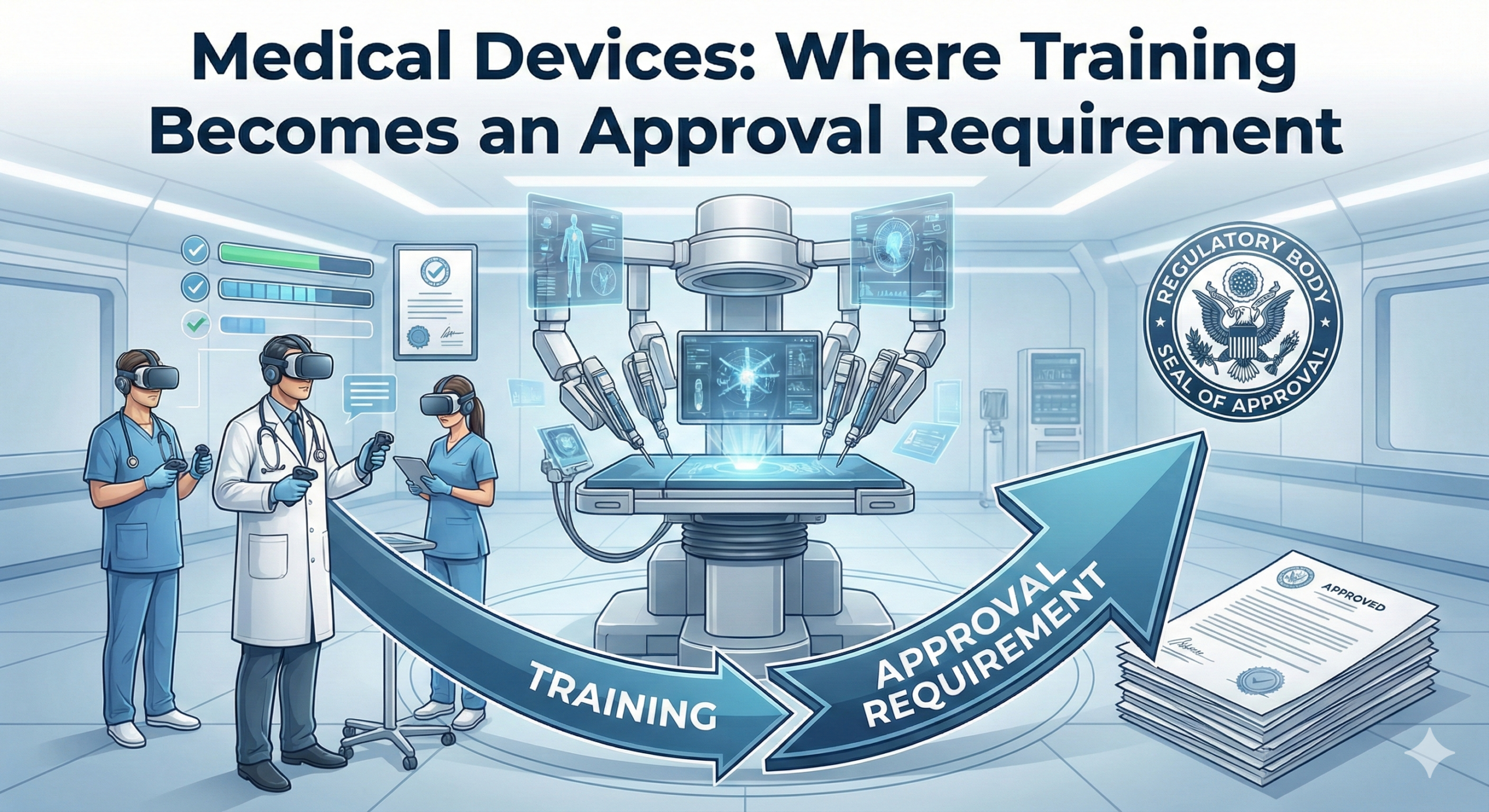
Medical Devices Where Training Becomes an Approval Requirement
Introduction: The Hidden Elite of Medical Devices
What comes to mind when you think of “medical devices”? Most people envision MRI machines, extracorporeal membrane oxygenation (ECMO) systems, or implants. Others might picture cutting-edge biosignal monitoring equipment. However, there exists a uniquely significant category within the medical device landscape: devices where specialized training is mandated as an explicit approval requirement by regulatory authorities. This column explores this distinctive domain through the lens of regulatory reality and contemporary practice.
What comes to mind when you think of “medical devices”? Most people envision MRI machines, extracorporeal membrane oxygenation (ECMO) systems, or impl…
A Paradigmatic Example: Robotic Surgical Systems
The da Vinci Surgical System offers an illustrative case. Extensively covered in news media, this robotic-assisted surgical platform represents a Class II medical device in the United States (FDA classification) and requires 510(k) clearance for new applications. Unlike conventional surgical instruments, however, the da Vinci system is not simply operated by any qualified surgeon—it demands specialized competency through structured, manufacturer-provided training programs.
The system’s regulatory approval inherently recognizes that physician credentialing alone is insufficient. The FDA’s review process explicitly considers whether adequate training infrastructure exists to ensure safe and effective device use. This represents a fundamental departure from traditional medical devices, where regulatory approval typically assumes that professionally licensed healthcare providers possess requisite competency.
The Regulatory Foundation: Understanding Training as an Approval Requirement
When regulatory authorities designate training as an “approval requirement,” they are establishing that structured education constitutes a non-negotiable condition for safe and effective device use. This differs fundamentally from optional training programs. An approval-mandated training requirement means that:
- The device cannot be legally used without documented completion of specified training
- The regulatory agency has evaluated and approved the training program itself as part of the device approval process
- Healthcare facility compliance with training requirements becomes part of post-market surveillance
For the da Vinci system specifically, Intuitive Surgical provides both initial credentialing training and ongoing education through a structured program that includes didactic education, simulator practice, and supervised clinical cases. The FDA’s review of this training architecture is integral to the approval decision.
The Scope of Regulatory Scrutiny: Training Content as an Examination Target
A critical—and often underappreciated—dimension of regulatory review involves evaluating the training program’s substantive content, delivery methodology, and operational governance. Regulatory authorities now examine:
Content Adequacy and Scientific Foundation
Training curricula must reflect current clinical evidence, device capabilities, and limitations. The material must address not only standard use cases but also contraindications, potential complications, and risk mitigation strategies. For advanced devices, this includes scenario-based learning addressing infrequent but high-consequence events.
Instructor Competency and Qualification Standards
Both the FDA and international regulators increasingly scrutinize the qualifications of training personnel. Instructors must demonstrate not only technical proficiency but also educational competency. This includes understanding adult learning principles, ability to assess trainee comprehension, and capacity to provide constructive feedback.
Evaluation Methods and Competency Assessment
Training programs must employ validated assessment tools to confirm that practitioners have achieved specified competency levels. This extends beyond knowledge assessment to include practical skills demonstration, often requiring simulator-based or supervised clinical performance evaluation.
Training Infrastructure and Resource Allocation
The physical and logistical framework supporting training—including simulator fidelity, learning management systems, documentation procedures, and accessibility—becomes part of regulatory scrutiny. Regulatory agencies examine whether the training infrastructure adequately supports the intended learning outcomes.
Contemporary Regulatory Evolution: 2024-2025 Developments
Recent regulatory developments reflect an intensifying focus on training program quality. This shift is evident across major regulatory jurisdictions:
FDA’s Enhanced Scrutiny: The FDA’s 2024 guidance documents increasingly require sponsors to submit comprehensive training and credentialing plans as part of 510(k) and PMA applications for complex devices. The agency now requests evidence that training programs effectively produce competent practitioners.
PMDA‘s Organizational Perspective: Japan’s regulatory authority has similarly elevated training program evaluation, particularly for advanced surgical devices and diagnostic systems. PMDA guidance increasingly addresses institutional capacity to deliver and maintain training standards.
EMA and EU MDR Alignment: European regulatory authorities under the Medical Device Regulation (MDR) have emphasized that technical documentation must include comprehensive training protocols. The focus extends to ensuring sustainable training delivery throughout the product lifecycle.
International Harmonization Efforts: The International Medical Device Regulators Forum (IMDRF) has recognized training and competency as critical post-market performance factors, leading to convergent expectations across jurisdictions.
Implications for Medical Device Manufacturers
This regulatory evolution creates a substantive expansion of manufacturer responsibilities. Beyond product development and quality management systems, companies must now view training program development as a core competency. This encompasses:
Personnel Development: Establishing and maintaining a cadre of qualified training professionals requires investment in recruitment, education, and continuous professional development. Manufacturers must document trainer qualifications and maintain training-of-trainer programs.
Program Sustainability: Training programs must remain current with evolving clinical evidence, regulatory requirements, and device modifications. This necessitates systematic processes for curriculum review, update, and re-validation.
Global Consistency with Local Adaptation: While core training content must maintain consistency across markets to ensure uniform device safety and effectiveness, regulatory requirements and clinical practice contexts vary by jurisdiction. Manufacturers must develop training programs that achieve both objectives.
Documentation and Traceability: Regulatory oversight increasingly requires comprehensive documentation of training delivery, trainee assessment outcomes, and quality monitoring metrics. This documentation becomes part of regulatory submissions and post-market surveillance activities.
Broader Implications for Healthcare Institutions
Healthcare facilities purchasing devices with training requirements must recognize that institutional commitment extends beyond equipment acquisition. Facilities must:
- Allocate resources for initial staff training and ongoing competency maintenance
- Establish governance structures ensuring compliance with training requirements
- Document training completion and competency assessment for credentialing purposes
- Support instructor development and continued education
- Monitor training effectiveness through clinical outcomes and incident reporting
Conclusion: Training as a Regulatory Imperative
The designation of training as an approval requirement represents a significant evolution in how regulatory authorities conceptualize device safety and effectiveness. It acknowledges that sophisticated medical technology cannot rely solely on professional licensure to ensure safe use. Instead, training becomes an explicit, mandated, and continuously evaluated component of the device’s safety profile.
For healthcare practitioners and institutions, this reality underscores that acquiring advanced technology requires not merely technical skill acquisition but engagement with systematically designed, regulatory-compliant training programs. For device manufacturers, this evolution demands that training and competency development be recognized as fundamental to product viability, not as ancillary support functions.
As medical devices become increasingly sophisticated and clinically consequential, the regulatory focus on training will likely intensify further. The future of safe and effective healthcare delivery depends on this integration of product excellence with educational excellence—a perspective that positions training not as an administrative requirement but as a core element of clinical safety governance.
Related Articles
- Essential Requirements and Essential Principles for Medical Devices
- ECG Devices Used in Ambulances: Understanding Medical Device Classification and Regulatory Requirements
- Essential Requirements and Essential Principles for Medical Devices
- Understanding Labels and Labeling: Regulatory Requirements for Medical Devices
- Why Objective Evidence Matters: Performance Evaluation and Regulatory Requirements in Medical Devices
- Differences Between Pharmaceuticals and Medical Devices
