
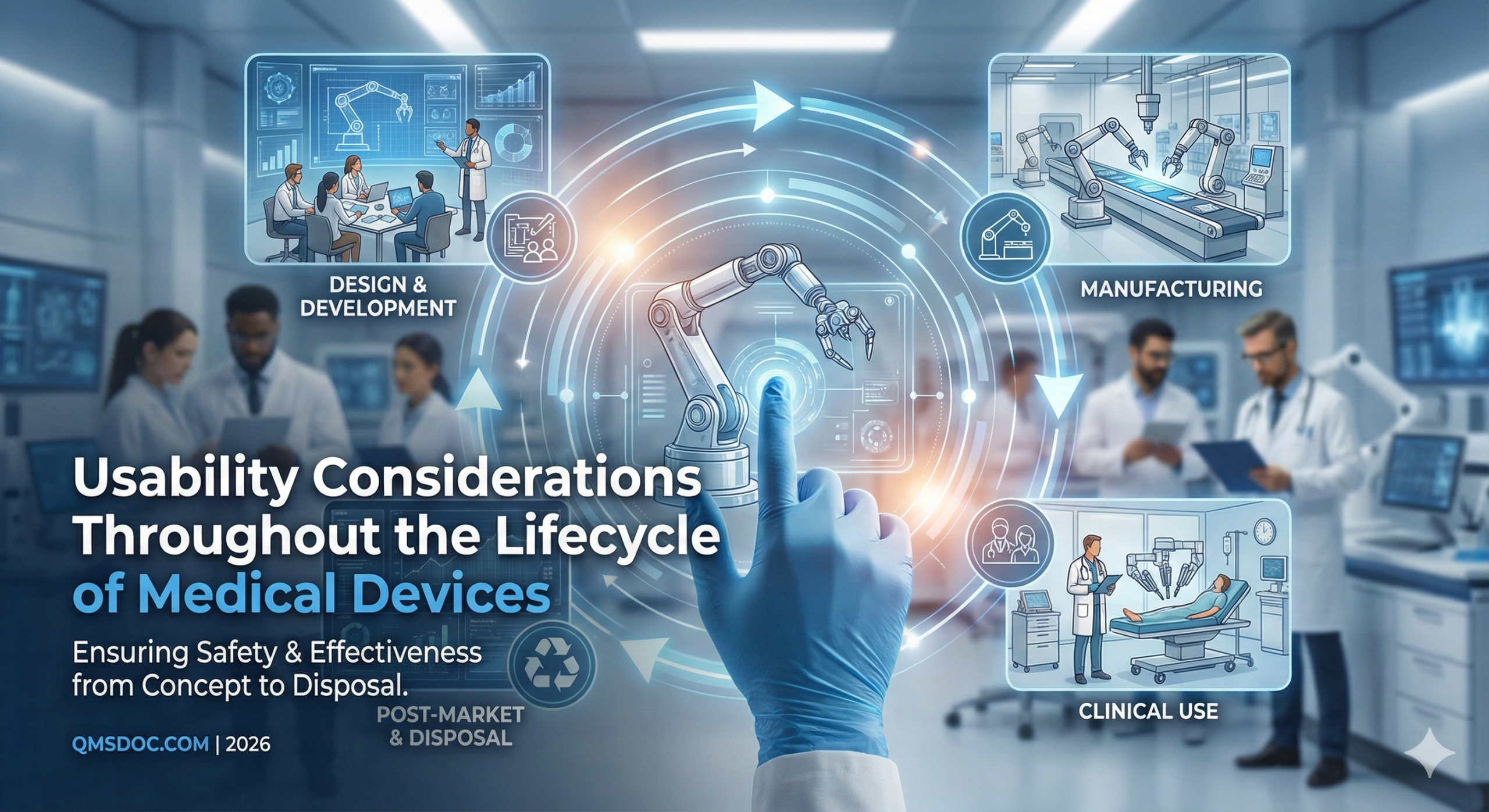
Usability Considerations Throughout the Lifecycle of Medical Devices
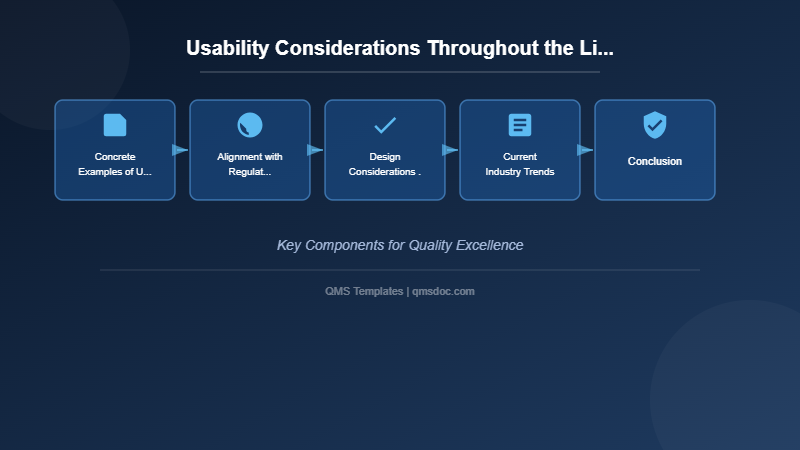
Unlocking the True Value of Medical Devices: The Importance of Usability Considerations Across the Entire Product Lifecycle
Medical devices used in everyday healthcare and in clinical settings are, in fact, engineered with remarkable precision. At the core of this engineering lies usability engineering—the integration of “ease of use” into every stage of product development. In accordance with the international standard IEC 62366-1:2015, usability engineering is not merely about surface-level user convenience but rather a comprehensive approach that ensures medical devices function safely and effectively for all stakeholders throughout the entire product lifecycle, from development through final disposal.
Medical devices used in everyday healthcare and in clinical settings are, in fact, engineered with remarkable precision. At the core of this engineeri…
When usability is mentioned, it is often considered primarily from the perspective of “how easily a user can operate a product.” However, from a medical device regulatory standpoint, this represents only a partial view. The truly critical factor is usability consideration from the perspective of the entire product lifecycle, encompassing transportation, installation, operation, maintenance, repair, and disposal. These comprehensive considerations are essential to meeting contemporary regulatory expectations and ensuring optimal device performance throughout its operational life.
Concrete Examples of Usability Considerations Throughout the Lifecycle
Consider a large-scale medical device as a practical example. This device is transported from the manufacturing facility to a hospital and installed by specialized personnel. Critical considerations at this stage include ease of transportation and installation procedures. These factors are integral components of usability. If a device is excessively heavy, it creates difficulties for transport personnel, increases the risk of equipment damage, and raises occupational health and safety concerns. Similarly, when installing equipment in limited spaces within healthcare facilities, careful consideration of device dimensions and installation interfaces becomes necessary.
During the operational phase, where the device is used daily, the interface design, warning labels, training materials, and other elements must be intuitive and safe for end-users—the healthcare professionals responsible for device operation. The FDA (U.S. Food and Drug Administration) guidance document “Applying Human Factors and Usability Engineering to Optimize Medical Device Design” emphasizes that device design must minimize the risk of use errors and prevent serious harm to patients.
Furthermore, the device’s performance during maintenance and repair significantly influences usability. When repair is straightforward, healthcare institutions can minimize equipment downtime and maintain continuity of patient care. Device structural design must incorporate serviceability considerations, including ease of access to replacement components, clear disassembly procedures, and standardization of compatible parts.
In the final stages of disposal and recycling, usability considerations remain indispensable. Medical devices may contain hazardous substances—such as heavy metals in certain electronic components—necessitating safe and environmentally responsible disposal methods. When a device maintains proper functionality throughout its lifecycle, the recycling process proceeds smoothly, and environmental impact is minimized.
Alignment with Regulatory Requirements
IEC 62366-1 is the international standard for usability engineering and is mandatory in the medical device manufacturing industry. This standard defines usability not merely as “ease of use” but as the ability of users “to use a medical device according to its intended purpose while minimizing the risk of errors.” This definition is closely integrated with ISO 14971 (Medical Device Risk Management), wherein usability engineering is positioned as a component of risk management activities.
Regulatory authorities including the FDA, the European Medicines Agency (EMA), and Japan’s Pharmaceuticals and Medical Devices Agency (PMDA) verify during regulatory submissions that usability engineering is embedded throughout the entire product lifecycle. Particularly since 2024, the relationship between cybersecurity (IEC 81001-5-1) and usability has received heightened regulatory scrutiny. For networked medical devices, the balance between security functionality usability and safety has become increasingly important.
Design Considerations for All Stakeholders
Comprehensive usability engineering must account for all stakeholders beyond end-users (healthcare professionals). These include logistics and transportation personnel, who require designs that are safe and efficient to handle; healthcare facility managers, who need straightforward setup and maintenance procedures; service technicians, who require rapid diagnostic and repair capabilities; and ultimately, patients, who depend on safe and reliable medical care.
With these considerations in mind, usability engineering can be defined as “the ability of all relevant users and stakeholders to safely and effectively interact with a medical device throughout its entire product lifecycle.” This represents true usability and is a fundamental principle in medical device regulation.
Current Industry Trends
As of 2025, the medical device manufacturing industry is witnessing further evolution in usability engineering methodologies. With the increasing prevalence of artificial intelligence and machine learning (AI/ML)-enabled medical devices, considerations extend beyond traditional physical ease of use to include algorithm transparency, explainability to users, and accommodation of users with diverse linguistic and cultural backgrounds. As remote monitoring and telemedine-compatible devices proliferate, the integrated usability design of digital and physical interfaces has become essential.
Concurrently, the global regulatory harmonization movement (MDSAP, IMDRF-driven international standard unification) is accelerating. Medical devices marketed in multiple regions must not only comply with diverse regulatory frameworks but also accommodate regional usage patterns and linguistic diversity through carefully tailored usability design.
Conclusion
Engineers who adopt this holistic perspective are indispensable for advancing not only the quality of medical devices but also overall efficiency, safety, and sustainability. By maintaining comprehensive usability considerations throughout the entire medical device lifecycle, the true value and potential of products can be realized. Through simultaneous compliance with regulatory requirements and adoption of this comprehensive approach, the safety and efficacy of medical devices in clinical settings are ensured, ultimately fostering patient trust and delivering tangible benefits to healthcare systems.
Related FDA QMSR Templates
Streamline your FDA QMSR compliance with our professionally crafted templates:

Related Articles
- Why Class I Medical Devices Are Subject to Usability Engineering
- Why Medical Devices Need Usability Engineering
- Why Usability Engineering Is Necessary for Non-Software Medical Devices
- Applying Human Factors and Usability Engineering to Medical Devices(邦訳版)
- Understanding Part 11 in FDA Inspections: Key Considerations for Pharmaceutical and Medical Device Companies
- Differences Between Pharmaceuticals and Medical Devices

Comment