
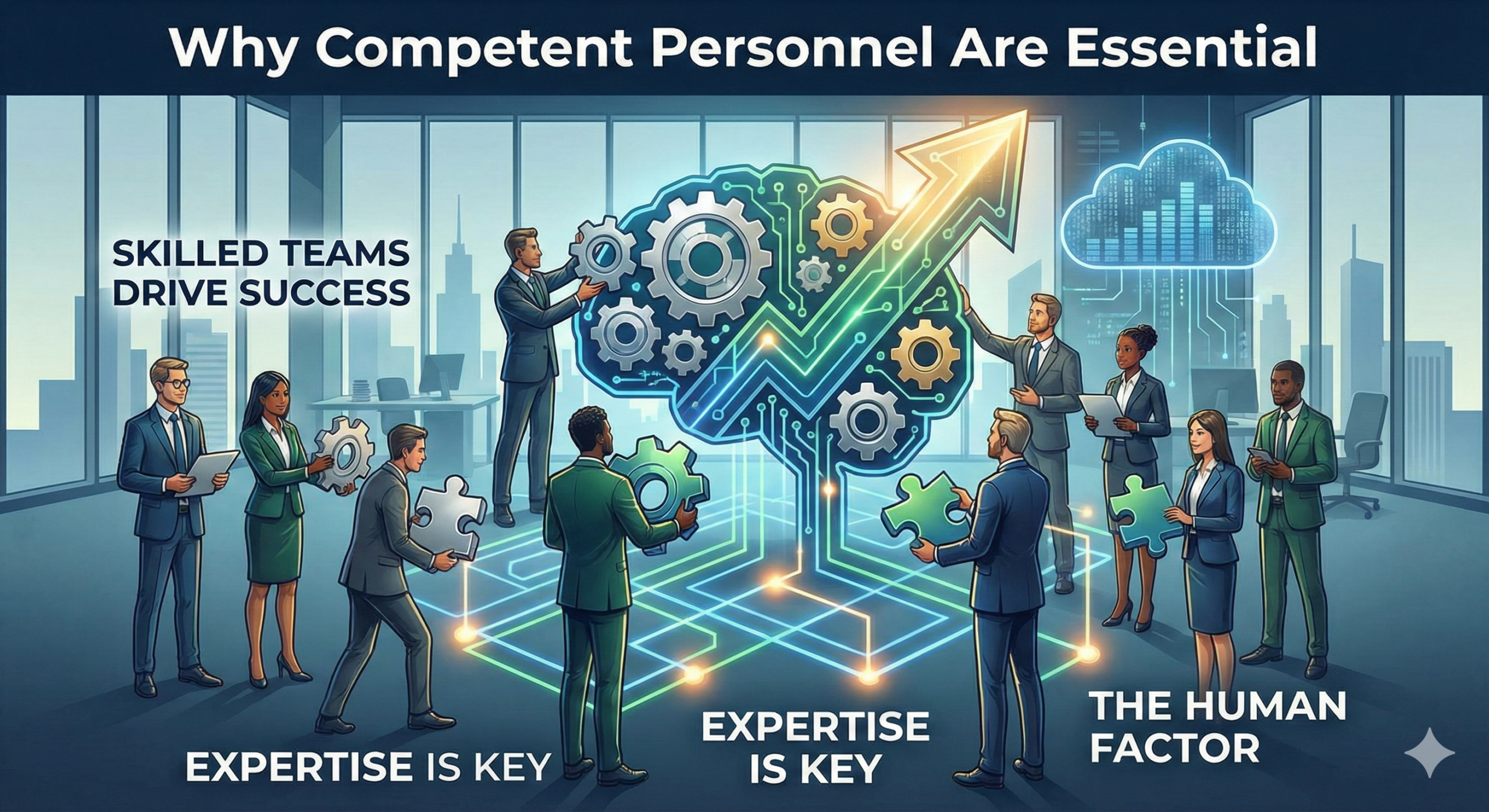
Why Competent Personnel Are Essential
The Necessity of “Competence”—Examining through the Lens of Driving License Acquisition
When we learn something new and become proficient at it, a certain amount of time and effort are required. Using the acquisition of an automobile driving license as an example, we will explore four elements necessary for competence development: “education,” “training,” “skill,” and “experience.” These same elements play equally important roles in organizational development within the medical device industry.
When we learn something new and become proficient at it, a certain amount of time and effort are required. Using the acquisition of an automobile driv…
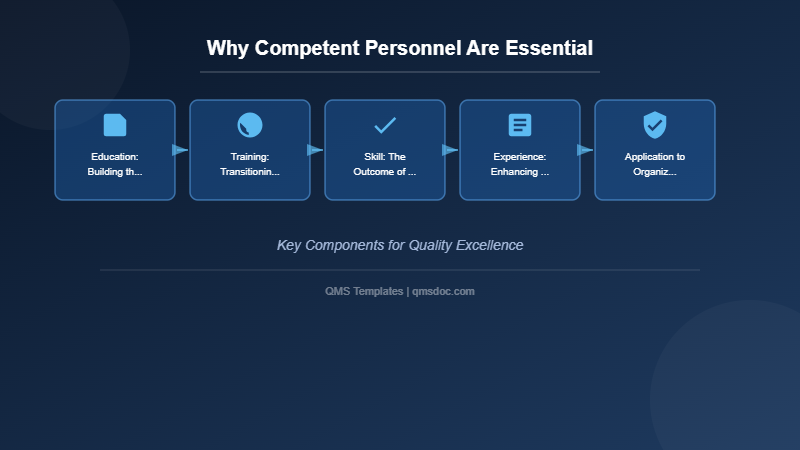
Education: Building the Foundation for Learning Theory
To drive a vehicle, one must understand the structure of automobiles and the fundamental theories of driving. This knowledge is acquired through education, and those seeking a driving license begin their learning journey by obtaining this information in a classroom setting. By understanding the underlying theory, individuals can visualize the concrete operations and actions they must take while driving.
Similarly, in organizational development within medical device companies, employees assigned to new positions must first acquire theoretical knowledge and background in their respective business domains. Understanding the principles of quality management systems, relevant regulatory requirements, international standards such as ISO 13485, and fundamental industry concepts forms the foundation upon which subsequent practical work is built. This educational foundation enables employees to contextualize their duties within the broader regulatory and quality framework that governs the medical device industry.
Training: Transitioning from Education to Skill
Next, training is necessary to acquire the techniques and methods required for performing actual work tasks. Building on the knowledge learned in the classroom, individuals practice concrete job operations and gradually develop practical competencies. This phase bridges theoretical understanding with real-world application.
Within medical device enterprises, this stage represents on-the-job training in the workplace. For example, a new employee in the quality assurance department learns specific tasks essential to daily operations—such as the actual operation of quality control processes, the use of document management systems, and the preparation of nonconformance reports—under the guidance of experienced colleagues. This training process is not merely academic instruction; rather, it represents learning through hands-on practice in the actual work environment, enabling knowledge to be internalized and made practical.
Skill: The Outcome of Training
Through training, employees in the relevant position acquire job-specific competence. This represents the ability to understand the theoretical principles learned and translate them into actual work operations. As a result, employees become capable of executing assigned duties independently—following standardized procedures, meeting documentation requirements, and maintaining quality standards—while working effectively within the organization’s established systems.
Medical device standards, including ISO 13485, require that organizations document employee competence and conduct regular evaluations. This skill stage represents an important milestone demonstrating that the employee has achieved a requisite level of capability necessary for their role. The assessment and documentation of competence becomes a critical component of the organization’s quality management system, providing evidence of capability and supporting compliance with regulatory requirements.
Experience: Enhancing Skill Quality
However, while job operations can be acquired through training and skill development, understanding and responding to complex and constantly changing work environments requires experience. The “anticipatory ability” and “problem prediction capability” that experience provides represent key factors distinguishing experienced employees from newly assigned personnel.
In the medical device industry, organizations must respond to evolving regulatory environments, emerging technological trends, and shifting market requirements. Experienced employees represent invaluable assets who can anticipate such changes and strengthen organizational response capacity. Furthermore, judgment based on experience brings higher-order and more accurate decision-making to critical functions such as risk assessment, failure analysis, and process improvement. This accumulated wisdom becomes particularly valuable as organizations navigate increasingly complex regulatory landscapes and technological challenges.
Application to Organizational Development
When we apply this progression to organizational development, we see a clear flow: understanding new position responsibilities and learning regulatory requirements (education), conducting on-the-job training and practical preparation (training), independently performing assigned duties (skill), and continuous learning through daily work performance in that position (experience). This approach aligns closely with the definition of “competence” in ISO 13485 and represents the standard approach to personnel management required by international standards.
Implementation in Organizational Strategy
As organizations prepare for structural reorganization in 2025 and establish new positions and roles, it is imperative to carefully consider all four elements—”education,” “training,” “skill,” and “experience”—to secure and develop excellent personnel. Systematic education for beginners, practical training in the workplace, skill acquisition through work execution, and continuous accumulation of experience—all personnel develop competence through these processes. For both individual employees and the organization as a whole, understanding and respecting this growth process is essential.
Managers bear responsibility for understanding their subordinates’ developmental stages and providing appropriate support corresponding to each stage. Simultaneously, employees themselves must understand this progression, periodically reflect on their own growth, and approach their daily work with a commitment to continuous learning and improvement. This shared commitment to competence development represents a critical success factor in maintaining organizational effectiveness.
Securing and developing competent personnel is not merely an investment in individual growth; it directly contributes to the medical device company’s quality and risk management capabilities, and ultimately to enhanced patient safety. In this sense, competence development constitutes a strategic investment essential to organizational success and regulatory compliance in the medical device industry.
Related FDA QMSR Templates
Streamline your FDA QMSR compliance with our professionally crafted templates:
Related Articles
- The Three Essential Elements of Regulatory Compliance and Quality Improvement
- Understanding the “Typewriter Excuse”: Essential Perspectives on Data Integrity
- Why Standard Operating Procedures (SOPs) Are Essential in Pharmaceutical and Medical Device Companies
- Responsibilities of Validation Personnel
- Authenticity, Legibility, and Integrity: The Three Essential Requirements for Electronic Document Management
- Why the V-Model Remains Essential: Evolution from Traditional Validation to Modern Software Assurance

Comment