
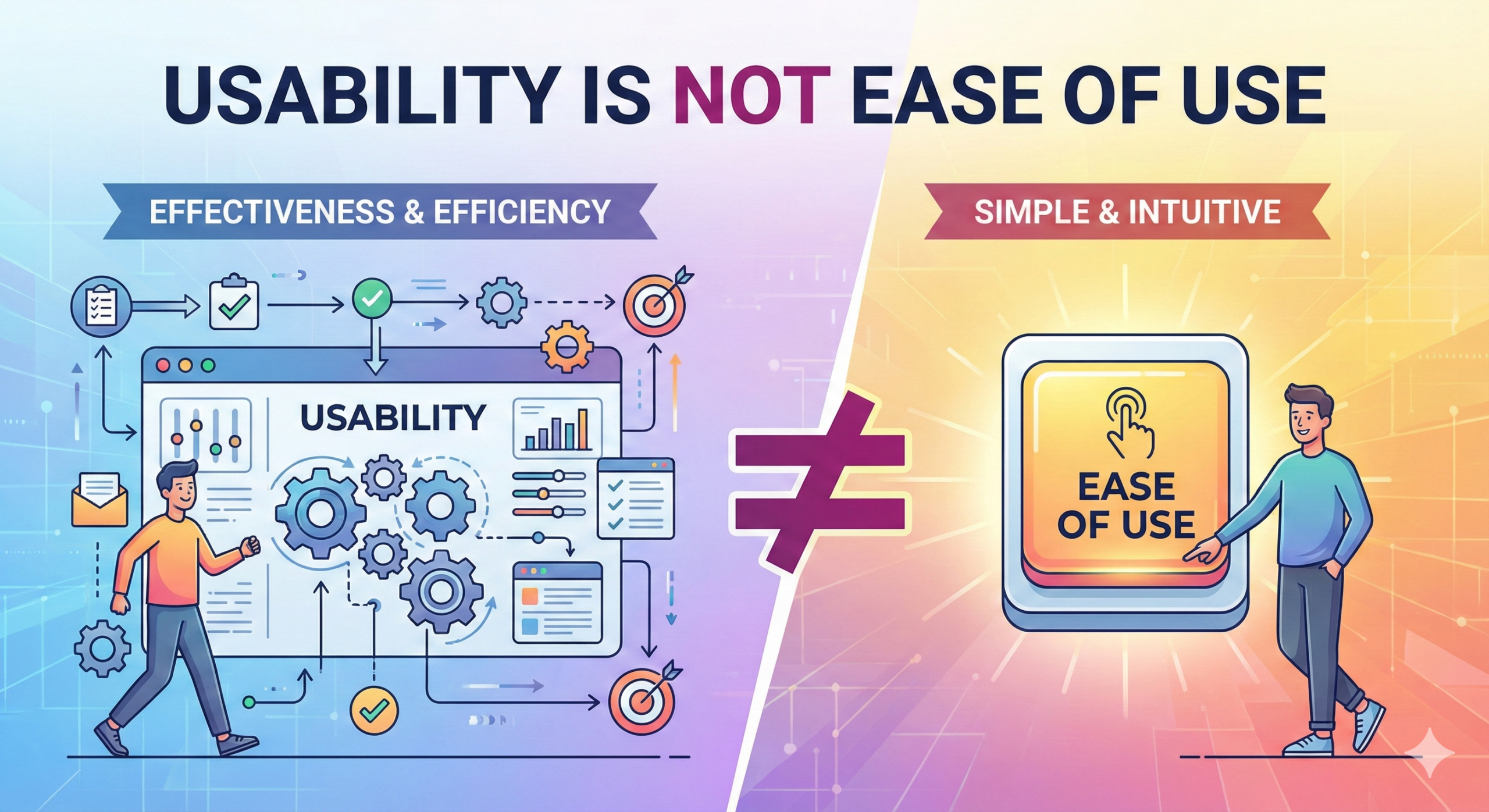
Usability is NOT “Ease of Use”
Do most people truly understand what “usability” means? In common parlance, it is often interpreted as “ease of use,” but this interpretation may contain a fundamental misunderstanding. Particularly in the world of medical devices, usability is understood in an entirely different context than simple “ease of use.” This article clarifies the true nature of “usability” through concrete examples, drawing on the latest international standards that govern medical device design.
Do most people truly understand what “usability” means? In common parlance, it is often interpreted as “ease of use,” but this interpretation may cont…
Defining Usability: Beyond “Ease of Use”
First, we must address the fundamental question: what is “usability”? While commonly interpreted as “ease of use,” the international standard IEC 62366-1 “Medical devices – Part 1: Application of usability to medical devices” defines usability as “the extent to which a product can be used by specified users to achieve specified goals with effectiveness, safety, and satisfaction in a specified context of use.”
The critical point here is that “ease of use” is merely one of three equally important elements, alongside safety and effectiveness. In medical devices, usability represents a hierarchical structure in which safety and effectiveness take priority, and ease of use is pursued only within the boundaries established by these primary considerations.
The Disposable Lighter Analogy
To illustrate this concept, consider the common disposable lighter. A disposable lighter is widely available and inexpensive, making it extremely popular worldwide. Its operation is straightforward: simply press a button, and fire is produced instantly. This immediate, intuitive operability represents excellent usability as a consumer product.
However, if this same operational principle were applied to a medical device, would the same “ease of use” be appropriate? The answer is definitively no.
In medical devices, safety and effectiveness take absolute priority. Consider devices such as infusion pumps or insulin delivery systems. If designed with the same instantaneous operability as a lighter, the result would create serious risks. A single accidental button press could result in overdosing or other catastrophic harm to the patient.
“Difficulty of Use” as a Safety Feature
Consequently, usability in medical devices often manifests as what appears to be “difficulty of use.” This is intentional. The design philosophy centers on minimizing the possibility of user errors by incorporating:
- Clear error prompts and confirmation messages
- Sequential verification steps
- Mechanisms that guide users toward correct operation
- Ultimately achieving safety and effectiveness
For example, many medical devices include staged confirmation steps, mechanisms that prevent unintended reversals, or mandatory dose and administration verification screens. While these features might initially appear to increase operational difficulty, they actually represent the highest level of usability in the medical device context.
Regulatory Support for Error-Centered Design
This design philosophy is supported by international regulatory requirements:
- FDA 21 CFR Part 11 and the EU MDR (Medical Device Regulation) Annex I both mandate Design for Error Prevention, requiring manufacturers to implement mechanisms that account for and prevent human error
- IEC 62366-1 requires that usability validation studies identify foreseeable use errors and demonstrate that the design minimizes their occurrence
Current Regulatory Landscape (2024-2025)
The importance of ensuring medical device safety has only intensified from 2024 into 2025. The PMDA (Pharmaceuticals and Medical Devices Agency) has strengthened its review of usability validation studies in medical device approval processes, with Usability Validation Studies now being a critical examination point. Consequently, usability itself is being reconsidered from fresh perspectives and continues to evolve.
True Usability: A Multifaceted Approach
From this medical device example, we can understand that usability refers specifically to “the extent to which specified users can use a medical device to achieve specified goals with safety and effectiveness in a specified context,” rather than the pursuit of “ease of use” alone.
Rather than pursuing ease of use blindly, true usability is achieved by considering multiple factors:
- The intended purpose and context of use
- User safety
- Clinical effectiveness
This multifaceted approach is essential.
Conclusion: Prioritizing Safety Over Simplicity
For all stakeholders—medical device developers, regulatory authorities, and users—it is vital that when encountering the term “usability,” they consider the overarching principle behind it: the pursuit of safety and effectiveness.
Medical devices affect human life. In their design, prioritizing substantive “safety and effectiveness in use” over superficial “ease of use” is the only path to achieving true usability.
Related Articles
- What is Usability
- The Proper Approach to Batch Release Disposition
- Establishment of PIC/S GMP Annex 16: Critical Considerations for Batch Release Authorization
- The Importance of Use Environment and User Characteristics in Medical Device Usability Engineering
- Flow Rate and Volume Input Errors in Infusion Pumps: A Usability Engineering Perspective
- Aircraft Pilot Type Ratings and Medical Device Usability Engineering

Comment