
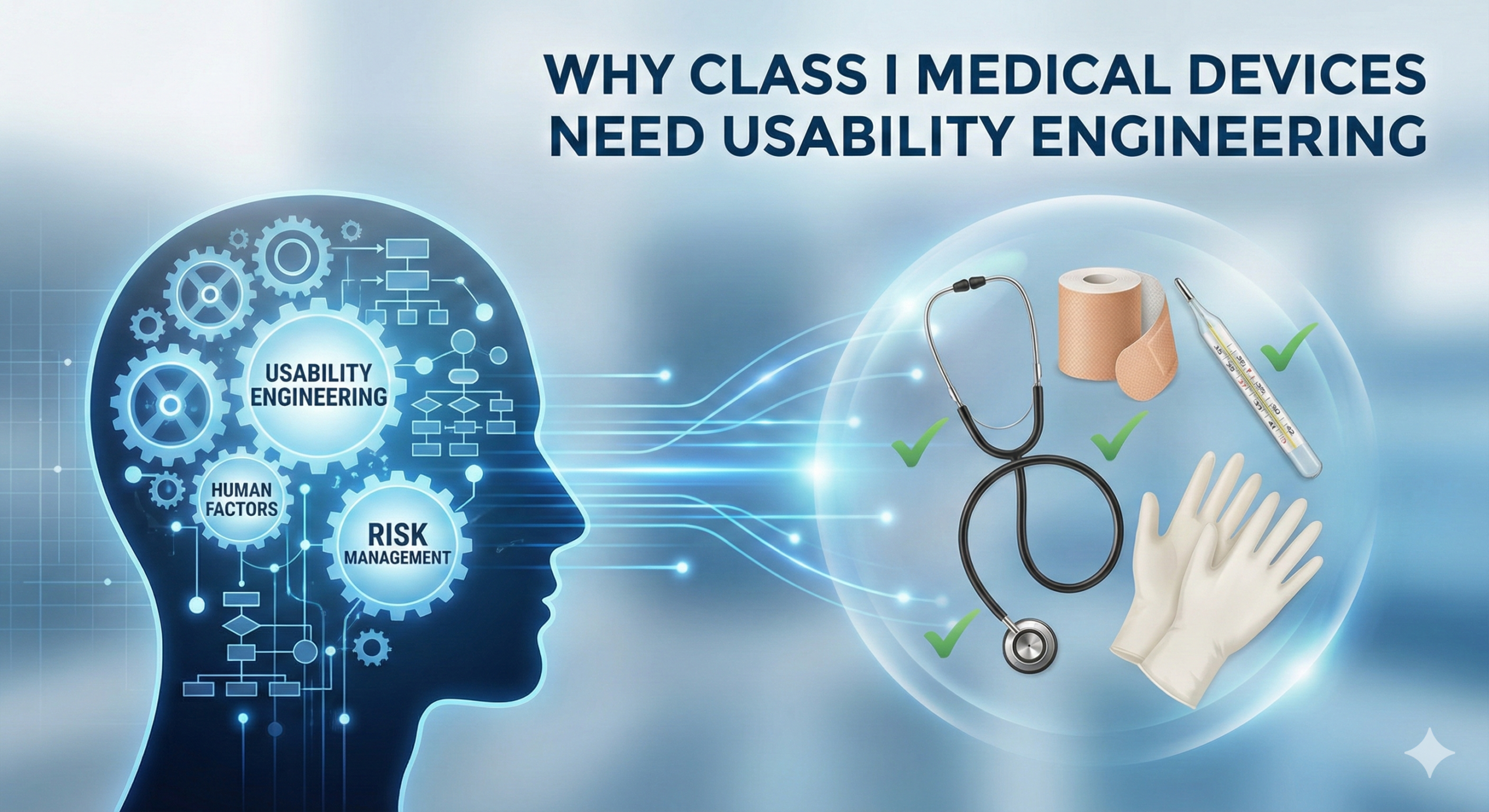
Why Class I Medical Devices Are Subject to Usability Engineering
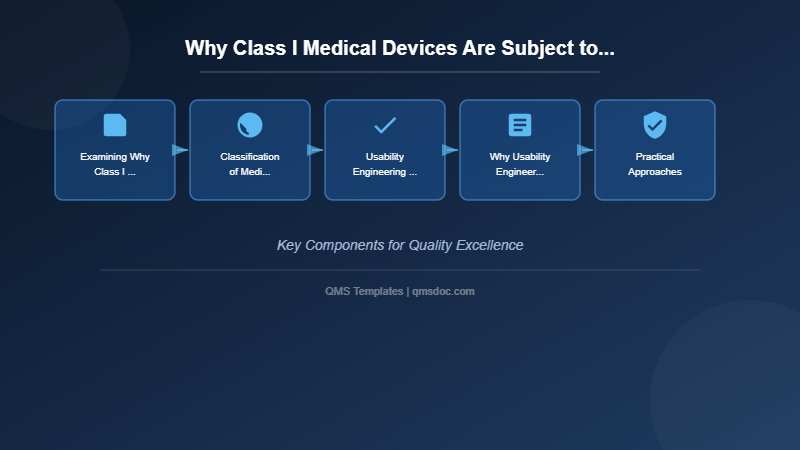
Examining Why Class I Medical Devices Are Subject to Usability Engineering
Medical devices are used in various aspects of our daily lives. From measurement devices such as blood pressure monitors and thermometers, to therapeutic devices like pacemakers, diagnostic devices, and body-supporting devices, their scope is wide-ranging. These medical devices are classified into three risk classes—Class I, Class II, and Class III—based on their degree of risk. In Japan’s regulatory system administered by the Ministry of Health, Labour and Welfare (MHLW) and the Pharmaceuticals and Medical Devices Agency (PMDA), these are referred to as general medical devices (Class I), controlled medical devices (Class II), and highly controlled medical devices (Class III).
Medical devices are used in various aspects of our daily lives. From measurement devices such as blood pressure monitors and thermometers, to therapeu…
At first glance, Class I medical devices, which are considered the lowest risk, may seem to be subject to fewer regulatory requirements than devices in the other classes. However, usability engineering actually plays a very important role even for Class I devices. This article examines in detail why Class I medical devices are subject to usability engineering and explores the underlying rationale.
Classification of Medical Devices and the Relationship with Design Controls
Medical devices are classified into three classes based on their degree of risk. In Japan’s regulatory system, general medical devices (Class I) are those judged to pose the lowest risk and often do not require stringent approval processes before market entry. In contrast, controlled medical devices (Class II) and highly controlled medical devices (Class III) require more stringent application and approval processes commensurate with their risk level.
Design Control is an important process by which medical device manufacturers ensure the safety and efficacy of their products and is required by ISO 13485:2016 and subsequent versions. Similarly, under the U.S. Food and Drug Administration’s (FDA‘s) Quality Management System Regulation (QMSR, 21 CFR Part 820 Subpart C), design control is mandated for Class II and Class III medical devices.
Under Japan’s medical device regulations, design control is also a mandatory requirement for Class II and Class III devices. Conversely, for Class I devices, since their risk is considered low, design control is often not mandated as a regulatory requirement. This distinction between Class I devices and Class II and III devices is an important regulatory differentiation.
Usability Engineering and International Standards
Usability Engineering is a methodology by which a medical device’s design process is integrated with the user’s perspective, ensuring that the device can be used safely and effectively by end users.
At the international level, the standard IEC 62366-1:2015, “Medical devices – Part 1: Guidance on the application of usability engineering to medical devices,” and its 2020 revision establish processes for ensuring the usability of medical devices. This standard emphasizes the importance of anticipating, during the design phase, how a medical device will be used and what errors users might make, and then taking appropriate corrective actions.
Importantly, IEC 62366-1 is not limited to specific device classes. Rather, usability requirements should be applied to medical devices in general based on risk assessments conducted in accordance with their degree of risk.
Why Usability Engineering Is Essential for Class I Devices
So what are the reasons that Class I devices become the subject of usability engineering?
First, even though Class I devices are considered lower risk, incorrect use can have serious consequences for patient care. Measurement devices such as blood pressure monitors and thermometers may appear simple at first glance, but errors in measurement methodology can lead to misdiagnosis and, as a result, inappropriate treatment of patients. For example, if the blood pressure cuff is positioned incorrectly or the user does not understand how to apply it properly, significant measurement errors can occur. This increases the likelihood that healthcare providers will make incorrect clinical decisions.
Second, medical devices are used in a variety of settings. Some devices are used by healthcare professionals, while others are used by the general public in home settings. Especially in home use scenarios, users have varying levels of health literacy and medical knowledge, and some users may not be able to understand complex operating procedures. Design that is easy to understand and intuitive for this diverse range of users is therefore essential.
Third, ISO 13485:2016 and subsequent versions require, from a risk management perspective, that all feasible and reasonable available risk control measures be implemented. Usability engineering is positioned as an important risk reduction strategy to prevent user errors that may occur during device use. In other words, regardless of whether design controls are formally mandated, efforts to improve usability within the framework of risk management are recommended.
Fourth, from the perspective of international harmonization, examination of the regulatory trends evident in the EU Medical Device Regulation (MDR), IVDR, and other jurisdictions reveals that usability requirements for medical devices in general are being strengthened globally. This represents an emerging international consensus on ensuring the safety and efficacy of medical devices.
Practical Approaches
For manufacturers of Class I devices to implement usability engineering effectively, the following approaches are useful:
- User Task Analysis — Understand how actual users will use the product and what types of errors are likely to occur at each stage of use.
- Prototype Testing — During the design phase, use prototypes to conduct testing with representative users and identify problems early.
- User Interface Design — Ensure that displays, operating methods, warning labels, and other elements are intuitive and easy to understand for users.
- User Education and Support — Through instructions for use, labeling, training materials, and other resources, provide support to ensure users can operate the device correctly.
- Post-Market Surveillance — Continuously monitor actual use conditions in the marketplace and identify unanticipated use patterns and misuse scenarios.
These approaches do not necessarily need to be complex or burdensome. It is important to implement an appropriate level of usability engineering commensurate with the characteristics of the Class I device.
Conclusion
Even though Class I devices are considered lower risk, usability engineering is an essential undertaking insofar as their use can affect user and patient health. This responsibility, on the part of the manufacturer, is part of ensuring the fundamental safety and efficacy of medical devices and enabling users to operate them correctly.
Looking at international standards and regulatory trends globally, recognition of the importance of usability requirements for medical devices is increasing. Therefore, proactive efforts by Class I device manufacturers to implement usability engineering not only enhance patient safety but also serve as an important strategy for gaining the trust of regulatory authorities, healthcare providers, and, ultimately, end users.
Related Articles
- Why Medical Devices Need Usability Engineering
- Why Usability Engineering Is Necessary for Non-Software Medical Devices
- Applying Human Factors and Usability Engineering to Medical Devices(邦訳版)
- ECG Devices Used in Ambulances: Understanding Medical Device Classification and Regulatory Requirements
- The Importance of Use Environment and User Characteristics in Medical Device Usability Engineering
- Aircraft Pilot Type Ratings and Medical Device Usability Engineering

Comment