
Why Presubmission is Important
Optimizing Regulatory Strategy through Collaboration with Regulatory Authorities
Have you heard the term “presubmission”? This concept plays an extremely important role in the regulatory approval process for medical devices and pharmaceuticals. To effectively utilize it in actual business operations, let us explain in concrete terms why presubmission is so important.
Have you heard the term “presubmission”? This concept plays an extremely important role in the regulatory approval process for medical devices and pha…
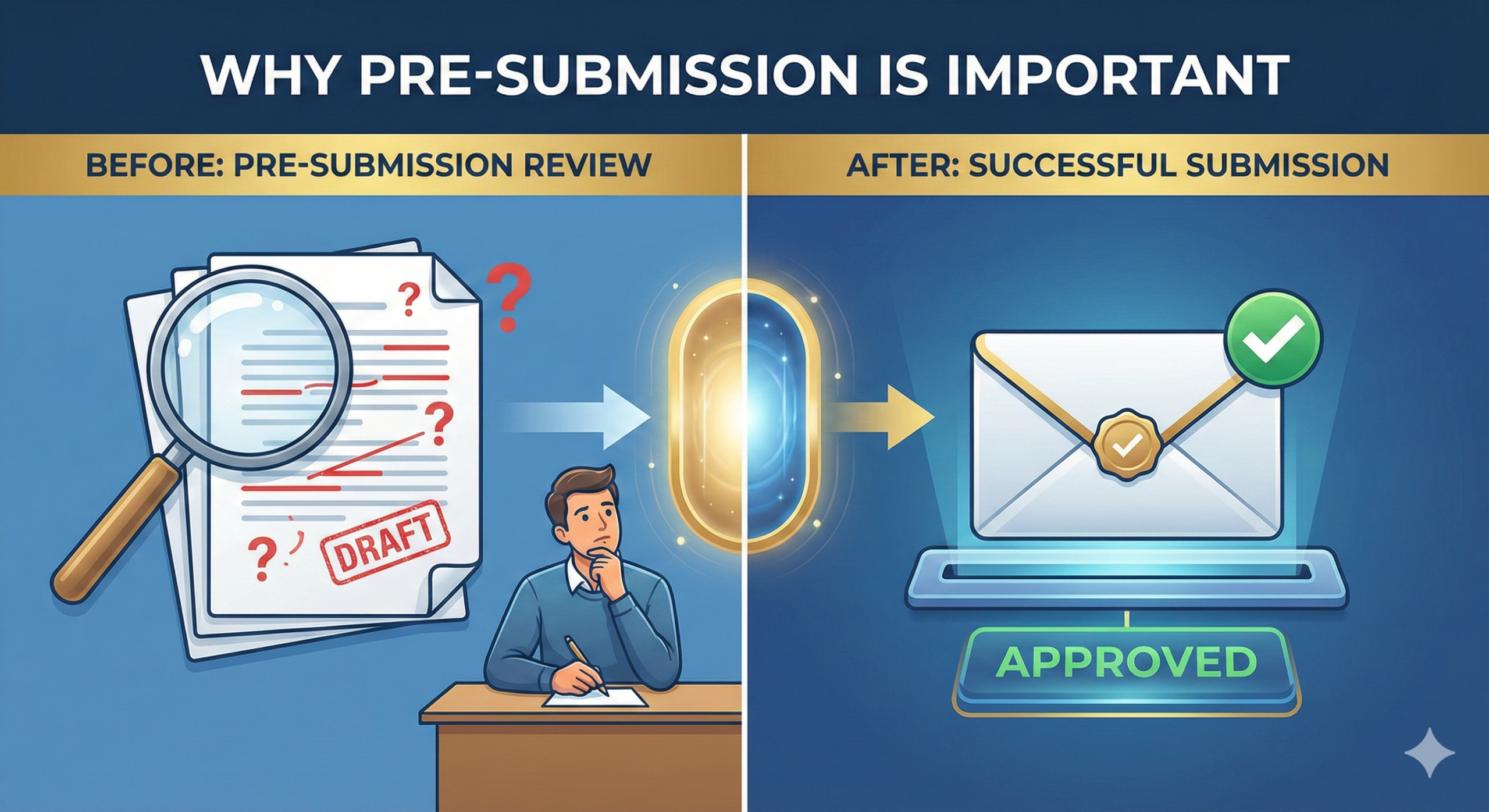
“Presubmission” refers primarily to pre-submission consultation with the U.S. Food and Drug Administration (FDA). It is a critical phase in which the applicant and the regulatory authority engage in mutual communication before the formal submission of an approval application. By obtaining guidance and feedback from the FDA prior to submitting formal application documentation, companies can facilitate the subsequent submission process, and optimize the time and costs required for approval. This is a strategic step toward regulatory success.
There are several significant advantages that make presubmission important. First, obtaining early feedback from regulatory authorities allows companies to validate the appropriateness of their development approach in advance. Second, it enables optimization of the submission strategy and data generation plans, particularly regarding the protocols for human factors validation testing and other validation studies. Third, by building mutual understanding of regulatory requirements, companies can reduce post-submission correspondence and achieve shorter approval timelines.
In FDA medical device review, the approval process tends to be very stringent and time-consuming because the agency must carefully verify the applicability of new products. However, by obtaining preliminary guidance and feedback from the FDA through presubmission, companies can increase the predictability of this process and shorten the time to approval.
Furthermore, the feedback obtained through pre-consultation dialogue with the FDA enables companies to optimize human factors validation testing and validation study protocols. Human factors refer to “human factors,” encompassing the safety, efficacy, and usability of medical devices from the perspective of their users (healthcare professionals and patients). By discussing these protocols with the FDA in advance and reflecting their guidance, companies can ensure efficient and reliable testing implementation, which directly contributes to improved product quality and enhanced user satisfaction.
FDA presubmissions come in multiple formats. For medical devices, typical examples include pre-IDE meetings (before Investigational Device Exemption applications), pre-submission meetings (before 510(k) applications), and meetings equivalent to pre-BLA consultations (before Premarket Approval applications). In each format, the applicant submits a set of questions, and the FDA provides written feedback that is then reflected in the company’s subsequent submission strategy. From 2023 through 2024, the FDA has been engaged in ongoing efforts to further enhance the transparency and efficiency of the presubmission process. This has enabled applicants to obtain clearer and more specific guidance in advance.
As a practical example, when a medical device company planning a 510(k) submission reaches agreement with the FDA during presubmission on the criteria for establishing substantial equivalence and the necessary testing data, the subsequent review process tends to proceed more rapidly. Additionally, in product development involving complex design changes, phased consultations through presubmission greatly contribute to reducing development risk.
Presubmission dialogue also influences companies’ strategic decisions. For instance, if a highly novel medical device is judged unlikely to obtain approval through the 510(k) pathway during presubmission, the company can make an early strategic shift toward a PMA submission, avoiding unnecessary extension of development timelines. In this way, presubmission is not merely a formal procedural step but rather represents the foundation of regulatory strategy itself.
Furthermore, from the perspective of international harmonization, the importance of presubmission continues to grow. Regulatory authorities such as the FDA, EMA (European Medicines Agency), and PMDA (Pharmaceuticals and Medical Devices Agency of Japan) are advancing mutual harmonization of regulatory requirements and scientific evaluation standards. The guidance obtained from the FDA during presubmission provides useful information for subsequent EU MDR submissions and PMDA applications.
In essence, presubmission is an indispensable step for facilitating the approval process of new products and achieving improved product quality and development efficiency. By strategically leveraging presubmission feedback to construct optimal validation study protocols and clinical trial plans, companies can achieve product development that is safer, more user-friendly, and brought to market more efficiently. Particularly for medical devices of high complexity or those incorporating innovative technologies, effective utilization of the presubmission process can become a critical factor determining regulatory approval success.

Comment