
What is DTx (Digital Therapeutics)?
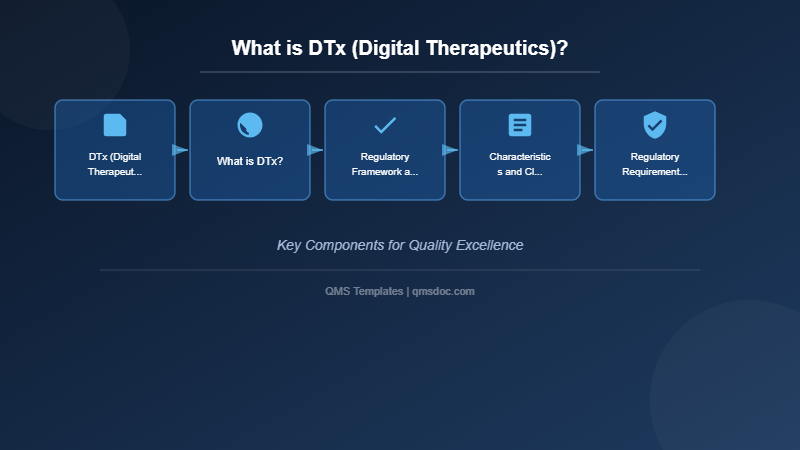
DTx (Digital Therapeutics): A New Paradigm in Software-Driven Healthcare
Digital technology has become pervasive in virtually every aspect of modern life, and the healthcare industry is no exception. Among the various innovations emerging in this digital health revolution, “DTx (Digital Therapeutics)” stands out as a novel therapeutic approach drawing significant attention from regulatory bodies, healthcare providers, and patients alike. However, while the term “DTx” has become increasingly familiar, many individuals still lack a comprehensive understanding of its specific definition, regulatory framework, and practical applications. This article provides an introductory yet professionally rigorous explanation of DTx, its definitions, regulatory landscape, and clinical characteristics.
Digital technology has become pervasive in virtually every aspect of modern life, and the healthcare industry is no exception. Among the various innov…
What is DTx?
Digital Therapeutics (DTx) is more than just another health-related software application. In regulatory terms, DTx is classified as a medical device under frameworks such as the Pharmaceuticals and Medical Devices Act in Japan. Specifically, DTx refers to therapeutic software programs that are intentionally developed to produce clinical therapeutic effects—a distinction that differentiates them from conventional wellness applications or general health-tracking software.
DTx products can function as standalone therapeutic interventions or as adjunctive treatments used in combination with pharmaceutical products to improve clinical outcomes. Notable international examples include reSET (developed by Pear Therapeutics for substance use disorder treatment) and Somryst (a digital cognitive behavioral therapy application for insomnia). In Japan, smoking cessation support applications have received regulatory approval as medical devices. reSET, for instance, delivers cognitive behavioral therapy (CBT) principles and has demonstrated clinical efficacy through rigorous clinical trials.
Regulatory Framework and Classification of DTx
The regulatory pathway for DTx varies significantly across jurisdictions. In the United States, the FDA (Food and Drug Administration) classifies medical software, including DTx, as medical devices and provides comprehensive guidance on digital health software. Similarly, in Japan, DTx products fall under the Pharmaceuticals and Medical Devices Act and require regulatory approval as medical devices before market authorization.
It is critical to understand that not all digital health software qualifies as DTx. To be classified as DTx, an application must be specifically intended for diagnosis, treatment, prevention, or disease management, and it must be supported by a defined level of clinical evidence. This distinction ensures that only software products demonstrating meaningful therapeutic intent and clinical validation are subject to DTx designation.
Characteristics and Clinical Advantages of DTx
When compared to conventional pharmaceutical interventions, DTx offers several distinctive characteristics. The most notable advantage is the virtual absence of adverse effects from the medication perspective. Since DTx does not involve the ingestion or administration of chemical substances, patients are not exposed to drug-related allergic reactions or adverse events resulting from individual physiological variations. However, it is important to recognize that DTx use may involve psychological stress or unintended behavioral consequences that warrant consideration.
From a convenience standpoint, the software-based nature of DTx enables ease of access and widespread availability. Patients can utilize DTx applications in their homes, during commuting, or at other convenient times within their daily routines. This accessibility is particularly valuable in regions with limited healthcare resources, as DTx has the potential to bridge medical access gaps and improve health equity. Furthermore, DTx applications generate comprehensive compliance data and usage metrics that healthcare providers can leverage for individualized medical management and treatment optimization.
Additionally, DTx possesses a unique advantage regarding the incorporation of medical innovations. Software updates can rapidly integrate the latest medical evidence and therapeutic knowledge into clinical practice. This flexibility contrasts favorably with traditional pharmaceutical products, where regulatory modifications following market authorization are typically constrained.
Regulatory Requirements and Clinical Evaluation of DTx
For DTx to obtain regulatory approval as a medical device, its safety and efficacy must be scientifically established through rigorous clinical investigation. The FDA typically requires clinical trials for DTx products, with randomized controlled trials (RCTs) serving as the standard approach to demonstrate therapeutic efficacy. This requirement reflects the expectation that DTx products meet clinical evidence standards equivalent to those of pharmaceutical agents.
Under Japan’s Pharmaceuticals and Medical Devices Act, DTx is classified as a medical device program. Regulatory approval requires comprehensive documentation addressing safety, efficacy, and post-market surveillance strategies. Particular emphasis is placed on software security, user interface design, and data management requirements, all of which are subject to stringent regulatory scrutiny. The European Union’s In Vitro Diagnostic Regulation (IVDR) may also apply to certain DTx categories, requiring conformity assessment based on product classification. Additionally, amendments to the Medical Device Regulation (MDR) have strengthened the regulatory framework governing digital health tools in European markets.
Clinical Applications of DTx and Impact on Patient Care
DTx demonstrates particular clinical utility in the management of chronic lifestyle-related diseases, including type 2 diabetes mellitus, hypertension, obesity, and related metabolic conditions. These diseases require continuous behavioral management and self-monitoring—precisely the areas where DTx applications provide therapeutic support by enhancing long-term treatment adherence and enabling real-time feedback loops.
In response to rapid population aging and unequal distribution of healthcare resources, the escalating cost of healthcare delivery has become a critical policy concern. The geographic disparity in medical access, particularly in rural and remote regions, constitutes a significant health equity challenge. DTx applications have the potential to expand access to specialized medical care by enabling patients in underserved areas to receive treatment guidance from medical specialists via software-facilitated management. Moreover, by enabling patients to conduct self-management in their home environments, DTx can reduce the clinical workload on healthcare providers and improve overall system efficiency.
However, it is essential to acknowledge that DTx efficacy is substantially dependent on patient digital literacy and sustained engagement (adherence) with the application. Additionally, implementation strategies must address potential socioeconomic disparities in access to ensure that DTx adoption promotes health equity rather than exacerbating existing inequalities.
Conclusion
Digital Therapeutics represent a novel category of therapeutic intervention delivered through software applications and regulated as medical devices within established regulatory frameworks. With minimal adverse effect profiles, compatibility with individual lifestyle patterns, and potential to enhance healthcare access, DTx products offer promising therapeutic options. However, the demonstration of clinical efficacy and safety requires scientific rigor equivalent to that demanded of pharmaceutical agents.
To maximize the role of DTx in future healthcare systems, healthcare stakeholders must prioritize patient education, provider training, and continuous post-market safety monitoring (PMCF). With appropriate implementation and appropriate clinical integration, DTx will continue to represent a valuable tool for patient self-management and healthcare optimization.
