
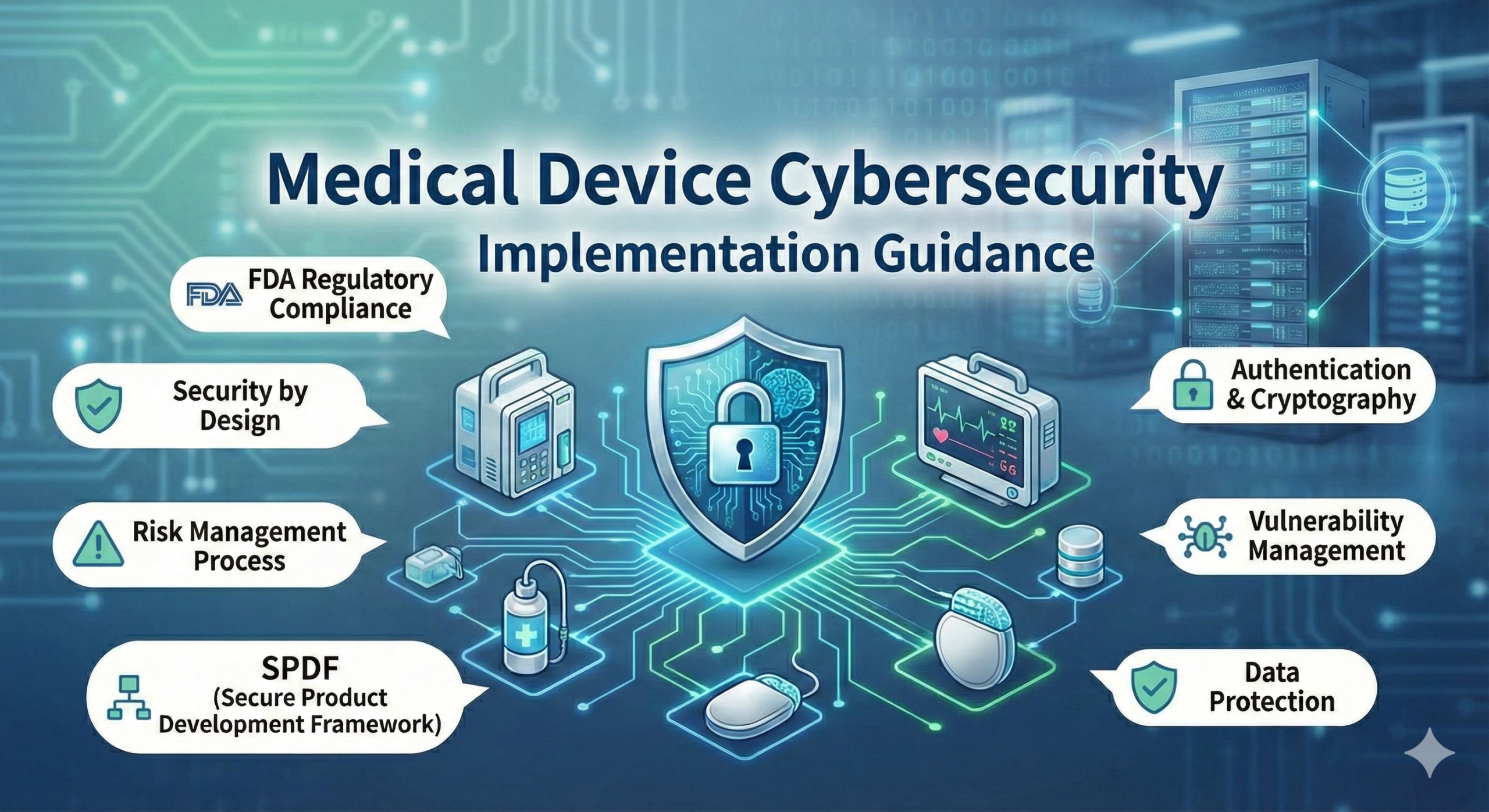
Medical Device Cybersecurity Implementation Guidance
Overview of MHLW Implementation Framework and Practical Compliance
Background of the Public Comment Solicitation
The Ministry of Health, Labour and Welfare (MHLW) initiated a public comment period on October 7, 2021, regarding the “Guidance for the Implementation of Cybersecurity for Medical Devices (Draft).” Comments were accepted through November 5, 2021. This guidance document was developed to implement the International Medical Device Regulators Forum’s (IMDRF) principles and practices for medical device cybersecurity in the Japanese medical device industry.
The Ministry of Health, Labour and Welfare (MHLW) initiated a public comment period on October 7, 2021, regarding the “Guidance for the Implementation…
The MHLW demonstrated its commitment to advancing international regulatory harmonization and improving medical device cybersecurity safety across national borders by encouraging medical device manufacturers to adopt the IMDRF guidance. This initiative was structured to be implemented gradually over approximately three years.
Characteristics and Positioning of the Guidance
This guidance document serves as a framework for domestic implementation of IMDRF guidance, incorporating the following key characteristics:
First, while grounded in IMDRF guidance requirements, the document reflects findings from the AMED-funded research project titled “Research on Identifying Issues Related to Cybersecurity of Medical Devices in Healthcare Facilities” (Principal Investigator: Masatsugu Nakano, Executive Vice President, Medical Device Center Foundation). This research-based approach ensures that international regulatory requirements are balanced with practical considerations specific to Japan’s medical device industry.
Second, recognizing the dynamic nature of the international regulatory environment, the guidance anticipates periodic revisions and supplements in accordance with evolving IMDRF discussions and best practices. This adaptive approach enables medical device manufacturers to remain aligned with current regulatory trends and international developments.
Purpose and Scope of the Guidance
The primary objective of this guidance is to ensure the quality, efficacy, and safety of medical devices while complying with the Pharmaceutical Affairs and Medical Device Act (Japan’s pharmaceutical and medical device law) by implementing the IMDRF guidance requirements. The document provides medical device manufacturers with essential information for implementing cybersecurity measures and establishing organizational processes appropriate for the Japanese market.
When manufacturers implement appropriate measures based on this guidance, they can systematically reduce cybersecurity-related risks throughout the entire product lifecycle (Total Product Lifecycle: TPLC) of medical devices, thereby ensuring product safety and essential performance. This ultimately translates to prevention of harm to patients and mitigation of adverse events.
The scope of application encompasses programmed medical devices capable of wireless or wired connection with other devices, networks, and media carriers. This includes Software as a Medical Device (SaMD) that functions independently as a medical device and accessories utilizing programmed systems. The guidance applies to diverse software-based solutions in the increasingly digital healthcare environment, such as smartphone applications, telehealth platforms, and Internet of Things (IoT)-enabled medical devices.
Definition and Scope of Cybersecurity Risks
This guidance addresses cybersecurity risks narrowly defined as those directly impacting the clinical safety of medical devices. Specifically, three categories of risks fall within the scope:
The first category comprises risks affecting the product performance of medical devices. An example would be unauthorized modification of diagnostic algorithms in a medical imaging device resulting in decreased diagnostic accuracy.
The second category includes risks affecting clinical activities themselves. This encompasses scenarios such as unauthorized access to surgical robotic systems leading to operational anomalies, or cyberattacks on patient monitoring systems that deny clinicians access to critical information necessary for clinical decision-making.
The third category encompasses risks directly leading to misdiagnosis, inappropriate treatment, or ineffective prevention. For instance, tampering attacks on electronic health record (EHR) systems that fraudulently alter patient information, subsequently resulting in inappropriate clinical interventions, exemplify this category.
It should be noted that risks related to data privacy—such as unauthorized disclosure of personal information or intrusion into hospital administrative systems—and general information security concerns fall outside the scope of this guidance. While important, these matters are appropriately managed through separate frameworks such as information security policies and personal data protection regulations.
Cybersecurity Implementation Throughout the Product Lifecycle
The central concept underlying this guidance is the implementation of cybersecurity measures across the entire medical device product lifecycle (TPLC). This principle recognizes that cybersecurity considerations must be integrated from the development stage preceding market entry, through the post-market phase of clinical use, and including eventual device discontinuation and disposal.
During the design and development stage, cybersecurity risk management, architecture design, and security testing represent critical considerations. This phase requires identification of foreseeable threats and incorporation of design-based countermeasures. Technical controls such as cryptographic implementation, authentication mechanisms, and input validation, along with evaluation methodologies including threat modeling, security code review, and penetration testing, are essential. These cybersecurity risk considerations must be integrated into the risk management framework in accordance with ISO 14971 (Risk Management) and IEC 62304 (Software Development Lifecycle Processes).
In customer-facing documentation, manufacturers must provide healthcare professionals and patients with appropriate information regarding cybersecurity. This includes operational manuals, security guidance, known vulnerability information, and guidance on the importance of security updates. Healthcare providers require sufficient information to recognize cybersecurity concerns and respond appropriately.
For regulatory submissions, manufacturers must clearly articulate the cybersecurity requirements that their medical devices satisfy and the implementation methods employed. When submitting applications to the Pharmaceuticals and Medical Devices Agency (PMDA) for regulatory approval, manufacturers must present specific, verifiable information regarding device cybersecurity design, test results, and vulnerability management policies.
In the post-market phase, information collection, information sharing, and incident response activities become paramount. Medical devices in clinical use may reveal emerging cybersecurity threats and vulnerabilities. Systematic collection and analysis of such information, coupled with provision of security updates or notification of risk information to healthcare facilities when warranted, represents essential manufacturer responsibilities. This includes establishing information-sharing mechanisms with healthcare facilities and developing well-defined incident response protocols for cybersecurity events.
Important Considerations for Implementation
Organizations implementing this guidance must establish clear organizational accountability and governance structures for cybersecurity across the enterprise. Because implementation typically requires coordination among multiple departments—including product development, quality assurance, regulatory affairs, and post-market surveillance—integrated organizational governance proves essential.
As medical device technology becomes increasingly complex, cybersecurity threats diversify correspondingly. When adopting new technologies such as open-source software, cloud computing, or artificial intelligence and machine learning capabilities, concurrent consideration of associated cybersecurity implications becomes imperative.
Furthermore, because medical devices typically enjoy extended operational lifespans, manufacturers must possess sustained capability to respond to cybersecurity threats emerging in the post-market environment. Critical capabilities include mechanisms for periodic security update distribution, processes for receiving and evaluating vulnerability reports, and established protocols for rapid response to cybersecurity incidents. Development of comprehensive post-market response plans addressing these capabilities is essential.
This guidance serves as an important framework for ensuring cybersecurity in the medical device industry, ultimately protecting patient safety and maintaining confidence in healthcare. Medical device manufacturers must understand the guidance’s requirements and implement appropriate measures tailored to their specific product characteristics and organizational scale.
Related Articles
- Medical Device Cybersecurity Guidance and IEC 81001-5-1
- IMDRF Guidance on Cybersecurity for Legacy Medical Devices
- FDA Draft Guidance on Cybersecurity in Medical Devices
- Implementation Dates of the Revised Pharmaceutical and Medical Device Act (PMD Act)
- Cybersecurity Measures Have Become Mandatory: A Turning Point in Medical Device Regulation
- Strengthening Cybersecurity Measures for Medical Institutions and Medical Devices (Request)

Comment