
Public Comments Solicitation on the Proposed Ordinance Amending the Ordinance Regarding Standards for Manufacture Control and Quality Control of Medical Devices and In Vitro Diagnostic Devices
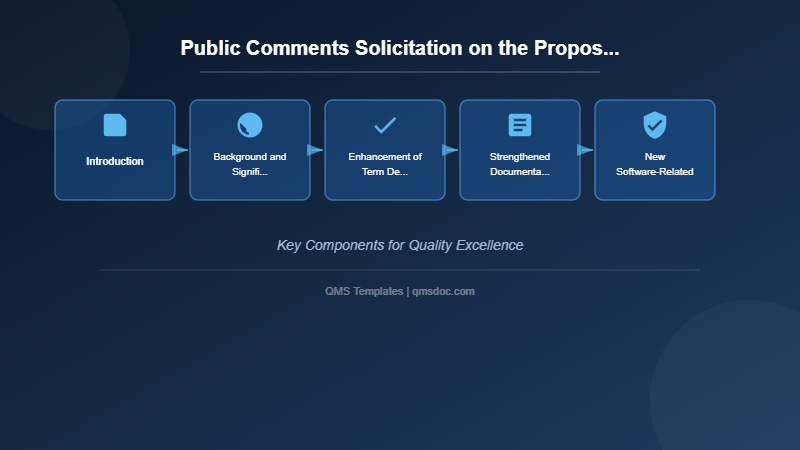
Introduction
On October 16, 2020, the Surveillance and Guidance Division, Drug and Life Science Division, Ministry of Health, Labour and Welfare issued a call for public comments on a proposed ordinance to amend the Ordinance Regarding Standards for Manufacture Control and Quality Control of Medical Devices and In Vitro Diagnostic Devices (hereinafter referred to as the “QMS Ordinance”). It is important to note that this is an amendment to the existing QMS Ordinance, not a completely new ordinance.
On October 16, 2020, the Surveillance and Guidance Division, Drug and Life Science Division, Ministry of Health, Labour and Welfare issued a call for …
The comment submission deadline was November 16, 2020 (Monday), and the ministry solicited comments from the general public.
Background and Significance of the Amendment
This amendment was implemented to ensure harmonization between international standards and domestic regulations in light of the publication of ISO 13485:2016. However, since ISO 13485:2016 was published in 2016, a time lag of four years had occurred. From the perspective of promptness in responding to international standards, the timing of the amendment somewhat lacked urgency.
ISO 13485 is an international standard concerning quality management systems (QMS) for medical device manufacturers and has been adopted as a regulatory requirement in many countries. Through this amendment, aligning Japan’s QMS Ordinance with international standards facilitates medical device manufacturers in establishing consistent quality management systems both domestically and internationally, which represents a significant advantage.
Enhancement of Term Definitions
Article 2 (Definition of Terms) is expected to include new definitions for terms such as “implantable medical devices,” “post-market surveillance,” and “usability,” among others.
“Implantable medical devices” refers broadly to medical devices intended to be implanted within the human body, including pacemakers, artificial joints, artificial blood vessels, and many other medical devices related to life support and functional restoration. The clarification of this definition increases the necessity to apply stricter quality control standards.
“Post-market surveillance” refers to activities conducted after a medical device is supplied to the market to continuously monitor its safety and effectiveness. Within Japan, these activities are regulated under the system for reporting safety information concerning pharmaceuticals and medical devices (GVP Ordinance). However, in international regulations such as the European Medical Device Regulation (MDR) and the In Vitro Diagnostic Regulation (IVDR), post-market surveillance is clearly positioned as a component of QMS. This amendment clarifies this perspective within domestic regulations as well.
“Usability” is the Japanese terminology for the concept of user experience and is detailed in IEC 62366-1:2015 (with the 2023 edition being the most current). An important distinction to avoid misunderstanding is that improving usability does not simply mean making medical devices “easier to use.” Rather, the essence lies in design that reliably ensures the intended use of medical devices and prevents unintended misuse. Even if a medical device has a design that is difficult to use, ensuring that the device functions safely and effectively remains the paramount priority. This reflects the unique safety philosophy inherent to medical devices.
Strengthened Documentation Requirements and Risk-Based Approaches
Article 5, Paragraph 2 is expected to clearly state that “all requirements, procedures, activities, and implementing provisions required to be documented by this Ordinance shall be established, implemented, and maintained.”
This provision is extremely important. While traditional interpretations required the creation of “procedure documents,” this amendment demands the creation of more detailed “implementation instructions.” Procedure documents are those that outline general procedures, whereas implementation instructions contain operational-level details about how procedures are actually executed. Particularly in cases where manufacturing processes are outsourced, it is crucial to establish detailed implementation instructions with external contractors and confirm that there are no gaps in mutual understanding.
Additionally, Article 5, Paragraph 2 emphasizes the necessity of implementing a “risk-based approach.” A risk-based approach means implementing quality management measures proportionate to the magnitude of risks (possibilities of harm) associated with the medical device. This concept is closely related to ISO 14971 (Medical Device Risk Management). Rather than applying the same level of response to all requirements, the expectation is to implement an appropriate level of response commensurate with the hazards specific to the medical device.
Article 5-5 requires the application of a risk-based approach to risks associated with outsourcing medical device manufacturing. Risk analysis is required for all outsourcing activities, including the selection of outsourcing partners, contract contents, and methods for conducting periodic audits.
New Software-Related Requirements
Article 5-6 specifies in detail a new requirement added from ISO 13485:2016: validation of software related to QMS. This includes various types of software used in medical device manufacturing, such as design support software, manufacturing system control software, and quality management system software.
Software validation is a process that demonstrates that software functions correctly in accordance with its intended purpose. More than mere testing, validation requires verification and confirmation of implementation throughout the entire software lifecycle, from requirements definition to operational deployment. This requirement is becoming increasingly important in the medical device manufacturing industry as digitalization advances and is also related to cybersecurity measures such as the IEC 80001 series.
Concretization of Product Standards Documentation
Article 7-2 is expected to require more specific content regarding product standards documentation. A product standards document is a record that specifies requirements related to the specifications, performance, and safety of a medical device and serves as the standard for all quality management activities. The new requirements are expected to specify in greater detail which items should be included in product standards documentation and how they should be presented.
Substantial Revision of Regulatory Structure
Notably, the proposed ordinance states that “in order to align the structure of provisions of ISO 13485 and the QMS Ordinance, necessary revisions such as relocation of certain provisions will be made.” This signifies not merely a “partial amendment” but rather a revision approaching a “complete re-enactment.” Since changes to article numbering will occur, medical device manufacturers must prepare to comply with the new article numbers.
Furthermore, revision is also planned for the Ordinance on Standards for the System of Operations Concerning Manufacture Control and Quality Control of Medical Devices and In Vitro Diagnostic Devices (Ministry of Health, Labour and Welfare Ordinance No. 94 of 2014). Unlike the QMS Ordinance, this ordinance addresses regulations concerning the organizational structure and responsibility management systems of medical device manufacturers, and the amendment will further clarify these aspects.
Implementation Schedule and Transitional Measures
The anticipated promulgation date was mid-March 2021 (the ordinance was actually promulgated on February 26, 2021). Importantly, the ordinance does not take effect immediately upon promulgation. Instead, a three-year transitional period was provided. This allows medical device manufacturers from February 26, 2021 to February 26, 2024 to revise existing procedures and systems to comply with new regulatory requirements, strengthen their quality management systems, conduct employee training, and undertake other necessary preparations.
This timing essentially coincides with the implementation of the European MDR/IVDR regulations (May 2021), overlapping with a period of significant international regulatory changes for medical devices. Structuring a QMS that integrates domestic and international regulatory requirements facilitates the development of efficient and sustainable quality management systems.
Industry Impact and Implementation Strategy
This amendment has substantial implications for medical device manufacturers. The requirements themselves under ISO 13485:2016 are likely already addressed by most manufacturers that have obtained international certifications. However, as these requirements are now explicitly mandated by domestic regulations and presented within a new regulatory structure, manufacturers must reassess their compliance status and address any identified gaps.
Particular attention must be paid to areas such as quality management related to outsourcing, software validation, and post-market surveillance activities, where more detailed and operationally feasible documentation must be established. Simultaneously, implementation of record-keeping systems based on the ALCOA+ principles (Authenticity, Completeness, Consistency, Clarity, Visibility, Auditability, and Accountability) is also essential.
As medical device manufacturers, it is critical to thoroughly understand the content of this amendment, evaluate the current state of their QMS, and systematically implement any required revisions and enhancements.
Reference Materials
- ISO 13485:2016 Medical devices – Quality management systems – Requirements for any organization
- ISO 14971 Medical devices – Risk management
- IEC 62366-1:2015 Medical devices – Part 1: Guidance on usability engineering of medical devices
- IEC 80001 series Information security, risk and resilience for health-related and connected medical devices and health software as a medical device (MDSware)
- Ministry of Health, Labour and Welfare Ordinance on Standards for Manufacture Control and Quality Control of Medical Devices and In Vitro Diagnostic Devices (QMS Ordinance)
- EU Medical Device Regulation (MDR) 2017/745
- EU In Vitro Diagnostic Regulation (IVDR) 2017/746
Related Articles
- The Importance of Design Control in Medical Devices
- Understanding the Difference Between “Design” and “Design Control” in Medical Devices
- What Are the Unique Characteristics of the Risk Model for In Vitro Diagnostic Medical Devices (IVDs)?
- Why Severity Takes Precedence Over Frequency: A Practical Approach to Risk Control in Medical Devices
- FDA Design Control Guide: Foundation of Medical Device Quality Management
- Revisions to Japan’s Medical Device Quality Management System Ordinance

Comment