
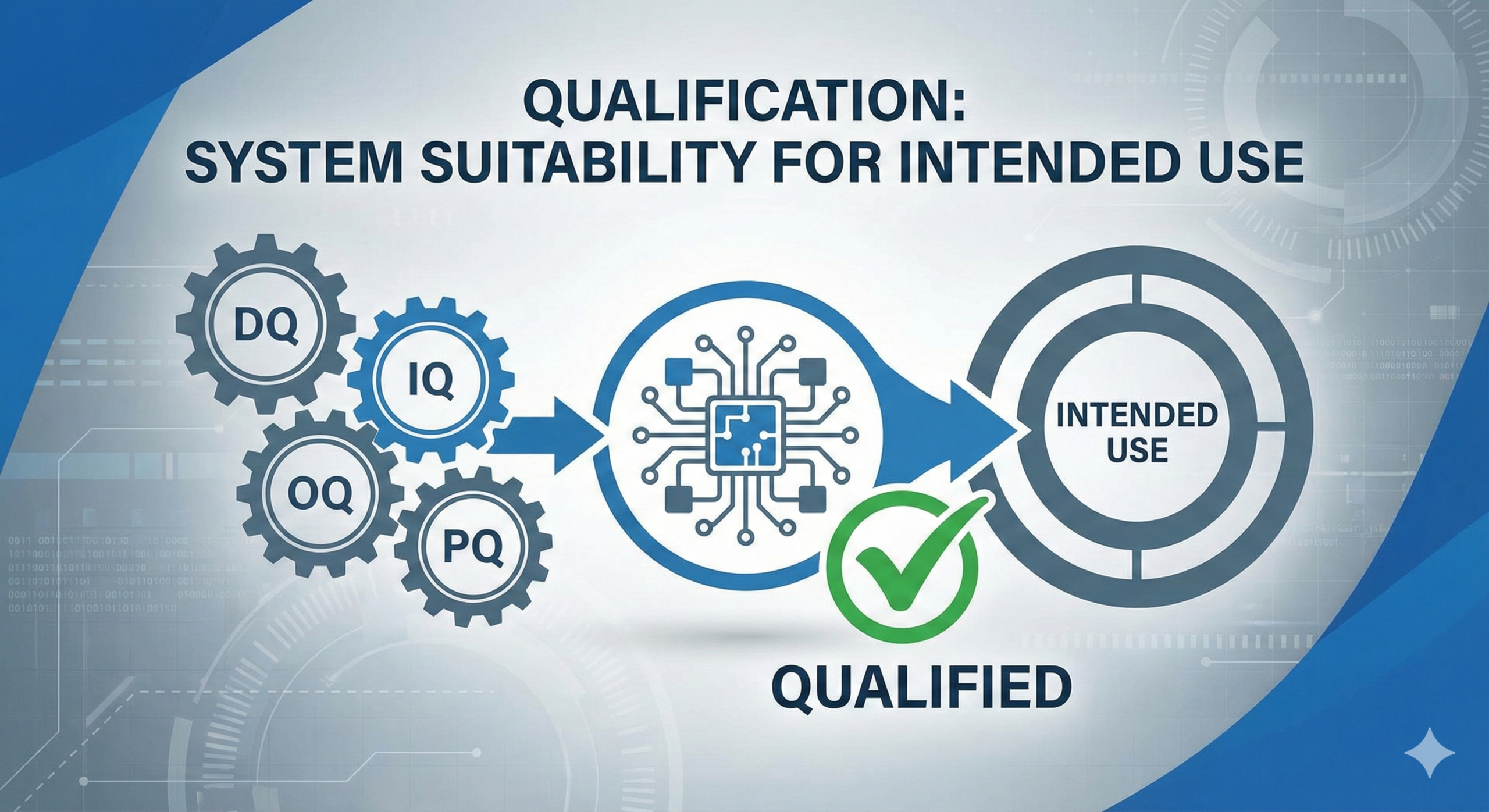
Qualification: Understanding System Suitability for Intended Use
Understanding Qualification Through Practical Examples
Imagine a scenario where you need to perform surgery but have no scalpel. You decide to purchase a high-end knife from an exclusive knife shop. As the knife is of the finest quality, its construction and materials are certainly superior. However, is a high-end kitchen knife appropriate for performing surgery? The answer is unequivocally “no.”
Imagine a scenario where you need to perform surgery but have no scalpel. You decide to purchase a high-end knife from an exclusive knife shop. As the…
Similarly, consider a situation where you need to drive a Phillips head screw but lack a Phillips head screwdriver. While a flathead screwdriver might technically fit into a Phillips head slot and appear to function, repeatedly doing so risks stripping the screw head. Furthermore, the screwdriver itself may become damaged in the process. Under such circumstances, accidents become inevitable.
As these examples illustrate, when the specifications of equipment or systems do not align with their intended use, the risk of accidents increases substantially.
Definition of Qualification
Regulatory requirements mandate that all activities related to quality management, manufacturing, inspection, and testing ensure that “specifications” align with “user requirements.” Regulatory authorities require verification that these elements are properly matched, and this verification process is termed “qualification.”
In essence, qualification refers to validation activities performed on hardware systems. Hardware typically consists of mechanical and electrical components. When such hardware is controlled by software, firmware, programmable logic controllers (PLCs), or similar systems, it is classified as a computerized system, also known as an automated system. In these cases, the controlling software must also undergo qualification, more specifically termed Computer System Validation (CSV).
Components of Qualification
Qualification is a crucial concept used during Process Validation (PV) activities and comprises the following stages:
Design Qualification (DQ) is the stage where the design specifications, technical specifications, and drawings provided by the supplier are verified to confirm whether they properly reflect the user’s requirements. During DQ, validation activities confirm that required performance characteristics, safety features, and regulatory requirements are correctly incorporated into the system design. This stage establishes the baseline that the hardware and software must achieve.
Installation Qualification (IQ) is the stage where hardware and software are verified to have been correctly installed in accordance with acceptance criteria. This encompasses confirming that equipment has been installed according to specifications in the technical documentation, that all components are properly connected to one another, and that necessary calibrations and configurations have been completed. IQ serves as evidence that the installed system matches the design intentions before operational testing begins.
Operational Qualification (OQ) is the stage where hardware and software are verified to function as specified under defined operating conditions. This stage validates that equipment operates appropriately within standard operating parameters and responds correctly to specified inputs and commands. OQ demonstrates that the system performs its intended functions reliably under normal use conditions.
Performance Qualification (PQ) is the stage where the system is verified to consistently achieve defined performance standards under actual manufacturing conditions. PQ demonstrates that the system functions as expected within the real process environment and produces results that meet specified acceptance criteria.
Modern Implementation Approaches
In contemporary practice, Design Qualification and Performance Qualification are frequently not performed. This reflects a modern approach that considers system complexity, the evolution of regulatory guidance, and practical implementation feasibility. Industry recognizes that Performance Qualification may be incorporated into Operational Qualification or Process Validation activities without compromising regulatory compliance.
Furthermore, Installation Qualification and Operational Qualification may be performed concurrently, and this integrated approach is widely accepted. This combined implementation, often referred to as “IOQ,” is frequently delegated to the hardware (including software) supplier. This integrated approach enhances efficiency of validation activities and reduces overall project timelines. By executing these stages in parallel where appropriate, organizations achieve regulatory compliance while optimizing resource utilization.
Conclusion
Qualification is a fundamental regulatory requirement in pharmaceutical manufacturing, medical device manufacturing, and related regulated industries. It serves to verify that systems and processes are fit for their intended use. Like the surgical scalpel and screwdriver examples, confirming that a system is suited to its purpose is essential for ensuring product quality, safety, and efficacy. Through systematic qualification activities—whether in their traditional sequential form or in modern concurrent implementations—organizations demonstrate their commitment to quality, maintain regulatory compliance, and ultimately protect the integrity of their products and the safety of users who depend on them.
Related Articles
- Understanding the True Purpose of Performance Qualification (PQ) in Computerized System Validation
- Understanding Assurance in Computer System Validation (CSV)
- Understanding Quality Systems in Pharmaceutical and Medical Device Industries
- Understanding Qualification in Process Validation: A Comprehensive Guide
- Understanding Quality Systems
- Understanding Qualification in Pharmaceutical Manufacturing: A Comprehensive Guide
