Primary Records and Backup Records in Raw Data
Definition of Primary Record
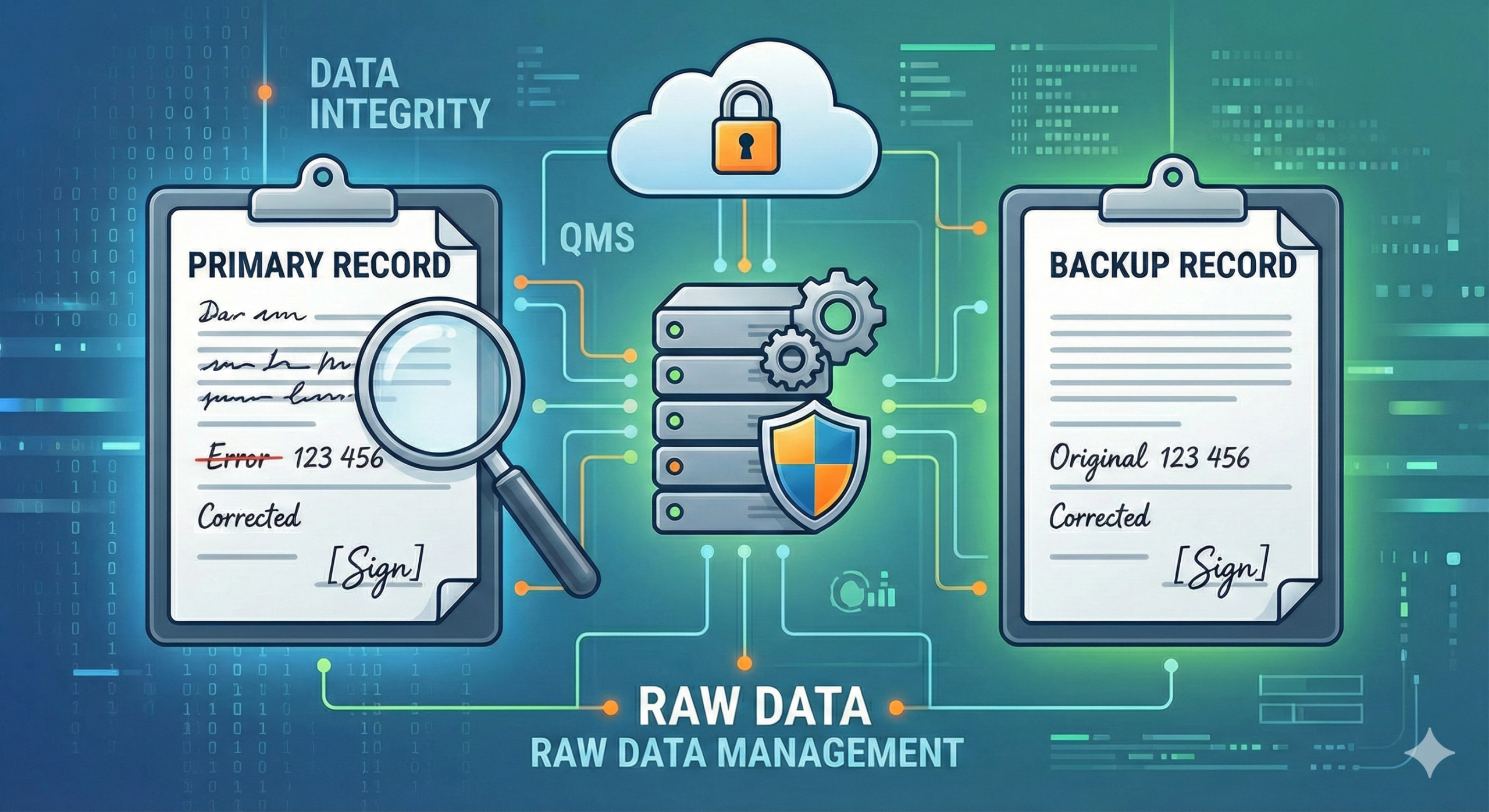
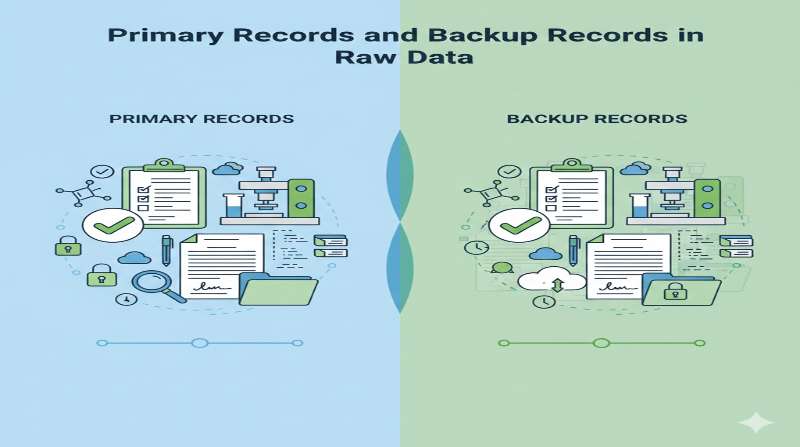
A primary record refers to the record that is designated as the authoritative source when data is simultaneously collected or stored by multiple methods and discrepancies occur between them. For example, consider a scenario where an electronic temperature and humidity monitoring system is implemented, and as a backup measure in case of system failure, a paper-based temperature and humidity recorder is also installed. In this case, the electronic temperature and humidity monitoring system would typically be designated as the primary record.
💡 原本記録とバックアップ記録の適切な管理は、データの完全性と可用性を確保するための基本要件です。
Under data integrity regulatory requirements, when the same data is being recorded simultaneously by multiple systems in this manner, it is essential to predetermine which system generates and stores the primary record in preparation for potential data discrepancies. This requirement is explicitly addressed in key regulatory guidance documents, including the PIC/S Good Practices for Data Management and Integrity in Regulated GMP/GDP Environments (PI 041-1, September 2021), FDA Guidance for Industry on Data Integrity and Compliance with Drug CGMP (December 2018), and MHRA GXP Data Integrity Guidance and Definitions (March 2018, revised July 2018).
Establishing Primary Record Attributes
The attributes of the primary record must be defined in Standard Operating Procedures (SOPs) and must not be changed on a case-by-case basis. This ensures consistency and prevents arbitrary selection of data sources based on convenience or desired outcomes. Risk management principles should be employed to ensure that the data designated as the primary record possesses the maximum degree of accuracy, completeness, content, and meaning. These principles align with the ALCOA+ framework, which requires data to be Attributable, Legible, Contemporaneous, Original, Accurate, plus complete, consistent, enduring, and available throughout the data lifecycle.
It is not advisable to designate low-resolution data or static data from printed or manual records as the primary record over high-resolution data or dynamic electronic data. The rationale is that electronic systems typically provide:
- Higher temporal resolution and more frequent data points
- Complete and unedited data capture
- Metadata including date/time stamps, user identification, and system information
- Audit trails that record all data creation, modification, and deletion activities
- Dynamic data that allows for trend analysis and advanced data review techniques
The selection of the primary record should be based on which system provides the most complete, accurate, and contemporaneous representation of the actual event or measurement being recorded. Electronic systems, when properly validated and controlled, generally meet these criteria more effectively than manual or paper-based systems.
Data Review in Case of Anomalies
However, when investigating data anomalies such as out-of-specification (OOS) results using a risk-based approach, all data must be scrutinized, including not only the primary record but also backup records. This comprehensive review is critical for several reasons:
First, it enables root cause analysis by providing multiple perspectives on the same event. Discrepancies between primary and backup records may reveal equipment malfunctions, calibration issues, or environmental factors that affected data collection. Second, it ensures data integrity by verifying the consistency and reliability of the primary record against independent backup systems. Third, regulatory authorities expect thorough investigations that consider all available data sources, as stated in ICH Q7 Good Manufacturing Practice Guidance for Active Pharmaceutical Ingredients and FDA‘s guidance on investigating OOS test results.
When data discrepancies are identified between primary and backup records during investigation, the predetermined hierarchy established in SOPs should guide decision-making. However, the investigation must document why discrepancies occurred, what they reveal about system performance or process conditions, and whether any corrective and preventive actions (CAPA) are necessary.
Understanding Hybrid Systems
In practice, many organizations operate hybrid systems where both electronic and paper-based records coexist. In such environments, it is particularly important to clearly define the primary record and establish robust procedures for reconciliation when discrepancies arise. The transition from paper-based to electronic systems should be carefully managed, with consideration given to data migration, system validation, and training to ensure that the primary record designation remains appropriate throughout the system lifecycle.
Key Considerations for Primary Record Selection
When designating primary records, organizations should consider the following factors based on current regulatory expectations:
Data Attributes: The primary record should provide the highest level of data granularity and preserve the original format of the data. Electronic systems that capture raw data directly from instruments or sensors typically satisfy this requirement better than transcribed or manually recorded data.
Metadata Capture: Modern data integrity guidance emphasizes the importance of metadata—the “data about data” that provides context, including who performed an action, when it was performed, and what instrument or method was used. Electronic systems generally capture more comprehensive metadata automatically.
Data Integrity Principles: The primary record should best satisfy the ALCOA+ principles. Electronic systems with appropriate controls typically provide superior compliance with these principles compared to paper-based systems, particularly regarding contemporaneous recording, completeness, and availability of audit trails.
System Reliability: While electronic systems offer many advantages, the reliability and validation status of the system must be considered. A well-maintained, validated electronic system is preferable as the primary record, but if the electronic system is unreliable or inadequately validated, this must be addressed before designation.
Regulatory Compliance Table
The following table summarizes the key regulatory expectations for primary and backup records:
| Aspect | Primary Record | Backup Record |
| Designation | Must be predefined in SOPs | Must be clearly identified as backup |
| Data Quality | Highest resolution, most complete | May be lower resolution or summarized |
| ALCOA+ Compliance | Must fully comply with all principles | Should comply, but may have limitations |
| Audit Trail | Required for electronic systems | Desirable but may not be available |
| Metadata | Comprehensive capture required | Basic information acceptable |
| Review Frequency | Routine review for all decisions | Reviewed during investigations and audits |
| Retention | Per regulatory retention requirements | Same retention period as primary record |
| Investigation Role | First source for routine decisions | Must be reviewed in anomaly investigations |
Conclusion
The designation and management of primary records versus backup records is a fundamental aspect of data integrity in regulated environments. Organizations must thoughtfully determine which records serve as the primary source of truth, document this decision in procedures, and ensure that the primary record provides the most accurate, complete, and reliable representation of the data. Simultaneously, backup records must be retained and reviewed appropriately, particularly during investigations, to ensure comprehensive understanding of data and process performance. This balanced approach satisfies regulatory expectations while supporting robust quality and compliance practices.
Note: This guidance reflects requirements from PIC/S PI 041-1 (2021), FDA Data Integrity Guidance (2018), MHRA GXP Data Integrity Guidance (2018), ICH Q7, and EU GMP Annex 11. Organizations should consult the most current versions of applicable regulations and guidance documents for their specific jurisdiction and industry sector.
Related Articles
- Understanding CFR: The Foundation of U.S. Regulatory Framework
- The Birth of 21 CFR Part 11: A Historical Perspective
- The Four Unsolvable Challenges of Part 11
- Understanding the “Typewriter Excuse” in FDA 21 CFR Part 11 Compliance
- Why Printouts Cannot Be Trusted: Understanding the Vulnerability of Paper-Based Document Management
📌 関連テンプレート: バックアップ手順書テンプレート
Related FDA QMSR Templates
Streamline your FDA QMSR compliance with our professionally crafted templates: