
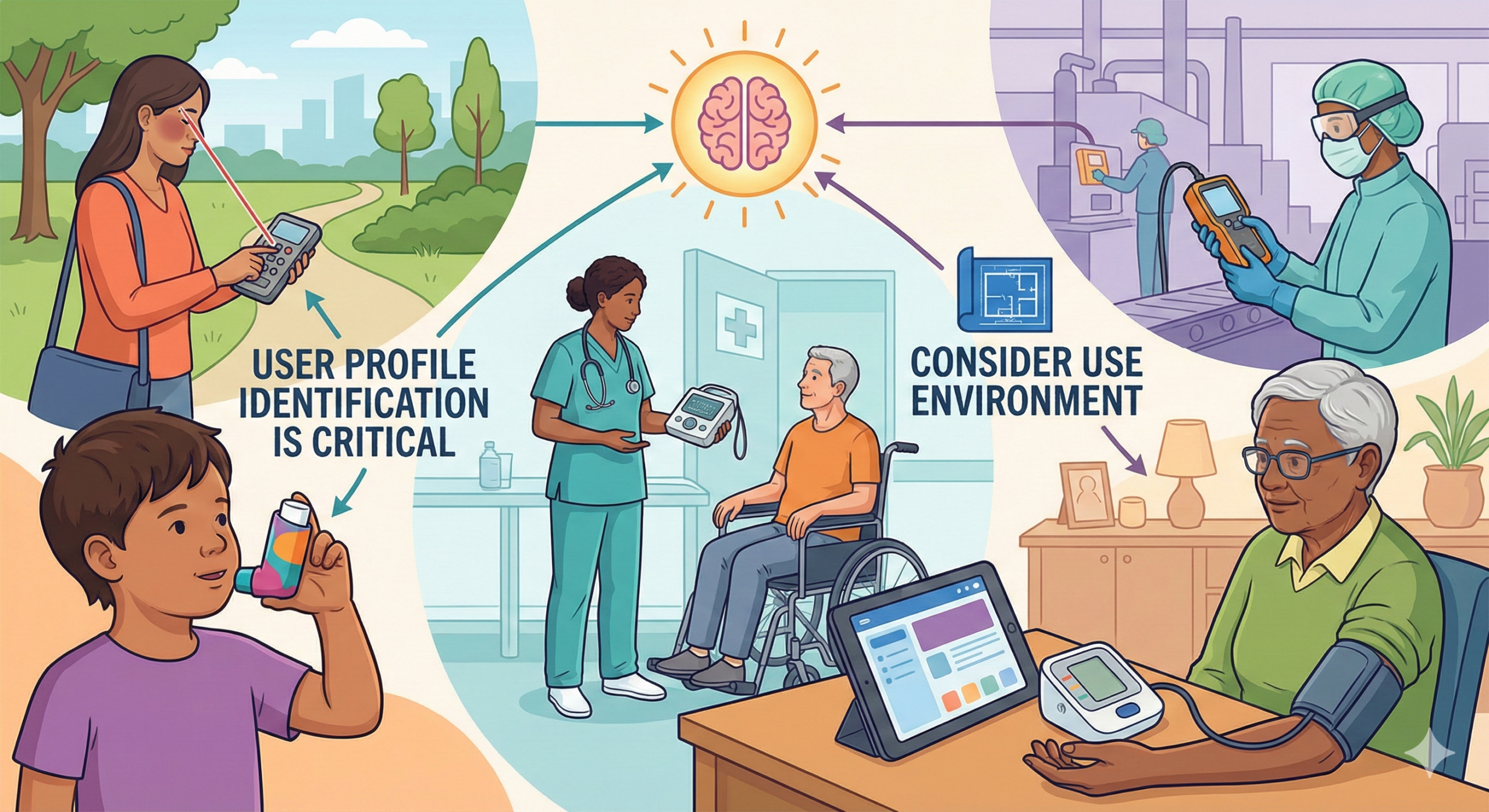
Why Consideration of the Use Environment is Critical
Environmental Factors and Their Impact on Safety—Key Points to Understand for Effective Device Management
In healthcare settings where the latest equipment is increasingly deployed, this article explains why consideration of the use environment is important through concrete examples. The theme of “the importance of considering the use environment” represents a fundamental principle that extends beyond medical technology to encompass many industries and professional domains. Let us explore this topic through practical cases.
In healthcare settings where the latest equipment is increasingly deployed, this article explains why consideration of the use environment is importan…
Use Environment Challenges in Healthcare Settings: The AED Example
The Automated External Defibrillator (AED) is installed in public facilities such as railway concourses to respond to emergencies such as cardiac arrest. When considering the actual environmental factors in which an AED operates, one can imagine the psychological and physical stress experienced by operators and patients in high-noise environments where calls for help must be shouted loudly, surrounded by large crowds of people.
The use environment for medical devices is clearly defined in ISO 13485 (Quality Management Systems for Medical Devices) and the IEC 60601 series (Safety Standards for Medical Devices). These international standards require consideration not only of the physical environment in which medical devices are used—such as temperature, humidity, and electromagnetic interference—but also the operational environment based on the operator’s competency level and the context of use. This comprehensive approach to environmental definition is essential for ensuring both device safety and effective clinical outcomes.
Incorrect operation can lead to life-threatening consequences. Even experienced healthcare professionals are prone to human error when operating devices in unfamiliar environments, making the use environment a critical factor. Indeed, in FDA (U.S. Food and Drug Administration) human factors guidance and the EU’s MDR (Medical Device Regulation), use environment analysis is mandated as a core requirement of usability engineering. This regulatory emphasis underscores the global recognition that safe and effective medical device operation is fundamentally dependent on the environmental context.
IEC 62366-1 (Usability of Medical Devices) explicitly requires detailed analysis of the physical, social, and organizational environments in which medical devices are used, and assessment of the user’s ability to perform tasks within that environment. By adhering to this standard, improvements that account for use environment can be integrated from the device design phase, enhancing both usability and safety outcomes.
Operational Challenges in Advanced Healthcare Environments
Within ambulances, treatment is conducted in conditions vastly different from routine clinical settings—with equipment relocation, bedside operation, confined spaces, vibrations during transit, and acute time pressure. These compound factors demonstrably impact healthcare professional performance. The synergistic effects of these environmental stressors can compromise decision-making, procedural accuracy, and overall clinical effectiveness.
To execute these complex and demanding operations smoothly, careful consideration of the use environment is essential, requiring sustained training and strengthened teamwork. Particularly from 2024 through 2025, regulatory guidance emphasizes the following key dimensions:
Software-Based Medical Devices and Cybersecurity — As medical devices increasingly incorporate cloud connectivity and network integration, the definition of use environment must now extend beyond traditional physical parameters to encompass digital security. Standards such as IEC 81001-5-1 (Security for networked medical devices) create a more complex landscape for use environment analysis, requiring developers to consider cyber threats as integral environmental factors that may compromise device safety and performance.
Multi-Regional Operational Compatibility — As international harmonization through MDSAP (Medical Device Single Audit Program) and IMDRF (International Medical Device Regulators Forum) advances, medical device manufacturers must demonstrate capability to address diverse use environments across different countries and regions. When considering deployment in emerging markets, for example, adaptation to unstable electrical infrastructure and hot, humid climates becomes critical design requirements that directly influence device reliability and clinical efficacy.
Artificial Intelligence and Machine Learning Integration — FDA’s AI/ML Action Plan and related regulatory guidance for AI/ML-based medical devices introduce use environment variability as a novel regulatory challenge. The diagnostic accuracy of the same AI-enabled medical device may vary substantially depending on patient population characteristics and clinical facility conditions, making prior assessment of environment-dependent performance a mandatory component of regulatory submissions and post-market surveillance strategies.
Practical Significance of Use Environment Consideration
In summary, consideration of the use environment transcends mere technical proficiency with a device; it encompasses the capacity to adapt to that environment and apply knowledge flexibly—fundamentally important elements of medical device management. For evolving medical technologies, learning and research must incorporate both the technical competencies required for device operation and deep analysis of the use environment in which devices function.
The expectation for medical device developers is explicit: comprehensive use environment analysis during development, user research, and risk assessment translate directly into appropriate use in clinical practice and patient safety assurance. This perspective forms the foundation for genuinely patient-centered medical device development.
Related Articles
- Establishment of PIC/S GMP Annex 16: Critical Considerations for Batch Release Authorization
- Understanding “Storage” in Japanese ER/ES Guidelines: A Critical Concept Often Misunderstood
- Understanding Part 11 in FDA Inspections: Key Considerations for Pharmaceutical and Medical Device Companies
- The Critical Importance of Root Cause Analysis
- The Declining Quality Culture in Japan: A Critical Analysis with Current Regulatory Perspectives
- Quality Systems in Pharmaceutical Manufacturing: A Critical Analysis of Regulatory Requirements and Organizational Structures
