
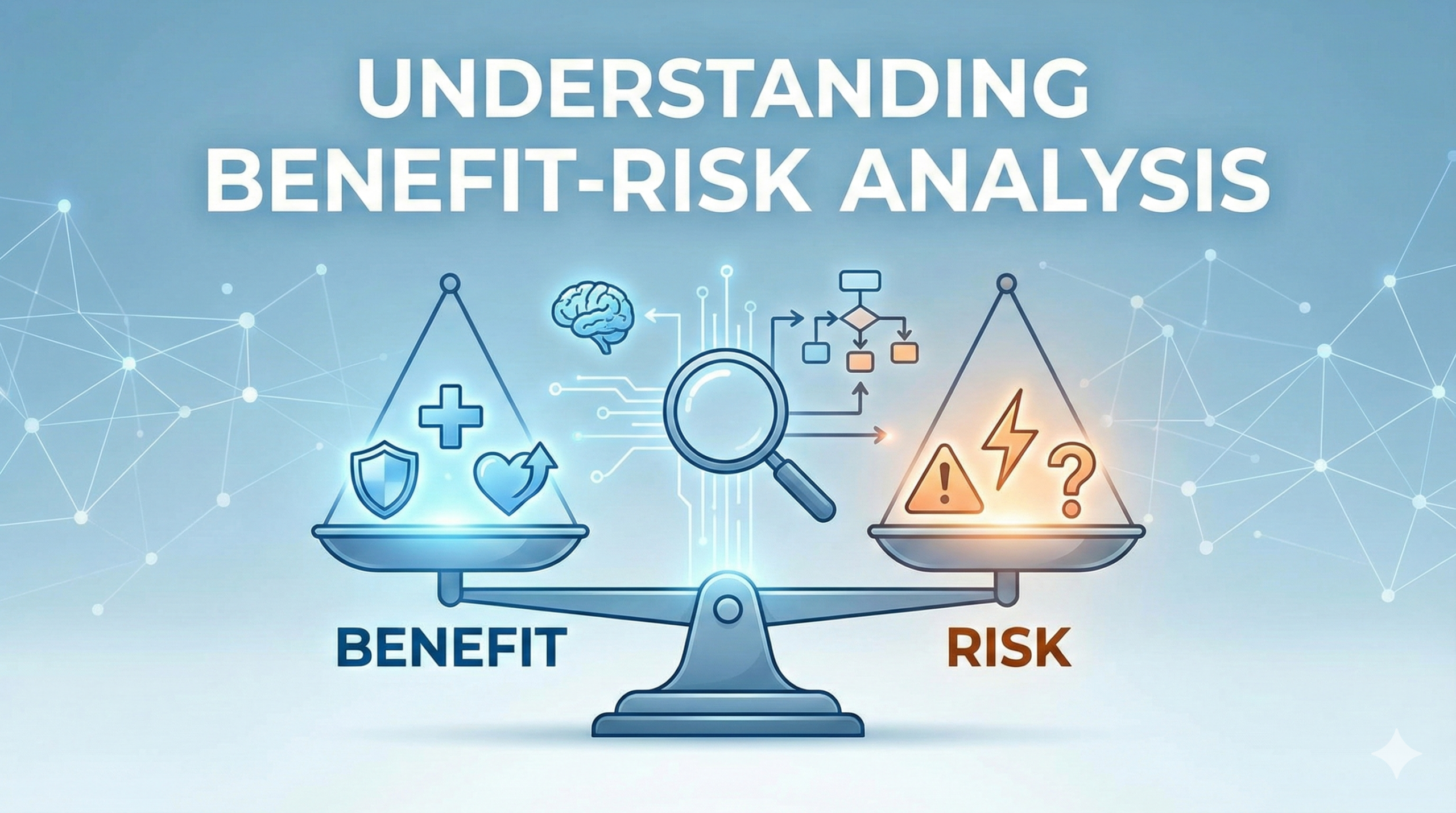
Understanding Benefit-Risk Analysis
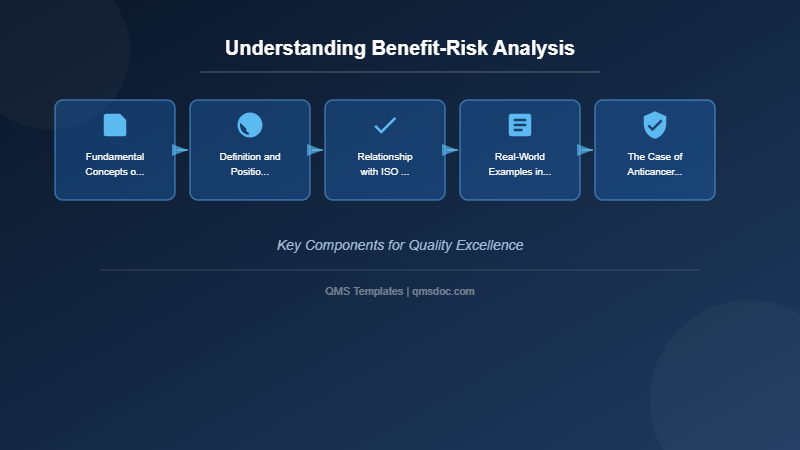
In the development of medical devices and pharmaceuticals, creating a “completely safe” product is realistically impossible. No matter how superior a product may be, some level of risk inevitably exists. The crucial question is whether that risk is at an acceptable level, a determination that must be made scientifically. At the core of this decision-making process lies “Benefit-Risk Analysis.”
In the development of medical devices and pharmaceuticals, creating a “completely safe” product is realistically impossible. No matter how superior a …
This article provides a systematic explanation of benefit-risk analysis in the medical device and pharmaceutical fields, covering everything from basic concepts and implementation methods to regulatory requirements and practical challenges.
Fundamental Concepts of Benefit-Risk Analysis
Definition and Positioning
Benefit-risk analysis is a methodology for systematically comparing and evaluating the benefits a product or treatment provides against the associated risks. This analysis plays a particularly important role in the ALARP (As Low As Reasonably Practicable) region.
The ALARP region refers to situations where risk is not completely zero, but further risk reduction is not practically feasible due to technical or economic constraints. In such cases, whether the remaining risks outweigh the benefits becomes the key to determining product acceptability.
Relationship with ISO 14971
The international standard ISO 14971:2019 “Medical devices – Application of risk management to medical devices” positions benefit-risk analysis as part of risk management. This standard requires evaluation of whether residual risks that remain even after risk reduction measures have been implemented are outweighed by medical benefits.
This evaluation must be conducted based on objective data and literature, not mere subjective judgment. ISO 14971:2019 clearly specifies this requirement, eliminating justification through “narrative composition” alone. The 2019 revision significantly strengthened the emphasis on benefit-risk analysis compared to previous editions, with the term changed from “risk-benefit” to “benefit-risk” to emphasize benefits over risks in regulatory contexts.
According to ISO 14971:2019, “benefit” is defined as “positive impact or desirable outcome of the use of a medical device on the health of an individual, or a positive impact on patient management or public health.” Importantly, this definition explicitly excludes economic or business advantages, focusing solely on health-related benefits.
The standard also emphasizes that benefits should not include economic or business advantages to the manufacturer, ensuring that the analysis remains focused on patient welfare. ISO/TR 24971:2020, the technical report providing guidance on applying ISO 14971:2019, offers extensive practical guidance on conducting benefit-risk analysis, including consideration of uncertainty and the use of various methodologies.
Real-World Examples in Healthcare
The Case of Anticancer Drug Treatment
The most straightforward example of benefit-risk analysis is anticancer drug treatment. Anticancer drugs attack cancer cells but also affect normal cells, causing side effects such as hair loss, nausea, and reduced immunity. While these side effects place a significant burden on patients, the risk is acceptable if there is a possibility of treating a life-threatening disease like cancer.
Results from Ministry of Health, Labour and Welfare hearings indicate that benefit-risk evaluation of anticancer drugs comprehensively examines the following elements:
Extension of survival: Objective indicators such as overall survival (OS) and progression-free survival (PFS); impact on quality of life (QOL): evaluation through patient-reported outcomes (PRO); severity and frequency of adverse events: evaluation of adverse events based on grade classification; comparison with existing treatments: relative benefits compared to standard therapy; and patient age and general condition: indicators such as performance status (PS).
Medical Device Examples
Similar principles apply to medical devices. For example, artificial heart valves carry a risk of thrombosis requiring anticoagulation therapy, but this risk is judged to be outweighed by the benefit of preventing heart failure due to valvular disease. This judgment requires long-term clinical data and epidemiological evidence regarding patient prognosis.
Implementation Process of Analysis
Implementing benefit-risk analysis appropriately requires following these systematic steps.
1. Risk Identification and Quantification
First, identify all risks associated with the product or treatment and evaluate their probability of occurrence and severity as quantitatively as possible. Data sources include:
Preclinical trial data: toxicological evaluation through animal testing; clinical trial results: safety data from Phase I through Phase III trials; post-market surveillance data: spontaneous reports, post-marketing surveillance studies, and post-marketing clinical trials; and literature information: published data on similar products or drugs with the same efficacy.
In quantifying risks, occurrence frequency is classified into categories such as “rare (less than 0.01%),” “occasionally (0.1-5%),” and “frequently (5% or more),” while severity is evaluated as “minor,” “moderate,” “severe,” or “fatal.”
2. Clarification and Quantification of Benefits
Specifically define expected benefits and quantify them as much as possible. For pharmaceuticals, the following indicators are used:
Primary efficacy endpoints: response rate, survival period, symptom improvement; secondary evaluation items: reduction in hospitalization period, improvement in QOL scores; and patient-reported outcomes: pain reduction, improvement in activities of daily living.
For medical devices, improvements in diagnostic accuracy, reduction in treatment time, and decreased invasiveness are evaluated.
3. Conducting Comparative Evaluation
Establish appropriate evaluation indicators to enable comparison of risks and benefits on the same scale. Indicators used in health economics evaluation include:
Quality-Adjusted Life Years (QALY): an indicator combining years of life with quality of life; Disability-Adjusted Life Years (DALY): an indicator representing disease burden; and Incremental Cost-Effectiveness Ratio (ICER): the ratio of additional costs to effects.
However, aspects that cannot be captured by these indicators alone exist, requiring multifaceted evaluation.
4. Assessment of Uncertainty and Sensitivity Analysis
Recognize data limitations and uncertainty, confirming the robustness of conclusions through the following methods:
Sensitivity analysis: evaluating the impact on results when key parameters are varied; scenario analysis: evaluation assuming best and worst cases; and probabilistic sensitivity analysis: quantification of uncertainty through Monte Carlo simulation.
5. Continuous Reevaluation
Benefit-risk analysis is not a one-time exercise. Data must be continuously collected post-market, and reevaluation must be conducted when new findings emerge. Reevaluation is particularly essential in the following cases:
Reports of serious adverse events; addition of new indications; changes in relative positioning due to the emergence of competing products; and evolution of scientific understanding or clinical practice standards.
Importance of Objective Evidence
Need for Evidence-Based Judgment
The most important aspect of benefit-risk analysis is judgment based on objective evidence. “Narrative composition” based on subjective impressions or wishful thinking cannot be considered scientific analysis. Regulatory authorities do not accept evaluations without support from data or literature.
Types and Quality of Required Evidence
Evidence used in benefit-risk analysis has the following hierarchy:
High Evidence Level: Systematic reviews and meta-analyses; large-scale randomized controlled trials (RCTs); and prospective cohort studies.
Moderate Evidence Level: Small-scale RCTs; retrospective cohort studies; and case-control studies.
Low Evidence Level: Case reports and case series; and expert opinions.
Using evidence of the highest possible level is recommended, but for rare diseases or new technologies, judgment must be made using the best available evidence.
Utilization of Real-World Data
In recent years, the importance of Real-World Data (RWD) from actual clinical practice has increased alongside clinical trial data. RWD includes:
Electronic health record data; claims data; patient registries; and health data from wearable devices.
This data provides valuable information for evaluating long-term safety that cannot be captured in clinical trials and effectiveness in diverse patient populations.
Relationship with Regulatory Requirements
International Regulatory Trends
Regulatory authorities in many countries require submission of benefit-risk analysis during approval review of medical devices and pharmaceuticals.
European Union (EU)
Under the Medical Device Regulation (MDR, Regulation (EU) 2017/745), manufacturers are required to continuously evaluate and document the benefit-risk ratio. Detailed benefit-risk analysis is required as part of the Clinical Evaluation Report (CER). The MDR Annex I General Safety and Performance Requirements (GSPRs) explicitly mandate benefit-risk analysis. On December 16, 2025, the European Commission published a proposal to simplify the MDR and In Vitro Diagnostic Regulation (IVDR, Regulation (EU) 2017/746), aiming to reduce administrative burden while maintaining high levels of patient safety. The proposal includes measures such as revised medical device software classification rules, reduced re-certification requirements, and expanded use of electronic Instructions for Use (eIFU).
United States
The FDA requires detailed benefit-risk evaluation in New Drug Applications (NDAs) and Premarket Approval (PMA) for medical devices. Use of the “Structured Benefit-Risk Assessment Framework” is recommended. Risk Evaluation and Mitigation Strategies (REMS) for post-market risk management are implemented. In October 2023, the FDA published final guidance titled “Benefit-Risk Assessment for New Drug and Biological Products,” which articulates key considerations factoring into benefit-risk assessments, including how patient experience data can inform the assessment. This guidance was developed as part of commitments under the sixth authorization of the Prescription Drug User Fee Act (PDUFA VI) and requirements under the 21st Century Cures Act.
The FDA’s Benefit-Risk Framework (BRF) is a structured, qualitative approach focused on identifying and clearly communicating key issues, evidence, and uncertainties. The framework includes two key elements: Benefit-Risk Dimensions (analysis of condition, current treatment options, benefit, and risk and risk management) and Benefit-Risk Integrated Assessment (overall analysis tying together all dimensions).
Japan
The Pharmaceuticals and Medical Devices Agency (PMDA) emphasizes evaluation of benefit-risk balance in approval reviews. Formulation and implementation of Risk Management Plans (RMP) are mandatory. Continuous evaluation through post-marketing surveillance is required.
Documentation Requirements
Documents submitted to regulatory authorities must include the following elements:
Results of risk analysis: all identified risks and their evaluation; quantitative evaluation of benefits: detailed explanation including clinical significance; comparative analysis: relative positioning versus existing treatments; assessment of uncertainty: data limitations and sensitivity analysis results; and conclusions and justification: scientific basis for benefits outweighing risks.
Limitations and Challenges of Analysis
Difficulty of Quantification
Complete quantification of all risks and benefits is difficult. Challenges exist particularly in the following areas:
Long-term impacts: effects 10 or 20 years in the future are difficult to predict; rare adverse events: events with extremely low frequency are difficult to detect in clinical trials; and indirect impacts: burden on caregivers, social costs, etc.
Diversity of Value Judgments
The weighting of benefits and risks differs depending on the evaluator’s position and values:
Patient perspective: whether to emphasize QOL or survival period; healthcare provider perspective: balance of treatment effectiveness and safety; and societal perspective: perspectives on health economics and equity.
Integrating these diverse perspectives is not easy, requiring a transparent decision-making process.
Data Quality and Availability
Obtaining high-quality data is particularly difficult in the following areas:
Rare disease areas; special populations such as pediatric and elderly patients; and usage situations in developing countries.
Addressing Dynamic Nature
Benefit-risk balance is not fixed but changes due to the following factors:
Accumulation of new scientific knowledge; development of alternative treatments; changes in patient population characteristics; and changes in social values.
To address this dynamic nature, establishing a system for periodic reevaluation is essential.
The following table summarizes key considerations in benefit-risk analysis:
| Analysis Component | Key Considerations | Data Sources |
| Risk Identification | Known and foreseeable hazards, hazardous situations, potential harms | Preclinical data, clinical trials, literature, post-market surveillance |
| Risk Quantification | Probability of occurrence, severity of harm | Clinical trial adverse events, epidemiological data, expert judgment |
| Benefit Identification | Clinical benefits, patient management improvements, public health impact | Clinical trial efficacy data, patient-reported outcomes, real-world evidence |
| Benefit Quantification | Primary and secondary endpoints, QOL measures, survival data | Randomized controlled trials, observational studies, patient registries |
| Comparative Evaluation | Alternative treatments, standard of care, unmet medical need | Comparative effectiveness research, health technology assessments |
| Uncertainty Assessment | Data limitations, statistical uncertainty, extrapolation issues | Sensitivity analyses, confidence intervals, expert elicitation |
Conclusion
Benefit-risk analysis is a scientific method for confronting unavoidable risks in healthcare. In situations where complete safety is not realistic, it serves as an important tool for determining how to manage risks and provide maximum benefits to patients.
The crucial point is that this analysis must always be conducted based on objective evidence. Subjective judgments without support from data or literature can threaten patient safety. Furthermore, benefit-risk balance is not fixed but must be continuously reevaluated in response to new findings and changes in social values.
In the future, advances in digital technology and the development of personalized medicine are expected to enable more sophisticated and patient-centered benefit-risk analysis. Medical professionals, regulatory authorities, and patients themselves understanding the principles of benefit-risk analysis and appropriately utilizing them will lead to better healthcare outcomes.
In the development and use of medical devices and pharmaceuticals, benefit-risk analysis is not merely a regulatory requirement but an essential process for maximizing patient safety and treatment effectiveness. All stakeholders are required to recognize this importance and commit to continuous improvement.
The regulatory landscape continues to evolve, with recent developments including the FDA’s 2023 finalization of benefit-risk assessment guidance, ongoing implementation of the EU MDR and IVDR with proposed simplification measures in December 2025, and increasing emphasis on patient experience data and real-world evidence. These developments reflect a growing recognition of the complexity and importance of benefit-risk analysis in modern healthcare, emphasizing transparency, patient-centeredness, and adaptability to new scientific evidence.
Manufacturers, healthcare providers, and regulatory bodies must stay informed of these evolving requirements and best practices to ensure that benefit-risk analysis continues to serve its fundamental purpose: protecting and improving patient health while enabling innovation in medical technology and therapeutics.
Related Articles
- Understanding Self-Inspection in Pharmaceutical Quality Management: A Comparative Analysis of Global Regulatory Approaches
- Understanding Risk Analysis
- Understanding CFR: The Foundation of U.S. Regulatory Framework
- Understanding the “Typewriter Excuse” in FDA 21 CFR Part 11 Compliance
- Why Printouts Cannot Be Trusted: Understanding the Vulnerability of Paper-Based Document Management
- Understanding the True Purpose of Performance Qualification (PQ) in Computerized System Validation
