
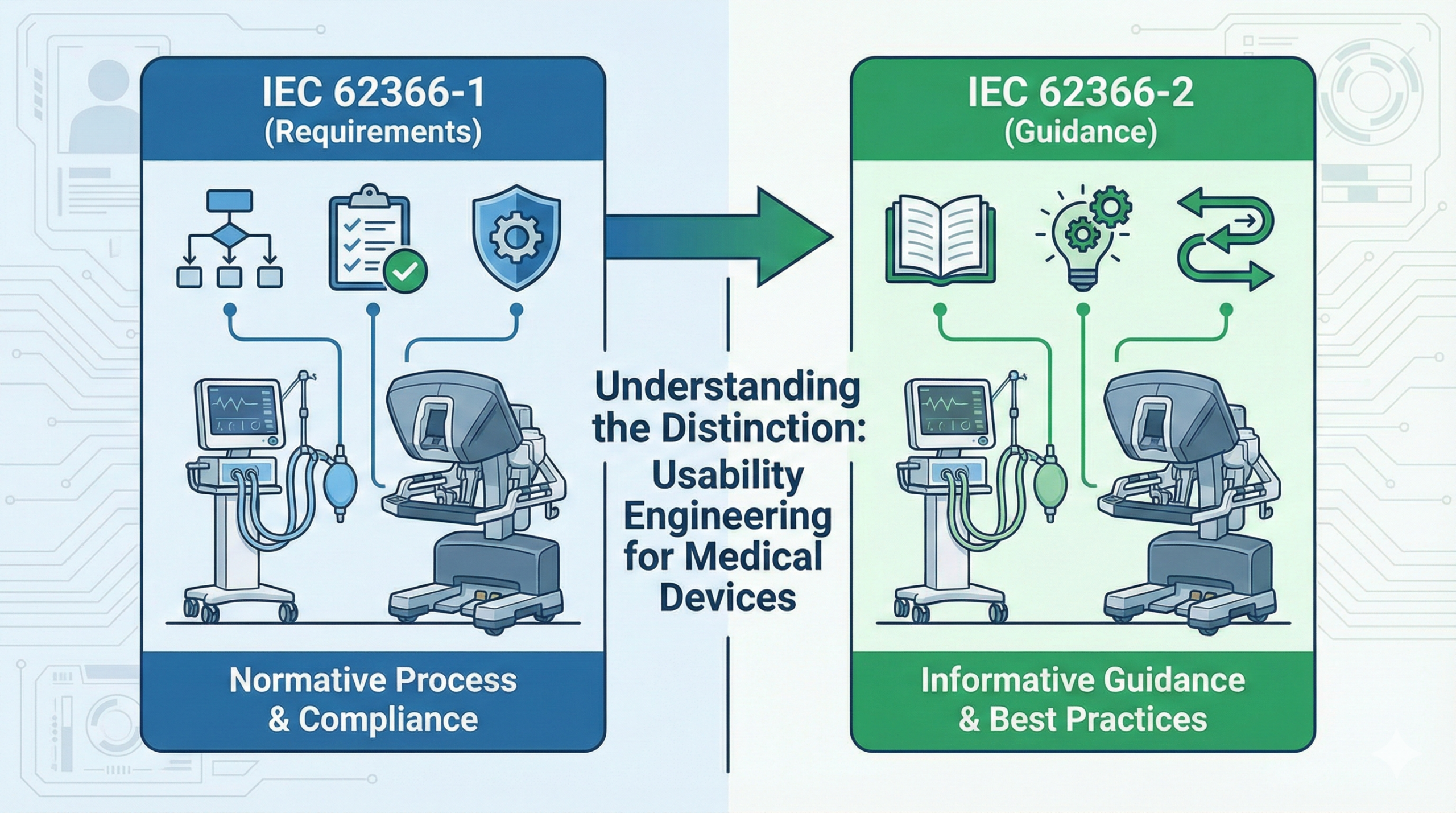
IEC 62366-1 and IEC 62366-2: Understanding the Distinction
Clarifying the Divide Between IEC 62366-1 and IEC 62366-2
Usability engineering in medical device development is a critical regulatory requirement defined by the IEC 62366 series of standards. This series is divided into two parts: IEC 62366-1 and IEC 62366-2. A clear understanding of the differences between these two standards is essential for establishing robust quality management systems and ensuring regulatory compliance in medical device development. This article explains the fundamental roles and distinctions between these standards from a practical implementation perspective.
Usability engineering in medical device development is a critical regulatory requirement defined by the IEC 62366 series of standards. This series is …
What is IEC 62366-1?
IEC 62366-1, formally titled “Medical devices – Part 1: Application of usability engineering to medical devices,” is an international standard that defines the requirements for usability engineering processes that must be implemented during the design and development phases of medical devices.
The fundamental philosophy underlying this standard is that for medical devices and systems to function as intended and achieve specified performance, user-centered design based on ergonomic principles is indispensable. Compliance with IEC 62366-1 is recognized as a substantive requirement for medical device approval under the FDA regulations, the European medical device regulations (EU MDR/IVDR), and Japanese PMDA regulations.
The specific requirements stipulated in IEC 62366-1 mandate the implementation of the following usability engineering processes.
First, organizations must identify, understand, and evaluate the characteristics of users and their use environments. This involves a comprehensive assessment of user skill levels, physical capabilities, and operational contexts within healthcare settings—a process that precludes design based solely on idealized use scenarios.
Second, detailed understanding of actual use cases is essential. Organizations must comprehensively understand the specific circumstances, users involved, and intended purposes under which medical devices will be used in real-world settings.
Third, based on user and use environment information, organizations must establish clearly defined, achievable usability goals. These objectives must be expressed in quantitative and measurable formats.
Fourth, organizations must implement user interface design to achieve these goals and conduct iterative design evaluations and improvements, including usability testing.
These requirements are legally binding, and medical device manufacturers must maintain appropriate documentation as evidence of compliance. Adherence to conventional design practices or theoretical approaches alone is insufficient. The regulatory expectation is for organizations to systematically implement usability engineering processes and maintain documented evidence of compliance.
What is IEC 62366-2?
IEC 62366-2, formally titled “Medical devices – Part 2: Guidance on the application of usability engineering to medical devices,” provides guidance and detailed explanations for practically implementing the requirements stipulated in IEC 62366-1. The most recent revision was released in 2023.
IEC 62366-2 provides detailed guidance on elements to consider in user interface design, methods for establishing implementable usability objectives, examples of stepwise evaluation processes drawn from practical applications, and approaches to integrating usability considerations with risk management. Additionally, the 2023 revision provides more detailed guidance on addressing usability in digital medical devices and software-based medical devices.
Importantly, IEC 62366-2 is positioned as guidance and reference material without regulatory legal force. However, in practical implementation, adherence to this guidance is critically important for meeting the expectations of international regulatory authorities such as the FDA and EMA. Regulatory authorities recognize the methods presented in IEC 62366-2 as standard implementation approaches when demonstrating compliance with IEC 62366-1 requirements.
Relationship Between IEC 62366-1 and Related Standards
IEC 62366-1 has a complementary relationship with ISO 13407 (User-centered design processes) and ISO 9241 series standards (Ergonomic guidelines for user interface design). Integration with ISO 14971 (Risk management) is also crucial, as the identification, evaluation, and mitigation of usability-related risks constitute important elements of the medical device risk management process.
Furthermore, IEC 62366-1 is closely related to IEC 62304 (Software lifecycle processes for medical devices) and the IEC 60601 series (Safety standards for medical devices), functioning as part of a comprehensive quality management framework for medical device development.
Key Point: Understanding Roles and Regulatory Obligations
The fundamental distinction between IEC 62366-1 and IEC 62366-2 lies in the difference between a requirements standard that specifies “what must be done” and a guidance standard that addresses “how to accomplish it.” IEC 62366-1 establishes requirements with legal binding force on medical device manufacturers, while IEC 62366-2 provides specific guidance on implementation methods.
In medical device development practice, the ultimate objective is to demonstrate compliance with IEC 62366-1 requirements, with the methods presented in IEC 62366-2 recognized as the means of substantiating such compliance. A comprehensive understanding of both standards and their systematic implementation within the organization provides the foundation for meeting regulatory requirements and delivering medical devices that are safe and effective for users.
Related Articles
- Documents and Records: Understanding the Distinction
- Use Error and Human Error: Understanding the Critical Distinction
- Are You Confusing Part 11 with Data Integrity? Understanding the Critical Distinction
- Understanding CFR: The Foundation of U.S. Regulatory Framework
- Understanding the “Typewriter Excuse” in FDA 21 CFR Part 11 Compliance
- Why Printouts Cannot Be Trusted: Understanding the Vulnerability of Paper-Based Document Management
