
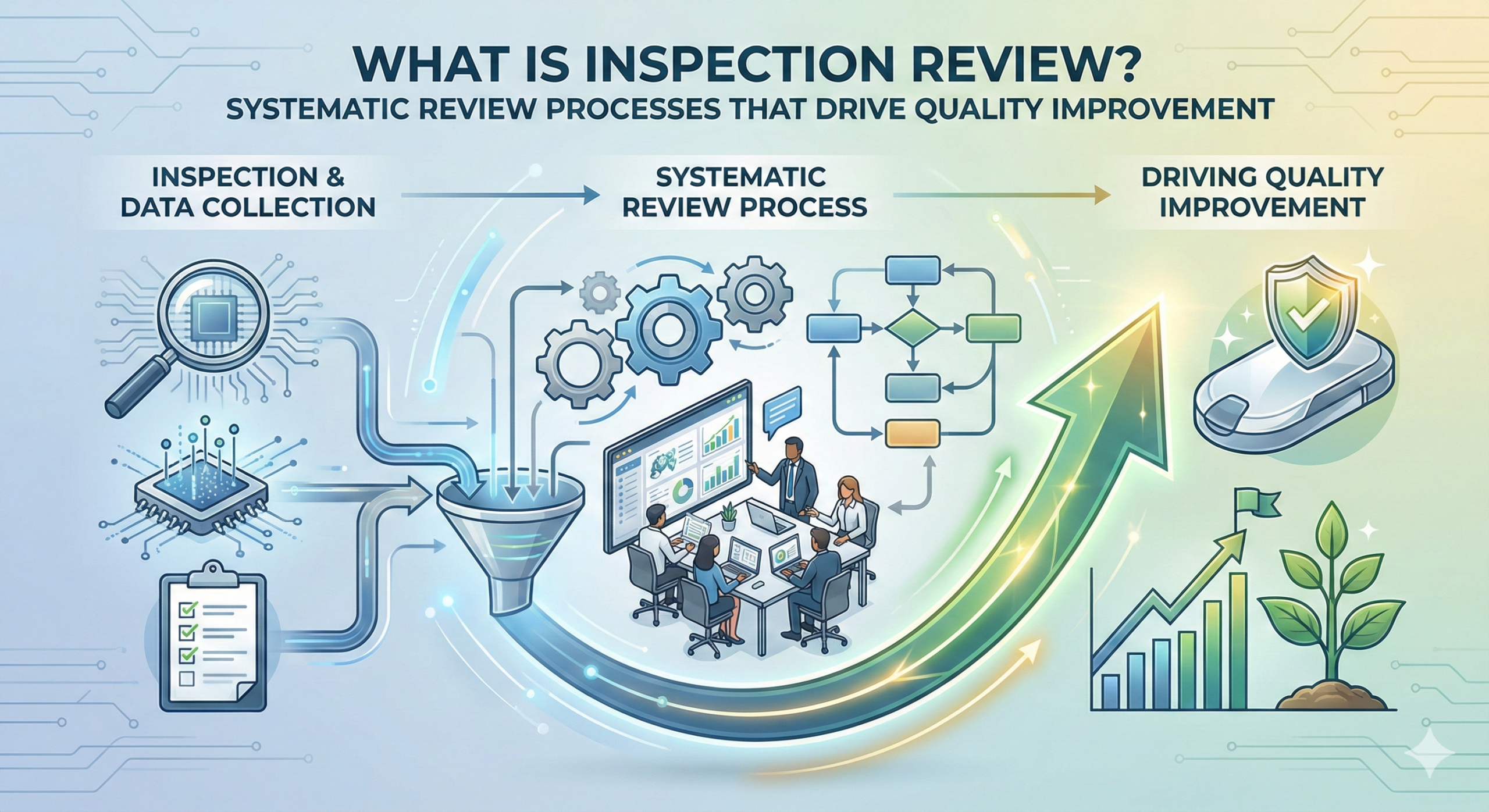
What is Inspection Review?: Systematic Review Processes That Drive Quality Improvement
Overview of Inspection Review and Its Value
In software development, IT projects, and regulated industries including medical devices and pharmaceuticals, quality assurance methodologies are diverse and multifaceted. Among these approaches, one technique with particularly well-demonstrated effectiveness is “inspection review.”
In software development, IT projects, and regulated industries including medical devices and pharmaceuticals, quality assurance methodologies are dive…
The term “inspection” literally means “detailed examination” or “scrutiny,” but in the context of information technology, it encompasses “systematic and thorough review” of deliverables such as source code, documentation, design specifications, and technical artifacts. Originally formulated by Michael Fagan in 1976, inspection review is a formally structured process that extends far beyond simple peer review. It represents a disciplined, multi-stage approach to identifying and resolving defects before they propagate downstream.
The Inspection Review Implementation Process
Inspection review proceeds through distinct, well-defined stages:
Individual Review Phase: Each participant independently reviews the deliverable (source code, design documents, requirements specifications, test plans, etc.) during their own time. This phase emphasizes thorough individual analysis rather than collective examination. The goal is for each reviewer to invest sufficient time in understanding the artifact and identifying potential defects, anomalies, or areas of improvement. This rigorous individual analysis establishes the foundation for subsequent collaborative discussion, ensuring that collective deliberation is based on substantive individual findings rather than cursory observations.
Collaborative Discussion Phase: Following the individual review phase, all participants convene to share and discuss the defects, issues, and observations they have independently identified. During this stage, the diverse perspectives and findings of multiple reviewers intersect, creating a shared understanding of the artifact’s strengths and weaknesses. When reviewers bring varied backgrounds, expertise, and analytical approaches, this intersection of viewpoints frequently surfaces defects that individual reviewers might have overlooked, substantially increasing the comprehensiveness of the review outcome.
This two-phase structure—combining individual scrutiny with collaborative analysis—distinguishes inspection review from simpler approaches such as ad hoc code review, traditional peer review without structure, or conference-based review meetings lacking systematic methodology.
Primary Benefits of Inspection Review
1. High Defect Detection Rate and Quality Assurance Capability
Inspection review is renowned for achieving exceptionally high defect detection efficiency. Empirically validated research indicates that inspection review is among the few methodologies capable of achieving defect detection rates exceeding 60 percent. This success stems from the synergistic combination of individual deep analysis and collaborative group discussion. Compared to simple code review, spot-checking, or informal quality verification practices, inspection review’s comprehensive quality assurance capability is demonstrably superior.
In regulated industries where system safety and reliability are paramount—particularly medical devices and pharmaceutical manufacturing—industry standards such as ISO 13485 (Quality Management Systems for Medical Devices) and ISO 62304 (Software Lifecycle Processes for Medical Device Software) explicitly mandate design review activities. Inspection review represents one of the most effective methodologies for satisfying these requirements while delivering tangible quality improvements.
2. Multifaceted Assessment Through Diverse Perspectives
By combining individual analysis with collaborative discussion, inspection review applies multiple analytical lenses to each deliverable. When reviewers possess varied backgrounds, professional experience, and subject matter expertise, the convergence of these perspectives frequently illuminates unforeseen challenges, potential improvements, and unanticipated risks. This “synergistic effect of multiple viewpoints” ensures that issues invisible to isolated reviewers become apparent through collective analysis, thereby enhancing the reliability and trustworthiness of the final deliverable.
3. Organizational Knowledge Sharing and Competency Development
Inspection review creates valuable opportunities for participants to exchange professional knowledge, accumulated experience, and problem-solving methodologies. As each reviewer encounters and learns from colleagues’ observations and analytical approaches, individual expertise expands and professional capabilities are broadened. This continuous knowledge exchange and peer learning drives measurable improvements in team technical capability, strengthens interpersonal collaboration, and catalyzes organizational skill development and maturation.
4. Risk Management and Regulatory Compliance
In medical device, pharmaceutical, and other heavily regulated industries, demonstrating compliance with regulatory authorities (FDA, EMA, PMDA, and similar agencies) is non-negotiable. The systematic and thorough examination enabled by inspection review allows organizations to identify potential risks during design and development phases, substantially reducing the cost and schedule impact of corrections in later project phases. Furthermore, during regulatory inspections and audits, documented evidence of systematic review processes and structured quality activities provides compelling demonstration of organizational quality culture and commitment to continuous improvement.
Application and Considerations in Modern Distributed Organizations
Contemporary organizational transformation and project management practices increasingly feature remote work arrangements, geographically distributed teams, and asynchronous communication patterns that challenge traditional co-located review models. In such environments, the “gather together and discuss” dimension of inspection review requires thoughtful adaptation. Through strategic application of digital collaboration platforms, asynchronous review tools, and video conferencing technologies, organizations can achieve substantively equivalent results to traditional co-located inspection reviews even when teams are geographically dispersed.
While inspection review demands investment in time and human resources, the returns—measured in defect detection, organizational learning, and risk mitigation—substantially enhance overall project cost-effectiveness. For industries where product reliability and safety directly impact human health and safety, this investment becomes essentially obligatory rather than discretionary.
Conclusion
Inspection review is far more than a mere review technique; it represents an integrated process simultaneously addressing quality assurance, risk management, and organizational learning. By synthesizing individual detailed analysis with collective knowledge sharing, inspection review achieves high defect detection rates while elevating organizational technical capability. In today’s digitally transformed organizational environment, the importance of structured, systematic review processes such as inspection review has only intensified rather than diminished. As organizations strengthen their quality cultures and advance continuous improvement initiatives, inspection review remains—and will increasingly become—an essential, foundational methodology for delivering excellence.
Related Articles
- FDA’s Policy Shift: Management Review and Audit Reports Now Subject to Inspection
- Proper Japanese Translation of “Review” in Medical Device Regulatory Requirements: Clarifying Terminology in Quality Management Systems
- What is a Quality Management System: The Essence of a Mechanism that Evolves Organizations
- Understanding Quality Control (QC) in Pharmaceutical Manufacturing: Beyond Inspection to Process Excellence
- FDA 510(k) Review Process Intensification and Software Reliability Assurance
- The Three Essential Elements of Regulatory Compliance and Quality Improvement
