
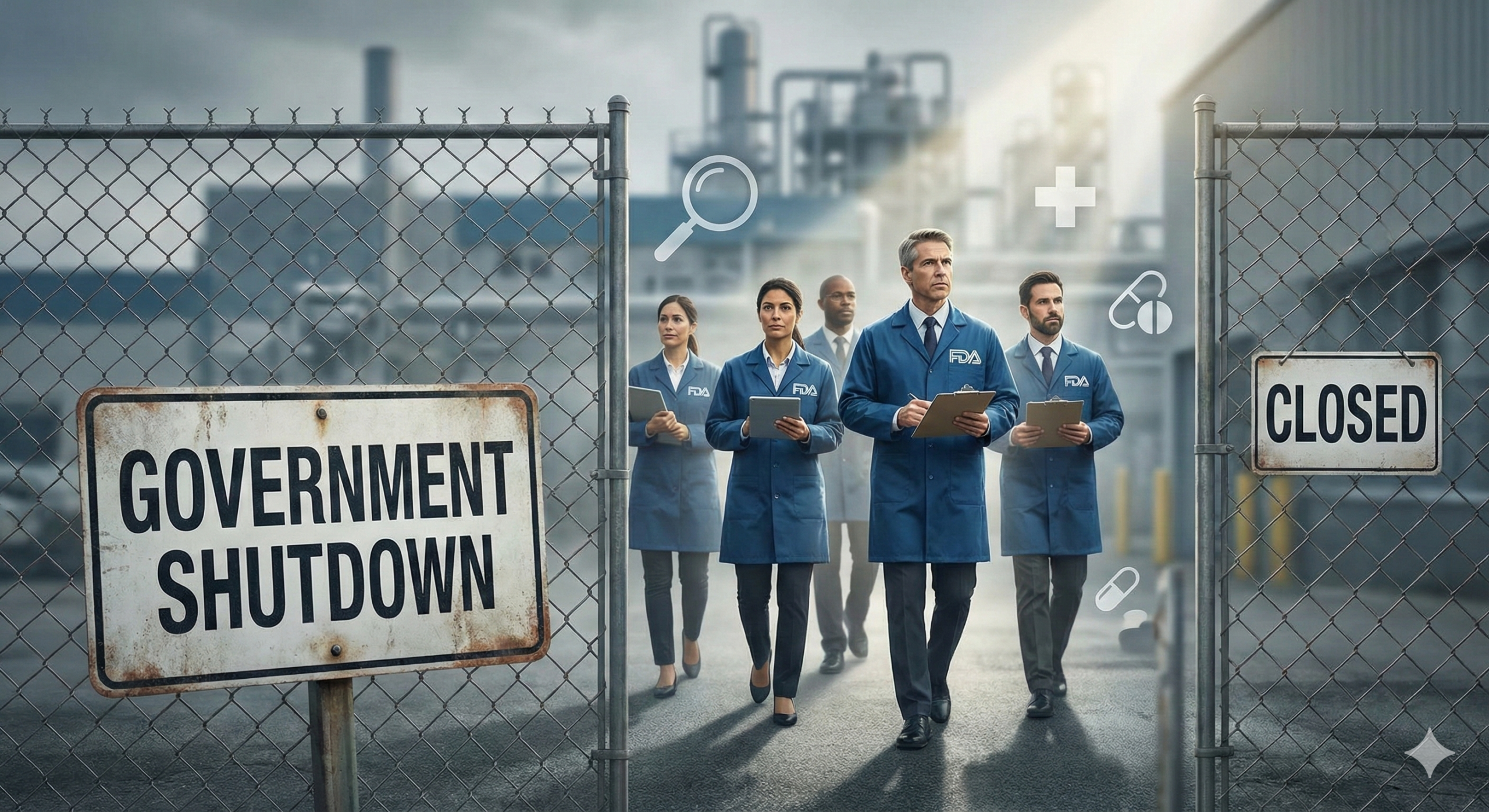
FDA Inspections During Government Shutdown
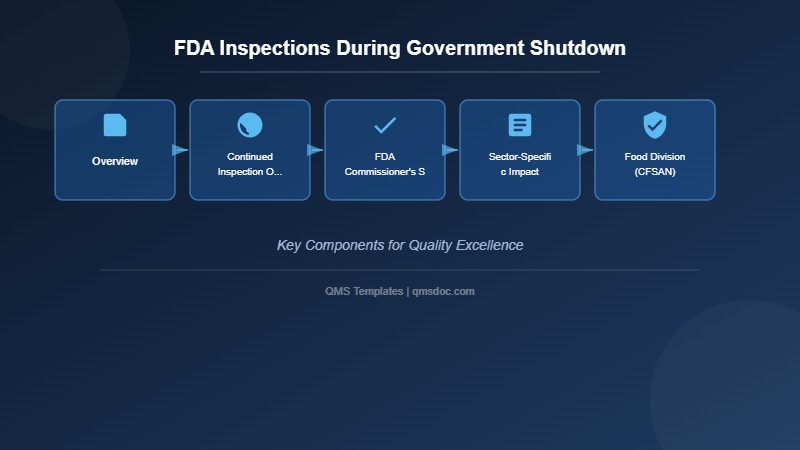
Overview
The United States federal government experienced a partial shutdown during which government operations were halted. This disruption has resulted in a temporary suspension of certain FDA inspection activities. Out of the FDA’s total workforce of approximately 17,397 employees, about 41% (roughly 7,053 people) were placed in a furlough status—a temporary unpaid leave of absence.
The United States federal government experienced a partial shutdown during which government operations were halted. This disruption has resulted in a …
Continued Inspection Operations
Despite the furlough of most personnel, approximately 400 FDA inspectors have continued their work without compensation during the shutdown period. Among these dedicated individuals, approximately 100 inspectors work in the medical device division. The FDA Commissioner has publicly and repeatedly expressed gratitude for the commitment demonstrated by these volunteer inspectors.
FDA Commissioner’s Statement
The FDA Commissioner issued an official statement regarding inspection priorities during the government closure. The statement clarified that the agency would maintain its inspection schedule for high-risk products and facilities of domestic and international origin. These continued inspections would cover pharmaceuticals, medical devices, and food products to ensure ongoing public health protection.
Sector-Specific Impact
Food Division (CFSAN)
According to reporting from CBS News, the situation in the food sector shows a differentiated approach. Routine inspections of domestic food facilities within the United States were suspended during the closure, while international food facility inspections continued without interruption. This prioritization reflected the agency’s assessment of public health risk, with international facilities receiving continued scrutiny to protect consumers from imported food hazards.
Pharmaceutical Division (CDER)
The Center for Drug Evaluation and Research (CDER), which oversees human pharmaceuticals, has maintained partial operational capacity. Key personnel involved in critical drug safety evaluations and emergency response have continued working, though some routine drug review activities were deferred.
Medical Device Division (CDRH)
The Center for Devices and Radiological Health (CDRH), responsible for medical device oversight, experienced significantly reduced activity levels compared to other FDA divisions. The available public indicators showed minimal operational presence, with minimal homepage updates and an absence of regular communications to stakeholders. This reduced capacity reflected the funding constraints imposed during the shutdown period.
Funding Mechanisms and Operational Continuity
A critical distinction in the medical device division’s ability to maintain operations relates to its funding structure. CDRH receives a substantial portion of its funding through user fees—regulatory fees collected from applicants, manufacturers, and other regulated entities as part of the medical device approval and registration processes. At the time of the shutdown, the agency had approximately two to three months of user fee funding available to sustain core operations.
This funding source provided greater operational flexibility for CDRH than for divisions primarily dependent on congressional appropriations. As user fee funding allows for continuation of certain regulatory functions, CDRH designated essential personnel to maintain critical operations. Prioritization was given to staff engaged in criminal investigations, public health emergency response, and other mission-critical functions directly related to protecting public health and safety.
Staffing Constraints and Regulatory Delays
The shutdown created notable staffing constraints that disrupted normal regulatory workflows. Staff members responsible for regulatory guidance development, as well as many CFSAN personnel whose duties did not directly involve emergency response or critical public health protection—such as those focused on import inspections and recall management outside of acute public health crises—were placed in furlough status.
This staffing reduction resulted in delays in the issuance of regulatory guidance documents and other policy communications. These delays affected industry stakeholders who depend on FDA guidance for understanding compliance requirements and implementing regulatory strategies. The disruption underscored the importance of consistent staffing levels for maintaining timely regulatory communications.
Compensation for Federal Employees
The federal government subsequently enacted legislation to ensure that both furloughed employees and those working without compensation during the shutdown would receive back pay and appropriate compensation. This legislative action provided financial relief to affected FDA personnel and affirmed the principle that federal workers performing essential functions or placed on involuntary leave would not suffer permanent financial loss.
Implications for Regulated Industry
The shutdown’s impact on FDA operations created uncertainty for medical device companies, pharmaceutical manufacturers, and other regulated entities. While the agency prioritized high-risk inspection activities, many routine regulatory functions, guidance updates, and administrative processes were delayed. Companies planning regulatory submissions or seeking guidance during such periods faced extended timelines and limited communication from the agency.
The experience highlighted the vulnerability of regulatory operations dependent on annual congressional appropriations and the value of alternative funding mechanisms such as user fees in maintaining core regulatory functions during periods of governmental transition.
Related Articles
- Responding to Affidavit Requests During FDA Inspections
- Key Points to Focus on During FDA Inspections: A Practical Guide for Success
- Challenges in Electronic Record Retention Requirements: Maintaining Authenticity During Long-term Preservation and System Migration
- The Commencement of ER/ES Inspections by Regulatory Authorities: Historical Context and Current Practices
- Understanding Part 11 in FDA Inspections: Key Considerations for Pharmaceutical and Medical Device Companies
- Have Part 11 Inspections Disappeared? Understanding Current Regulatory Trends
