

The Amended GMP Ordinance and International Standards Harmonization
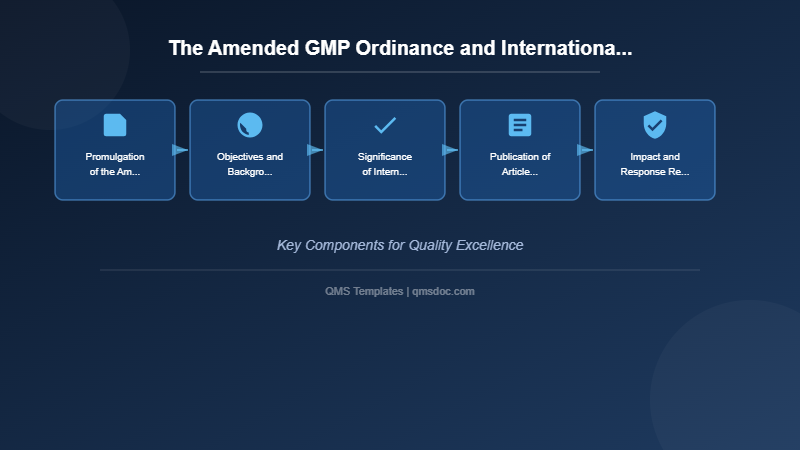
Promulgation of the Amended QMS Ordinance
On March 26, 2021, the Ministry of Health, Labour and Welfare promulgated the “Ordinance Partially Amending the Ordinance on Standards for Manufacturing Management and Quality Control of Medical Devices and In Vitro Diagnostic Devices” (Ministry of Health, Labour and Welfare Ordinance No. 60 of 2021). The enforcement date of this amended QMS Ordinance is March 26, 2024—exactly three years after promulgation.
On March 26, 2021, the Ministry of Health, Labour and Welfare promulgated the “Ordinance Partially Amending the Ordinance on Standards for Manufacturi…
Objectives and Background of the Amendment
The primary objective of this amendment is to harmonize Japan’s QMS Ordinance (medical device quality management system regulation) with the latest version of ISO 13485, the international standard for quality management systems in medical devices.
Prior to this amendment, Japan’s QMS Ordinance was based on the 2003 version of ISO 13485 and was aligned with international standards at that time. However, ISO 13485 underwent a major revision in 2016. This revision placed greater emphasis on strengthened risk management, clarified design development processes, more sophisticated manufacturing process controls, and comprehensive continuous improvement mechanisms throughout the quality management system. The 2021 amendment to Japan’s QMS Ordinance represented a critical step in addressing this evolution of international standards, enabling Japan’s medical device industry to maintain competitive advantage in the global regulatory environment.
Significance of International Standards Harmonization
For medical device manufacturers selling products across multiple countries and regions, compliance with different regulatory requirements poses a significant burden. When international standards such as ISO 13485 are adopted by individual countries’ regulations, companies can more easily manage a single quality management system to serve multiple markets. By aligning Japan’s QMS Ordinance with ISO 13485:2016, medical device manufacturers—particularly those pursuing international expansion—can respond to regulatory requirements more efficiently. Simultaneously, this achieves both objectives of strengthening international competitiveness and enhancing the quality and safety of medical devices.
Publication of Article-by-Article Explanation
To ensure that manufacturers understand the content of the amended QMS Ordinance accurately, the Ministry of Health, Labour and Welfare published an article-by-article explanation on March 26, 2021. This explanation (Notification No. 0326-10, “Regarding Partial Amendment to the Ordinance on Standards for Manufacturing Management and Quality Control of Medical Devices and In Vitro Diagnostic Devices”) provides detailed explanation of the background, objectives, and specific interpretation of each provision in the amended ordinance. For manufacturers to respond appropriately to the amendment, it is essential to consult not only the ordinance text itself but also this article-by-article explanation.
Impact and Response Requirements for Manufacturers
With the enforcement date of March 26, 2024, medical device manufacturers and importers are now obligated to ensure their existing quality management systems conform to ISO 13485:2016 and the amended QMS Ordinance that harmonizes with it. For many companies, this compliance extends beyond document revisions to include organizational restructuring, process reconstruction, and implementation of employee education and training programs. Particularly for critical processes such as risk management, design development, manufacturing process management, and quality monitoring, more detailed and systematic approaches are now required.
Conclusion
The amended GMP Ordinance represents a significant reform harmonizing Japan’s medical device regulations with international standards while strengthening industry competitiveness globally. Although manufacturers must invest effort and time in compliance, this also presents an opportunity to further enhance the quality and safety of medical devices. It is important for companies to utilize the official documents from the Ministry of Health, Labour and Welfare, including the article-by-article explanation, and proceed with appropriate compliance measures.
Related Articles
- Differences in Approach Between JIS Standards and FDA Guidance: Current State of International Harmonization
- Reflections on the Revised GMP Ministerial Ordinance: From Standards to Professional Practice
- Classification System of International Standards
- Understanding Technical Reports in International Standards
- Public Comments Solicitation on the Proposed Ordinance Amending the Ordinance Regarding Standards for Manufacture Control and Quality Control of Medical Devices and In Vitro Diagnostic Devices
- Why International Standards Don’t Explicitly Specify “How”
