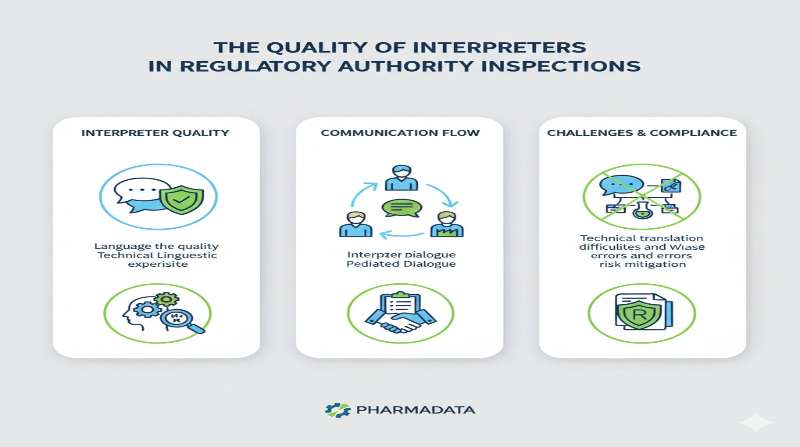
The Quality of Interpreters in Regulatory Authority Inspections
Introduction
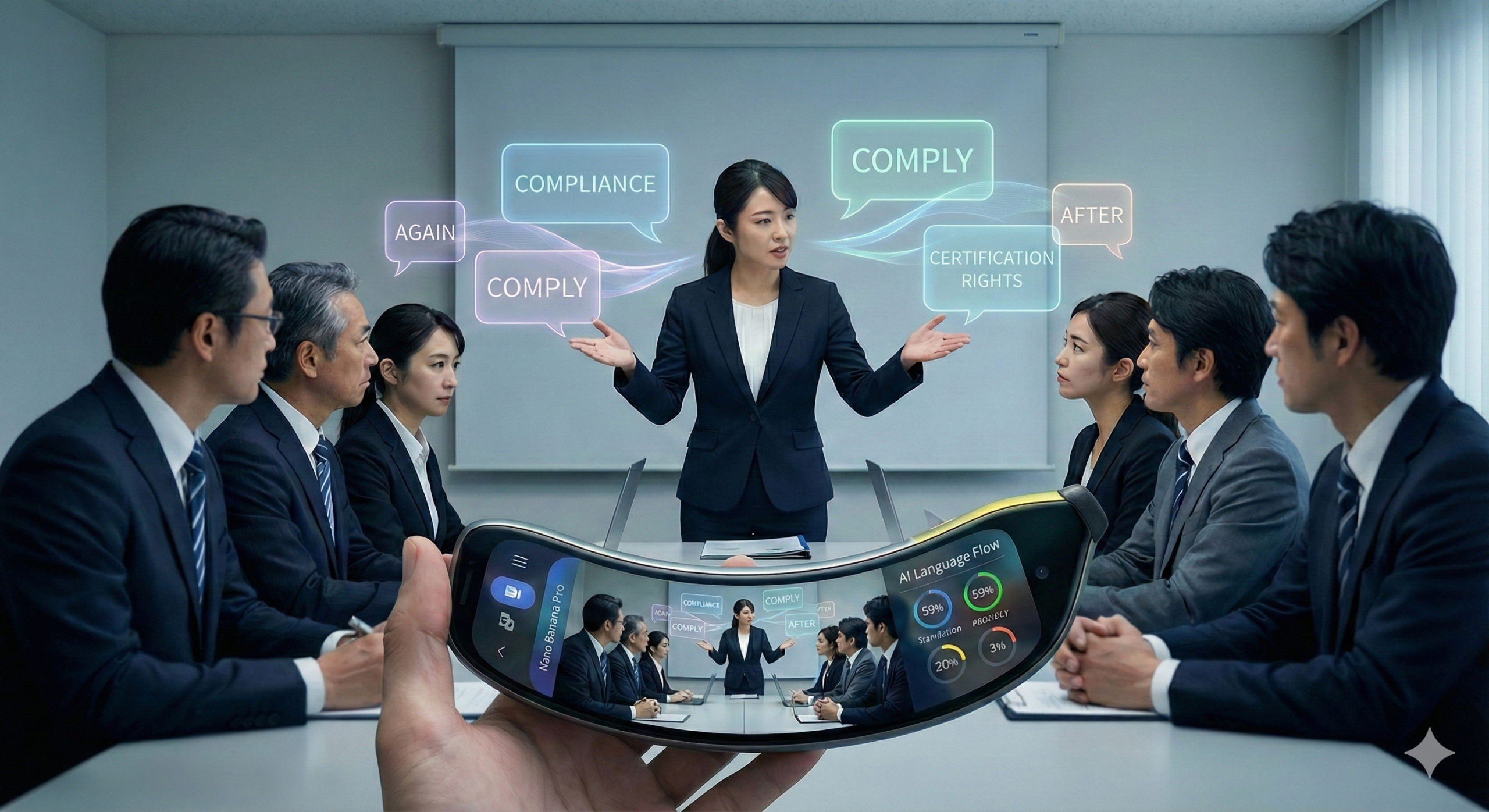
In regulatory inspections of pharmaceuticals and medical devices, the role of interpreters is critically important. When Japanese companies undergo inspections by overseas regulatory authorities such as the U.S. FDA (Food and Drug Administration), European EMA (European Medicines Agency), and Korean MFDS (Ministry of Food and Drug Safety), as well as when conducting face-to-face consultations and strategic pharmaceutical consultations with Japan’s PMDA (Pharmaceuticals and Medical Devices Agency), interpreters serve as vital bridges between companies and regulatory authorities.
💡 規制当局査察における通訳者の質は、査察結果を大きく左右する重要な要素です。
Current Status of Interpreter Use
Japanese companies customarily employ interpreters during FDA inspections and other overseas regulatory authority inspections. This is not merely a language issue but an essential measure to ensure accurate communication regarding specialized regulatory requirements such as GMP (Good Manufacturing Practice), GCP (Good Clinical Practice), and GLP (Good Laboratory Practice).
In recent years, following the COVID-19 pandemic, remote inspections (online inspections) have been conducted in addition to traditional on-site inspections. This change has created demand for interpreters to possess new skill sets, including proficiency in online meeting systems, ensuring audio quality, and establishing backup systems.
Advantages and Challenges of Inspections with Interpreters
Inspections conducted through interpreters have the following characteristics:
Advantages:
- Time to think. While the interpreter is translating, there is time to organize responses and prepare additional information.
- Ability to verify accurate understanding of technical terms. When unfamiliar terminology arises, there is temporal leeway to confirm understanding through the interpreter.
- Possibility of nuance adjustment. Content explained in detail in Japanese can be appropriately conveyed to inspectors by the interpreter.
Challenges:
- Communication takes time. While FDA inspections typically last about 4 days, using an interpreter effectively reduces the actual inspection time to approximately half.
- The most serious problem is the possibility that mistranslations of technical terms or insufficient interpreter understanding may result in content different from what was intended being conveyed to the inspector.
- When contextual understanding is insufficient, there is a risk that company responses are conveyed fragmentarily, creating misunderstandings with the inspector.
Recent Issues with Interpreter Quality
Recently, there has been an increase in interpreters dispatched from major agencies who do not meet appropriate standards as conference interpreters. While this trend has existed for some time, it has become particularly pronounced in recent years.
This likely stems from the following factors:
- Declining Ability of Interpretation Agencies to Assess Specialization: Agencies fail to accurately grasp interpreters’ actual abilities and do not understand the difficulty level of assignments or the required level of expertise. There is particularly insufficient understanding that different types of work—such as GMP inspections, GCP audits, and strategic pharmaceutical consultations—require different levels of knowledge.
- Cost-Priority Personnel Placement: Some interpretation agencies tend to assign interpreters with lower fees regardless of ability, prioritizing their own margins. This represents short-term profit prioritization over the critical outcome of inspection success.
- Relaxation of Registration Standards: Previously, registration with interpretation agencies almost invariably required recommendations from experienced senior interpreters. This recommendation system functioned as a quality assurance mechanism. However, recently, interpreters can easily register through self-reporting and self-promotion without objective verification of experience or ability.
- Lack of Understanding of Specialized Fields: Regulatory authority inspections require not only language skills but also broad regulatory knowledge including ICH (International Council for Harmonisation of Technical Requirements for Pharmaceuticals for Human Use) guidelines, FDA regulations, EU directives, and Japan’s Pharmaceuticals and Medical Devices Act. However, the number of interpreters who invest sufficient time and effort in acquiring this specialized knowledge is limited.
Specific Impact Cases
The adverse effects of inadequately skilled interpreters are not limited to inspections but are also observed in various meetings.
Particularly serious are cases where meetings with PMDA for strategic pharmaceutical consultations (clinical trial design consultations, clinical study consultations, etc.) cannot be completed due to inexperienced interpreters, requiring rescheduling. PMDA consultations are fee-based (ranging from several hundred thousand to several million yen depending on the consultation category) and require time for scheduling coordination, so losses when consultations fail due to interpreter issues are extremely large.
There are also reported cases where mistranslations during important inspections such as FDA Pre-Approval Inspections (PAI) have resulted in observations or unnecessary additional investigations being required.
The Critical Importance of Interpreters
Interpreters are like the “carotid artery” connecting companies and regulatory authorities. If our assertions are not correctly conveyed, inspectors will not be convinced. Conversely, if the true intent of inspectors’ questions and observations is not accurately conveyed to the company, appropriate responses cannot be made.
When misunderstandings arise from mistranslations, recovery is extremely difficult. Accurate understanding and translation are particularly essential for the following important concepts and terminology:
| Field | Examples of Critical Concepts and Terminology |
| GMP-Related | Batch Production Record (BPR), Laboratory Control Record (LCR), Validation, Qualification, Data Integrity, ALCOA+ principles, Corrective Action and Preventive Action (CAPA) |
| GCP-Related | Informed Consent, Protocol Deviation, Adverse Event vs. Adverse Reaction, Source Document, Case Report Form (CRF), Monitoring Report |
| Regulatory Requirements | CFR (Code of Federal Regulations), Warning Letter, Form 483, Observation, OAI (Official Action Indicated), VAI (Voluntary Action Indicated), NAI (No Action Indicated) |
| Quality Assurance | Quality Risk Management, Process Analytical Technology (PAT), Continued Process Verification, Annual Product Review, Change Control |
Securing Competent Interpreters
The number of interpreters who can be reliably entrusted with FDA inspections and similar assignments is limited. Alongside thorough pre-inspection preparation, securing competent interpreters is an important strategic issue.
Specific Criteria for Interpreter Selection
The following points should be verified when selecting competent inspection interpreters:
- Specialized Knowledge:
- Basic understanding of regulatory requirements such as GMP, GCP, and GLP
- Knowledge of ICH guidelines (particularly Q7, E6, M4, etc.)
- Understanding of inspection processes of regulatory authorities such as FDA, EMA, and PMDA
- Practical knowledge regarding pharmaceutical manufacturing, clinical trials, and quality assurance
- Practical Experience:
- Interpretation experience in regulatory authority inspections (minimum 5 cases desirable)
- Interpretation experience in PMDA consultations
- Experience in mock inspections
- History of continuous professional development through training
- Language Ability:
- Training in simultaneous or consecutive interpretation
- Ability to accurately translate technical terminology
- Ability to select appropriate translations according to context
- Responsiveness to appropriately ask for clarification or confirmation
- Communication Skills:
- Proactivity in appropriately confirming unclear points
- Judgment ability when there is risk of mistranslation
- Ability to build good relationships with both inspectors and the company
The Importance of Advance Preparation
Interpreters must attend inspection and consultation rehearsals and conduct the following preparations:
- Advance Confirmation of Terminology:
- Accurate English translations of proper nouns such as product names, equipment names, and department names
- Standardization of frequently used technical term translations
- Confirmation of official names and translations of abbreviations (SOP, CAPA, OOS, etc.)
- Understanding of company-specific terms and procedures
- Advance Study of Materials:
- Content confirmation of major SOPs (Standard Operating Procedures)
- Understanding of organizational charts and manufacturing process diagrams
- Review of past inspection observations (if applicable)
- Confirmation of anticipated questions and draft responses
- Scenario Exercises:
- Interpretation practice using anticipated Q&A sets
- Interpretation practice for technical explanations
- Confirmation of emergency responses (interpreter illness, communication failures, etc.)
Similar advance preparation and accurate use of terminology are essential when providing explanations in English directly.
Additional Considerations for Remote Inspections
For online inspections, the following additional preparations are necessary:
- Technical Preparation:
- Ensuring stable internet connection
- Preparing backup lines (mobile hotspots, etc.)
- Preparing backup devices (PCs, tablets, etc.)
- Proficiency in online meeting systems (Zoom, Microsoft Teams, etc.)
- Ensuring Audio Quality:
- Use of high-quality headsets or microphones
- Securing a quiet environment (dedicated conference rooms, etc.)
- Conducting audio tests in advance
- Screen Sharing Support:
- Confirming screen sharing methods for materials
- Understanding how to utilize simultaneous interpretation functions
- Advance sharing of materials for interpreters (PDFs, etc.)
Requirements for Interpretation Agencies
When commissioning interpretation agencies, the following points should be clearly communicated and verified:
- Assignment of interpreters with experience in inspections and regulatory authority consultations
- Advance presentation of the assigned interpreter’s track record (past inspection experience, specialized fields, etc.)
- Time allocation for advance preparation (rehearsal participation, material review, etc.)
- Continuous assignment of the same interpreter for multi-day inspections
- Standby backup interpreters for emergencies
Risk Mitigation Measures
The following additional measures are recommended to mitigate interpretation-related risks:
- English Translation of Key Documents:
- Creating English versions of important SOPs
- Preparing English versions of organizational charts and manufacturing process diagrams
- Creating and sharing technical terminology glossaries (terminology translation tables)
- Preparing English summaries of product specifications and validation reports
- Assignment of Multiple Interpreters:
- For lengthy inspections (factory tours, etc.), a two-person system with 20-minute rotations is recommended
- While one interprets, the other takes records, enabling content verification later
- Establishing terminology standardization and mutual checking systems between interpreters
- Thorough Record-Keeping:
- Detailed recording of questions and answers during inspections
- Immediate verification when there are doubts about interpretation content
- Recording important observations in both English and Japanese
Future Outlook
With the globalization of the pharmaceutical and medical device industries, the importance of interpretation in regulatory authority inspections is increasingly growing. Simultaneously, the expertise required of interpreters is becoming more sophisticated due to ICH guideline developments, strengthened data integrity requirements, and the normalization of remote inspections.
Industry-wide, the following initiatives are anticipated:
- Enhancement of Interpreter Specialization:
- Development of interpreter training programs specialized for regulatory authority inspections
- Provision of continuing professional development opportunities
- Consideration of certification systems by industry organizations
- Establishment of Quality Standards:
- Formulation of competency assessment standards for inspection interpreters
- Clarification of selection criteria for interpretation agencies
- Construction of interpreter evaluation systems based on customer feedback
- Technology Utilization:
- Appropriate use of AI-assisted translation tools (with final judgment remaining with human interpreters)
- Construction and sharing of technical terminology databases
- Development of online training platforms
Conclusion
Interpretation in regulatory authority inspections is not mere language conversion but specialized work that accurately conveys a company’s quality systems, compliance structure, and technical capabilities. Recognizing that interpretation quality directly affects inspection outcomes and investing sufficient time and resources in selecting competent interpreters and conducting appropriate advance preparation strengthens corporate regulatory compliance capabilities.
Alongside thorough pre-inspection preparation, securing competent interpreters is an indispensable element for inspection success. Cooperation among companies, interpretation agencies, and interpreters in pursuing higher quality standards will contribute to enhancing the international competitiveness of Japan’s pharmaceutical and medical device industries.
Related Articles
- Why is a Backyard (Back Room) Necessary for FDA Inspections?
- Remote Inspections in the Pharmaceutical Industry: Evolution from Emergency Measure to Permanent Regulatory Tool
- FDA Inspection Activities: Historical Context and Current Status
📌 関連テンプレート: 監査チェックリストテンプレート
Related FDA QMSR Templates
Streamline your FDA QMSR compliance with our professionally crafted templates: