
Introduction
In pharmaceutical manufacturing, data obtained from analytical instruments forms the cornerstone of quality assurance. When such data is compromised or falsified, defective pharmaceutical products may enter the market, potentially causing serious harm to patient health and safety. This article examines why data integrity has become more critical than Computer System Validation (CSV) in the context of analytical instruments, exploring both the underlying reasons and practical countermeasures that pharmaceutical manufacturers must implement.
Understanding Data Integrity
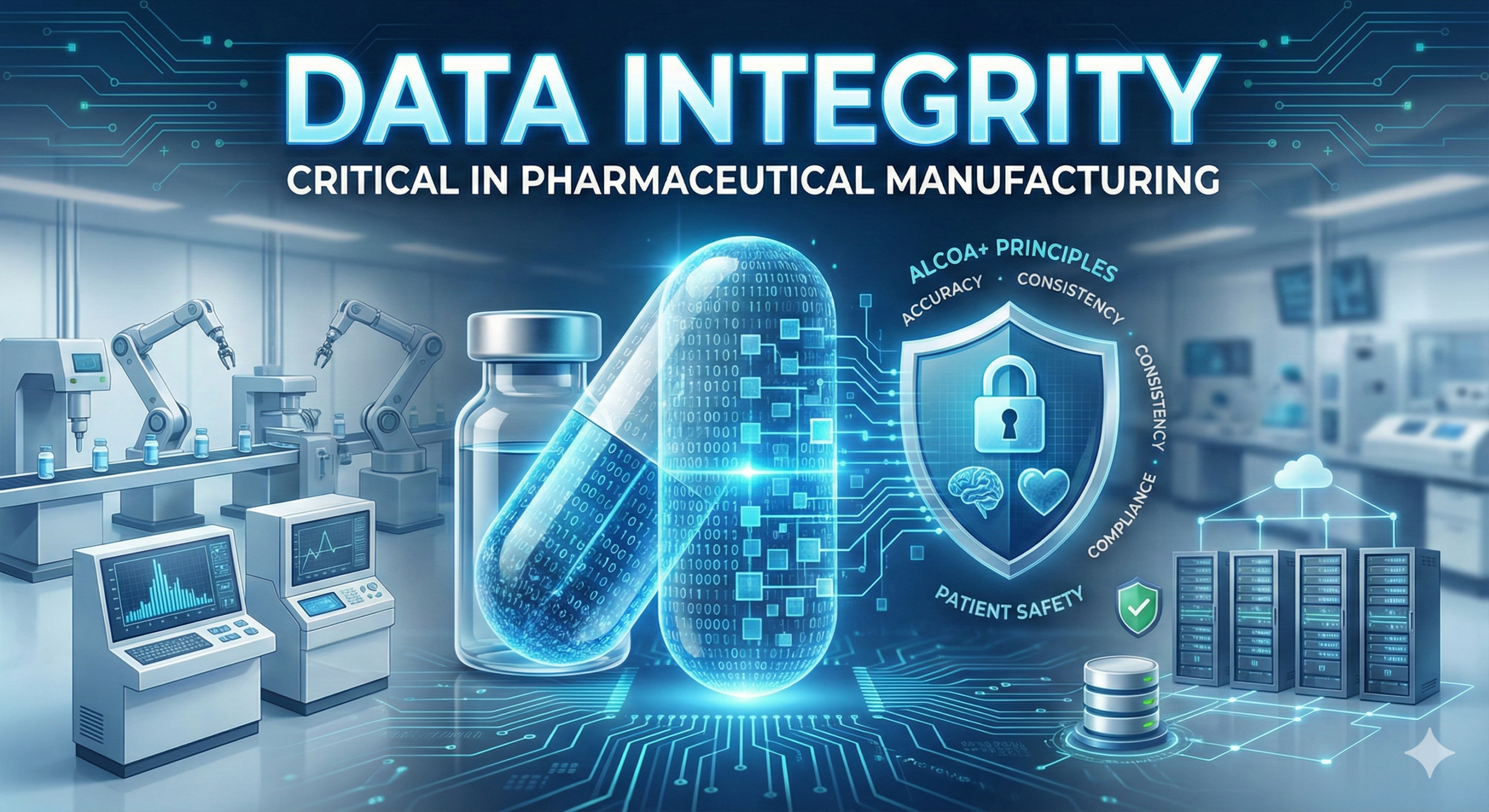
Data integrity refers to maintaining the completeness, consistency, and accuracy of data throughout its entire lifecycle. The pharmaceutical industry evaluates data integrity based on the principles known as “ALCOA+,” a framework that has evolved to meet increasingly sophisticated regulatory expectations.
The ALCOA+ Principles
The original ALCOA acronym was developed in the 1990s by Stan W. Woollen of the United States Food and Drug Administration (FDA). Over time, regulatory agencies recognized that data integrity required more comprehensive controls, leading to the expansion into ALCOA+. The principles are defined as follows:
Core ALCOA Principles:
Attributable (帰属性): Data must be clearly linked to the specific individual, system, or device that generated or modified it. This includes maintaining complete identification throughout the data lifecycle, with appropriate controls such as unique user IDs, no shared accounts, and proper access controls.
Legible (判読性): Data must remain readable, clear, and understandable throughout its retention period. This applies equally to paper records, which require durable materials and appropriate storage conditions, and electronic records, which must be presented in a format that can be reviewed and understood by authorized personnel.
Contemporaneous (同時性): Data must be recorded at the time of observation or activity, not transcribed or entered later. For electronic records generated by computerized systems, the system architecture must ensure that data is effectively timestamped with synchronized time sources (such as Network Time Protocol servers) to maintain temporal integrity.
Original (原本性): The first recording of data must be preserved as the original record. Any copies must be clearly identified and controlled through appropriate procedures. For electronic systems, this means maintaining the original electronic record with appropriate controls to prevent unauthorized modifications.
Accurate (正確性): Data must precisely reflect what was observed and recorded, without errors or unauthorized editing. This requires the use of accurate and calibrated data sources, proper documentation of any amendments, and for electronic data, the implementation of audit trails to track any modifications.
Extended ALCOA+ Principles:
Complete (完全性): All necessary data must be recorded with nothing omitted. This includes all raw data, metadata, audit trails, and any changes made during the life of the data. The data should be arranged chronologically with timestamps for any additions to the original data.
Consistent (一貫性): Data must be recorded without contradictions, following established procedures and formats consistently. Consistency should be verified through various audits throughout the data lifecycle.
Enduring (永続性): Data must be stored and maintained for the duration specified by regulatory requirements. The recording materials and storage media must be selected to ensure long-term preservation without loss of readability.
Available (利用可能性): Data must be accessible and retrievable when needed for review, audit, or inspection. This includes ensuring appropriate backup procedures, disaster recovery plans, and the ability to retrieve and present data in a usable format throughout the required retention period.
The Evolution to ALCOA++
The pharmaceutical industry continues to refine data integrity expectations. Some organizations now reference ALCOA++, which adds additional attributes such as traceable, robust, transparent, accountable, and reliable. This evolution reflects the increasing complexity of data systems and the need for more sophisticated controls in modern pharmaceutical operations.
CSV versus Data Integrity: Understanding the Distinction
The Focus of CSV (Computerized System Validation)
CSV is a documented process that demonstrates a computerized system is fit for its intended purpose and meets regulatory requirements. The primary focus areas include:
- Verification of appropriate system design, development, and testing
- Confirmation that user requirement specifications are met
- Validation of system performance according to predefined criteria
- Documentation of the system’s ability to consistently perform its intended functions
CSV follows a structured lifecycle approach that typically includes planning, specification, configuration, verification, and reporting phases. It encompasses activities such as Installation Qualification (IQ), Operational Qualification (OQ), and Performance Qualification (PQ).
Data Integrity: A Comprehensive Approach
Data integrity represents a more comprehensive concept that encompasses CSV as one important component but extends significantly beyond it. While CSV validates that a system functions as intended, data integrity ensures that the data produced by that system maintains its reliability, accuracy, and trustworthiness throughout its entire lifecycle.
The key distinctions include:
Scope: CSV focuses primarily on system functionality and technical controls, while data integrity addresses the entire data lifecycle from generation through archival and eventual destruction.
Human Factors: Data integrity explicitly considers human factors and behavioral aspects, recognizing that even a validated system can produce unreliable data if not used properly or if personnel deliberately circumvent controls.
Risk Management: Data integrity requires continuous risk assessment that extends beyond initial system validation, including ongoing monitoring of data handling practices, review of audit trails, and assessment of organizational culture.
Continuous Oversight: While CSV is often treated as a point-in-time activity (though it should include lifecycle management), data integrity demands continuous vigilance through ongoing monitoring, periodic reviews, and proactive identification of potential vulnerabilities.
The relationship can be understood as follows: CSV provides confidence in the technical capabilities of a system, but data integrity ensures that the data generated by that system can be trusted for its intended regulatory and business purposes.
Why Data Integrity Has Become the Primary Focus
1. Patient Safety and Public Health Protection
Data integrity directly impacts patient safety in multiple critical ways:
Detection of Impurities: Falsified or manipulated analytical data can mask the presence of harmful impurities, potentially allowing contaminated products to reach patients. Recent regulatory actions have highlighted cases where data manipulation concealed out-of-specification results for impurity testing.
Therapeutic Efficacy: When assay data is falsified to meet specifications, products with inadequate active pharmaceutical ingredient content may be distributed, resulting in subtherapeutic dosing and treatment failure for patients.
Stability and Quality: Manipulation of stability data can result in products with inadequate shelf-life being marketed, potentially exposing patients to degraded or ineffective medicines.
Supply Chain Integrity: In an increasingly globalized pharmaceutical supply chain, data integrity issues at contract testing laboratories or manufacturing sites can compromise product quality across multiple markets and patient populations.
2. Intensified Regulatory Scrutiny and Enforcement
Regulatory agencies worldwide have significantly increased their focus on data integrity, as evidenced by:
Warning Letters and Enforcement Actions: Analysis of FDA enforcement data reveals that data integrity citations appeared in approximately 61-65% of warning letters issued in recent years, representing a substantial increase from earlier periods. These citations frequently involve issues such as:
- Failure to maintain complete data (selective reporting of test results)
- Inadequate audit trails or disabled audit trail functionality
- Unauthorized modification of electronic records
- Lack of controls over blank forms and documents
- Inadequate investigation of data integrity lapses
Global Harmonization: Multiple regulatory agencies have issued specific guidance on data integrity:
- FDA: “Data Integrity and Compliance with Drug cGMP: Questions and Answers” (December 2018)
- MHRA: “GXP Data Integrity Guidance and Definitions” (updated periodically)
- WHO: “Guidance on Good Data and Record Management Practices” (Annex 5 to WHO Technical Report Series)
- PIC/S: “Good Practices for Data Management and Integrity in Regulated GMP/GDP Environments” (PI 041-1)
- EMA: “Questions and Answers: Good Manufacturing Practice” including data integrity sections
Consequences of Non-Compliance: Regulatory consequences for data integrity violations have become increasingly severe:
- Issuance of Warning Letters requiring comprehensive corrective action
- Refusal of new application approvals until data integrity issues are resolved
- Product recalls when data integrity issues call into question product quality
- Import alerts preventing products from entering major markets
- Consent decrees requiring independent oversight and substantial remediation
- In egregious cases, criminal prosecution of responsible individuals
Notifications Regarding Contract Facilities: The FDA has issued multiple notifications declaring studies conducted at certain contract research organizations as unacceptable due to data integrity violations. Recent examples include notifications regarding Raptim Research Pvt. Ltd. (March 2025), Synapse Labs Pvt. Ltd. (June 2024), and Panexcell Clinical Lab/Synchron Research Services (September 2021), demonstrating ongoing vigilance in this area.
3. Protection of Corporate Reputation and Business Continuity
Data integrity failures can have devastating effects on pharmaceutical companies:
Brand Damage: Public disclosure of data integrity violations significantly damages corporate reputation and erodes trust among healthcare providers, patients, and investors. Recovery from such reputational harm can take years and require substantial investment.
Financial Impact: The financial consequences extend well beyond immediate fines and include:
- Stock price depreciation following public disclosure of regulatory actions
- Lost revenue from products subject to import restrictions or recalls
- Costs of comprehensive remediation programs
- Investment in upgraded systems and additional personnel
- Expenses associated with regulatory oversight programs (consent decrees)
Business Disruption: Data integrity issues can halt new product approvals, restrict manufacturing capacity, and limit market access, substantially impacting business operations and strategic objectives.
Legal Liability: Companies may face civil litigation from patients, shareholders, and business partners, as well as potential criminal prosecution in cases of intentional fraud.
Implementing Data Integrity in Analytical Laboratories
A comprehensive data integrity program requires coordination of technical, procedural, and organizational controls.
1. Technical Controls and System Capabilities
Access Control and User Management:
Implement robust user authentication requiring unique user credentials for each individual. Eliminate shared login credentials and generic user accounts. Configure role-based access controls (RBAC) that limit system functions based on job responsibilities, applying the principle of least privilege. Conduct regular reviews of user access rights to ensure they remain appropriate as roles change. Implement technical controls to prevent or detect unauthorized access attempts.
Audit Trail Functionality:
Configure systems to generate comprehensive audit trails that automatically capture all data creation, modification, and deletion activities. Ensure audit trails include the user identity, date and time stamp (synchronized to an authoritative time source), the specific change made, and where applicable, the reason for the change. Implement controls to prevent audit trail modification or deletion by unauthorized users, including system administrators. Establish procedures for regular review of audit trails based on risk assessment.
Data Backup and Recovery:
Implement automated backup procedures that protect both active data and associated metadata, including audit trails. Verify backup integrity through regular restoration testing. Maintain backup data in a secure, segregated environment with equivalent access controls to production systems. Document and periodically test disaster recovery procedures to ensure data can be recovered within acceptable timeframes.
Electronic Signature and 21 CFR Part 11 Compliance:
For regulated electronic records, implement controls consistent with 21 CFR Part 11 requirements, including secure electronic signatures with appropriate identity verification, system validation documentation, and audit trail protection.
2. Procedural Controls and Documentation
Standard Operating Procedures (SOPs):
Develop comprehensive, clearly written procedures that address all aspects of data handling, from initial data generation through archival. Include specific instructions for:
- Proper operation of analytical instruments
- Data review and approval processes
- Investigation and documentation of anomalous results
- Handling of out-of-specification results
- Data retention and archival procedures
- Response to system failures or data integrity events
Implement a rigorous document control system ensuring all procedures are current, approved, and accessible to personnel. Establish regular review cycles to ensure procedures remain appropriate and current.
Training and Competency Assessment:
Provide comprehensive training on data integrity principles, emphasizing both the “what” (specific requirements) and the “why” (patient safety and regulatory importance). Training should include:
- ALCOA+ principles and their practical application
- Specific data integrity requirements for each individual’s role
- Proper documentation practices
- Recognition and reporting of potential data integrity issues
- Consequences of data integrity violations
Use case studies and real-world examples to illustrate both good practices and common pitfalls. Assess and document personnel competency through written evaluations, practical demonstrations, and ongoing observation. Provide refresher training at appropriate intervals and following significant procedural changes or data integrity events.
Good Documentation Practices (GDP):
For paper records, enforce strict documentation practices including:
- Recording data contemporaneously in permanent ink
- Making corrections using single-line strikethrough methods that preserve the original entry
- Documenting all corrections with initials, date, and reason
- Eliminating use of correction fluid, erasure, or obliteration
- Controlling blank forms to prevent unauthorized use or testing into compliance
For hybrid systems (combining paper and electronic records), clearly define which element constitutes the original record and ensure complete traceability between related records.
3. Organizational and Cultural Elements
Data Governance Framework:
Establish a formal data governance structure that includes:
- Clear assignment of data ownership and stewardship responsibilities
- Senior management commitment and oversight
- Cross-functional coordination between quality, IT, and operations
- Defined escalation paths for data integrity concerns
- Regular management review of data integrity metrics and issues
Designate a Data Integrity Officer or equivalent role with appropriate authority and resources to coordinate data integrity initiatives across the organization.
Quality Culture and Organizational Behavior:
Recognize that sustainable data integrity depends on organizational culture. Foster an environment characterized by:
- Open communication and transparency regarding errors and problems
- Non-punitive reporting systems that encourage identification of issues
- Leadership emphasis on “doing the right thing” versus achieving specific results
- Recognition that pressure to meet timelines or specifications should never compromise data integrity
- Appropriate investigation of data integrity issues focused on systemic improvements rather than solely individual blame
Management must demonstrate through actions and resource allocation that data integrity is a fundamental priority, not merely a compliance obligation.
Risk-Based Approach to Data Integrity:
Apply risk management principles to focus resources where they provide the greatest benefit:
- Conduct formal data integrity risk assessments identifying critical data flows and potential vulnerabilities
- Prioritize controls based on the criticality of the data and the likelihood and impact of potential integrity failures
- Document the risk assessment rationale and resulting control strategies
- Periodically reassess risks as systems, processes, and organizational factors change
Continuous Monitoring and Improvement:
Implement ongoing monitoring activities including:
- Periodic review of audit trails from critical systems
- Quality metrics related to data integrity (e.g., frequency of record corrections, deviations, out-of-specification results)
- Internal audits focused on data integrity vulnerabilities
- Trending and analysis of data integrity indicators
- Implementation of corrective and preventive actions based on findings
Case Studies: Learning from Data Integrity Failures
Case Study 1: Chromatographic Data Manipulation
Incident: At a pharmaceutical manufacturing facility, analysts were found to have altered HPLC integration parameters after data acquisition to manipulate out-of-specification results to appear within specification. The manipulation was discovered during a regulatory inspection when investigators noted inconsistencies in electronic data timestamps.
Consequences:
- FDA issued a Warning Letter citing multiple data integrity violations
- Products manufactured during the affected period required recall from the market
- The company incurred financial losses exceeding several hundred million yen/dollars
- Significant reputational damage in the industry and with customers
- Required implementation of extensive remediation program under regulatory oversight
Lessons Learned: Technical controls alone are insufficient. The case highlighted the need for:
- Comprehensive audit trail review procedures
- Organizational culture that does not pressure personnel to achieve specific results
- Clear policies prohibiting data manipulation with serious consequences for violations
- Training emphasizing that reporting out-of-specification results is the appropriate action
- Investigative procedures that identify and address root causes
Case Study 2: Selective Reporting of Test Results
Incident: A pharmaceutical company conducted multiple repetitions of analytical tests but reported only passing results to regulatory authorities, omitting failed test results. The practice was identified during a regulatory inspection when investigators requested to see the complete testing records.
Consequences:
- Regulatory authorities issued import restrictions preventing products from entering major markets
- Severe damage to the company’s credibility with regulatory agencies
- Required extensive investigation of potentially affected products
- Multi-year remediation program including independent third-party oversight
- Significant business impact from lost revenue and market access restrictions
Lessons Learned: The case emphasized that:
- All data must be recorded, retained, and made available for regulatory review
- “Testing into compliance” by repeating tests until passing results are obtained violates fundamental data integrity principles
- Transparent reporting of all results, including failures, is mandatory
- Procedures must clearly define the circumstances under which repeat testing is scientifically justified
- Investigation of failed results should focus on understanding and addressing root causes
Best Practices for Ensuring Data Integrity
1. Adopt a Preventive Approach
Rather than reacting to problems after they occur, organizations should implement proactive measures:
Quality by Design (QbD) Principles: Incorporate data integrity considerations from the earliest stages of system design and process development. Design processes and systems that inherently minimize opportunities for data integrity lapses.
Proactive Risk Management: Identify potential data integrity vulnerabilities before they result in compliance issues. Use failure mode and effects analysis (FMEA) or similar tools to systematically assess risks.
Continuous Process Improvement: Regularly evaluate and enhance data integrity controls based on operational experience, industry trends, and evolving regulatory expectations.
2. Cultivate an Appropriate Organizational Culture
Data integrity is fundamentally both a technical and a cultural issue. Organizations must develop a culture characterized by:
Transparency and Openness: Create an environment where personnel feel comfortable reporting errors, concerns, and potential data integrity issues without fear of punitive consequences. Implement “speak up” programs that protect and encourage such reporting.
Ethical Leadership: Leadership must consistently demonstrate through words and actions that integrity and patient safety are paramount. Resource allocation decisions, performance metrics, and management communications should reinforce these priorities.
Training and Awareness: Provide ongoing education that helps personnel understand not only the technical requirements but also the ethical dimensions and patient safety implications of data integrity. Use case studies and real-world examples to make the importance tangible.
Accountability Without Fear: Hold individuals accountable for their responsibilities while recognizing that most data integrity issues result from systemic problems rather than individual malfeasance. Investigations should focus on identifying and correcting root causes.
3. Leverage Advanced Technologies Appropriately
Emerging technologies offer opportunities to strengthen data integrity:
Blockchain Technology: Distributed ledger technology can provide tamper-evident records for critical data, though implementation requires careful consideration of regulatory acceptance and practical integration challenges.
Artificial Intelligence and Machine Learning: AI systems can assist in anomaly detection, pattern recognition in audit trail review, and identification of potential data integrity issues that might escape human review. However, such systems themselves require appropriate validation and controls.
Cloud-Based Systems and Software-as-a-Service: Modern cloud-based systems often incorporate robust audit trails, access controls, and data protection as inherent features. However, organizations must carefully assess such systems for regulatory compliance, data security, and vendor qualification requirements.
Electronic Laboratory Notebooks and Modern LIMS: Contemporary laboratory information management systems and electronic notebooks often include enhanced data integrity features. Organizations should leverage these capabilities while ensuring proper validation and user training.
Current Trends and Future Directions
Computer Software Assurance (CSA)
The FDA has begun transitioning from traditional CSV approaches to Computer Software Assurance (CSA), as outlined in draft guidance released in 2022 and finalized in 2025. CSA emphasizes critical thinking and risk assessment over documentation volume, focusing validation efforts on areas that pose the greatest risk to product quality and patient safety. This approach aligns well with modern data integrity principles by concentrating resources where they provide the most value.
Integration of Data Integrity into Quality Management Systems
Regulatory agencies increasingly expect data integrity to be fully integrated into an organization’s Pharmaceutical Quality System (PQS), rather than treated as a separate IT or compliance initiative. This integration requires:
- Senior management oversight and accountability for data integrity
- Cross-functional collaboration and communication
- Integration of data integrity considerations into all quality system elements (change control, CAPA, management review, etc.)
- Supplier quality management that extends data integrity expectations to contract organizations
Emphasis on Data Governance
Modern regulatory expectations increasingly focus on data governance – the framework of people, processes, and technology that ensures data is appropriately managed throughout its lifecycle. Effective data governance includes:
- Clear definition of roles and responsibilities for data management
- Documented policies and procedures for data handling
- Appropriate technical infrastructure and controls
- Metrics and monitoring to assess data integrity effectiveness
- Continuous improvement processes
Comparison: CSV versus Data Integrity
| Aspect | CSV (Computerized System Validation) | Data Integrity |
|---|---|---|
| Primary Focus | System functionality and technical compliance | Trustworthiness and reliability of data throughout its lifecycle |
| Scope | Computer system and software | Data from generation through archival, regardless of format (paper, electronic, hybrid) |
| Timing | Primarily during system implementation, with periodic revalidation | Continuous throughout data lifecycle |
| Human Factors | Limited consideration of user behavior | Explicit consideration of human factors, including intentional and unintentional data integrity lapses |
| Documentation | Validation protocols, test results, summary reports | SOPs, records, audit trails, training documentation, governance policies |
| Regulatory Framework | 21 CFR Part 11, Annex 11, GAMP 5 | ALCOA+ principles, data integrity guidance from multiple agencies |
| Risk Management | Risk-based validation categories | Ongoing risk assessment of data integrity vulnerabilities |
| Key Output | Validation documentation demonstrating system fitness | Reliable, trustworthy data supporting regulatory decisions |
Conclusion
Data integrity represents more than mere regulatory compliance—it is a fundamental requirement for protecting patient safety and ensuring public health. The reliability of data obtained from analytical instruments forms the foundation of pharmaceutical quality assurance, directly impacting the safety and efficacy of medicines that patients depend upon for their health and lives.
While CSV validates that computer systems function as intended, data integrity ensures that the data produced by those systems (as well as data from paper-based and hybrid systems) maintains its completeness, accuracy, and trustworthiness throughout its lifecycle. Understanding and implementing this distinction represents a critical evolution in pharmaceutical quality management.
Modern pharmaceutical companies must adopt a comprehensive approach combining technical controls, procedural safeguards, and organizational culture to ensure data integrity. This integration requires:
Technical Robustness: Systems designed with inherent data integrity controls, including comprehensive audit trails, access controls, and data protection mechanisms.
Procedural Discipline: Clear, well-documented procedures consistently followed by trained personnel, with appropriate oversight and quality control.
Cultural Foundation: An organizational environment that values transparency, ethical behavior, and patient safety above all other considerations, where personnel feel empowered and obligated to identify and report potential issues.
The consequences of data integrity failures extend far beyond regulatory citations to potentially affect patient safety, damage corporate reputation, and threaten business viability. Conversely, organizations that successfully embed data integrity into their culture and operations build trust with regulators, healthcare providers, and patients while reducing compliance risks and improving operational efficiency.
As pharmaceutical manufacturing continues to evolve with increasing digitalization, globalization of supply chains, and technological advancement, the principles underlying ALCOA+ remain constant: data must be reliable, trustworthy, and available to support informed decisions about product quality and patient safety. All pharmaceutical professionals must recognize the critical importance of these principles and implement them consistently in daily operations.
Ultimately, data integrity is not merely a technical requirement or compliance obligation—it is the most fundamental responsibility we bear in our commitment to protecting the patients whose lives depend on the safety and efficacy of our products. Every member of the pharmaceutical industry must embrace this responsibility and demonstrate through consistent action that patient safety, supported by data integrity, is our highest priority.
About Regulatory Evolution:
The regulatory landscape for data integrity continues to evolve. Organizations should monitor guidance from FDA, EMA, MHRA, PMDA, WHO, and other relevant authorities for updates to requirements and expectations. Industry organizations such as ISPE (International Society for Pharmaceutical Engineering), PDA (Parenteral Drug Association), and others provide valuable resources and training to support implementation of current best practices.
Note: This article represents general guidance based on current regulatory expectations and industry best practices as of January 2026. Specific requirements may vary based on jurisdiction, product type, and organizational circumstances. Organizations should consult with qualified regulatory and quality professionals to develop approaches appropriate to their specific situations.

Comment