
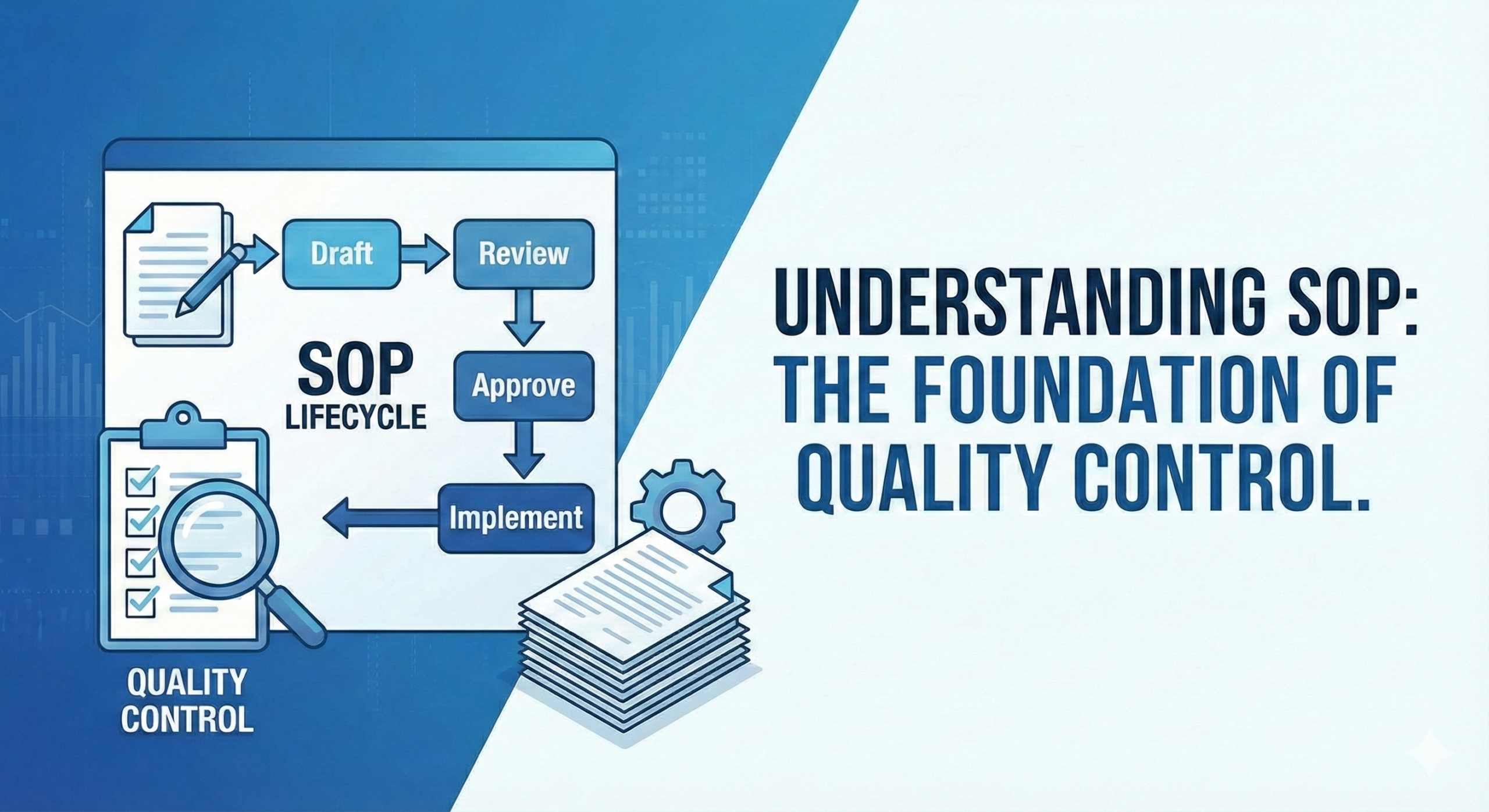
Understanding SOP: The Foundation of Quality Control
What is an SOP?
SOP stands for Standard Operating Procedure. In Japanese, it is called 標準業務手順書 (hyōjun gyōmu tejunsho), which translates to “standard work procedure manual.” To illustrate this concept, we can compare it to the strike zone in baseball.
Having worked in the pharmaceutical industry for many years and reviewed SOPs from various companies, I have observed a particular tendency, especially among Japanese companies: they frequently modify their SOPs to avoid SOP violations or deviations. In other words, they loosen the requirements or include every conceivable exceptional case in their SOPs to prevent deviations and violations from occurring.
However, frequent SOP changes are problematic because they essentially move the strike zone. When the strike zone changes frequently, it raises the question: what was the purpose of yesterday’s work if today’s standards are different?
Many companies attempt to document everything in their SOPs, including exceptional cases. But what happens when you expand the strike zone indefinitely? Every pitch becomes a strike. When the strike zone is too wide, any pitch thrown becomes a strike, and the concept of control loses its meaning.
The Proper Scope of SOPs
Therefore, SOPs should be set somewhat narrowly, and the key is how to maintain work quality within that narrow strike zone. This approach aligns with the principles outlined in ICH Q10 (Pharmaceutical Quality System), which emphasizes the importance of establishing clear, consistent standards while maintaining flexibility through appropriate quality risk management.
When I explain this concept, many people express concern: “What if an exception occurs? Won’t that result in an SOP violation?” or “Won’t that become a deviation?” In such cases, it is crucial to understand the proper method for handling exceptions.
If an SOP includes everything, including exception handling, it is not truly an SOP. I often say sarcastically, “This isn’t an SOP; it’s just an OP (Operating Procedure),” because it lacks the “Standard” component—there is nothing standardized about it.
The Proper Method for Exception Handling
What is the proper method for exception handling? Whether it involves validation, manufacturing, or services, whenever you plan to execute something, you create a plan. In that plan document, if there is a situation where “we cannot follow the SOP this time,” it is essential to document why the SOP cannot be followed, have a third party such as a QA (Quality Assurance) representative review it, and obtain their agreement.
The critical point here is that you should not modify the SOP itself to suit each situation. SOPs should not be changed frequently unless regulatory requirements change, business operations change, or organizational structures change. Rather, SOPs should be written narrowly, and when exceptions are likely to occur, you should consult with the QA representative.
This approach is consistent with modern Change Control principles and Risk-Based Quality Management as outlined by regulatory authorities including the FDA (U.S. Food and Drug Administration), EMA (European Medicines Agency), and PMDA (Pharmaceuticals and Medical Devices Agency of Japan). These agencies emphasize the importance of maintaining stable, well-defined procedures while implementing robust deviation management systems.
The Importance of Justification
In such cases, it is necessary to document why the SOP cannot be followed and why not following it will not compromise quality assurance. This reasoning is called “Justification” in English, meaning a valid rationale. This is critically important.
It is important to note that this is not an excuse. It is not about making excuses for “why we cannot do it,” but rather about creating a valid rationale for why we will partially deviate from the SOP this time and what activities we will conduct instead.
The proper exception handling method involves having the QA representative agree to this justification, provide their endorsement, and then having the responsible person approve the plan. Of course, it is best if exceptions do not occur at all, but documenting everything in the SOP for situations that rarely or infrequently occur is not appropriate.
Risk-Based Approach to SOP Management
In line with ICH Q9 (Quality Risk Management), organizations should adopt a risk-based approach to SOP deviations. Not all deviations carry the same level of risk to product quality, patient safety, or data integrity. The justification process should include a comprehensive risk assessment.
Risk Assessment Considerations:
When evaluating whether a deviation from an SOP is acceptable, the following factors should be systematically assessed: the potential impact on product quality and patient safety, the likelihood of the deviation affecting critical quality attributes, whether the proposed alternative approach maintains equivalent or superior control, and the presence of compensatory measures or additional controls.
This risk-based evaluation ensures that resources are appropriately focused on deviations that pose genuine quality risks, while allowing for documented flexibility when scientifically justified.
Documentation and Traceability
Modern pharmaceutical quality systems, as outlined in 21 CFR Part 211 (FDA), EU GMP Annex 1, and other international standards, emphasize the importance of comprehensive documentation. When exceptions to SOPs are approved, the following documentation should be maintained:
The original plan document containing the detailed justification, QA review and approval records with clear traceability, risk assessment documentation demonstrating that quality is not compromised, and implementation records showing that the approved alternative approach was followed as planned. This documentation trail ensures regulatory compliance and supports continuous improvement initiatives.
The Balance Between Standardization and Flexibility
SOPs should demonstrate quality control by establishing reasonably narrow standards. This does not mean rigidity; rather, it means clarity and consistency. The pharmaceutical industry operates under a principle known as “control strategy,” which combines well-defined standard procedures with systematic approaches to managing variations.
Comparison of Approaches:
| Aspect | Overly Broad SOP | Appropriately Narrow SOP with Exception Process |
| Control effectiveness | Weak – accepts too many variations | Strong – clear standards with documented exceptions |
| Regulatory compliance | Questionable – lacks clear standards | Robust – demonstrates control with flexibility |
| Training burden | High – too much information | Manageable – focused on essential standards |
| Change frequency | Very high – constant updates | Low – stable baseline with deviation management |
| Quality assurance oversight | Difficult – unclear what is standard | Clear – focused review of exceptions |
| Regulatory inspection readiness | Poor – appears reactive | Excellent – demonstrates proactive quality management |
Modern Regulatory Expectations
Current regulatory expectations from global health authorities emphasize the importance of quality culture and pharmaceutical quality systems. The FDA’s guidance on quality metrics, EMA’s guidelines on quality risk management, and PIC/S (Pharmaceutical Inspection Co-operation Scheme) recommendations all support the approach of maintaining stable, well-defined SOPs while implementing robust systems for managing necessary deviations.
These regulatory frameworks recognize that pharmaceutical manufacturing and quality control are complex activities where rigid adherence to overly detailed procedures can sometimes hinder quality outcomes. Instead, they advocate for science- and risk-based approaches that maintain high standards while allowing for appropriate flexibility when scientifically justified and properly documented.
Conclusion
The key to effective SOP management in the pharmaceutical industry is maintaining a clear standard (the “S” in SOP) while implementing systematic processes for handling necessary exceptions. This approach ensures quality control, regulatory compliance, and operational efficiency. By keeping SOPs appropriately narrow and managing exceptions through proper justification and QA oversight, organizations can maintain the “strike zone” that ensures consistent quality while avoiding the pitfalls of either excessive rigidity or insufficient standardization.
This balanced approach reflects best practices in pharmaceutical quality management and aligns with international regulatory expectations, ultimately serving the most important goal: ensuring the quality, safety, and efficacy of pharmaceutical products for patients worldwide.

Comment