
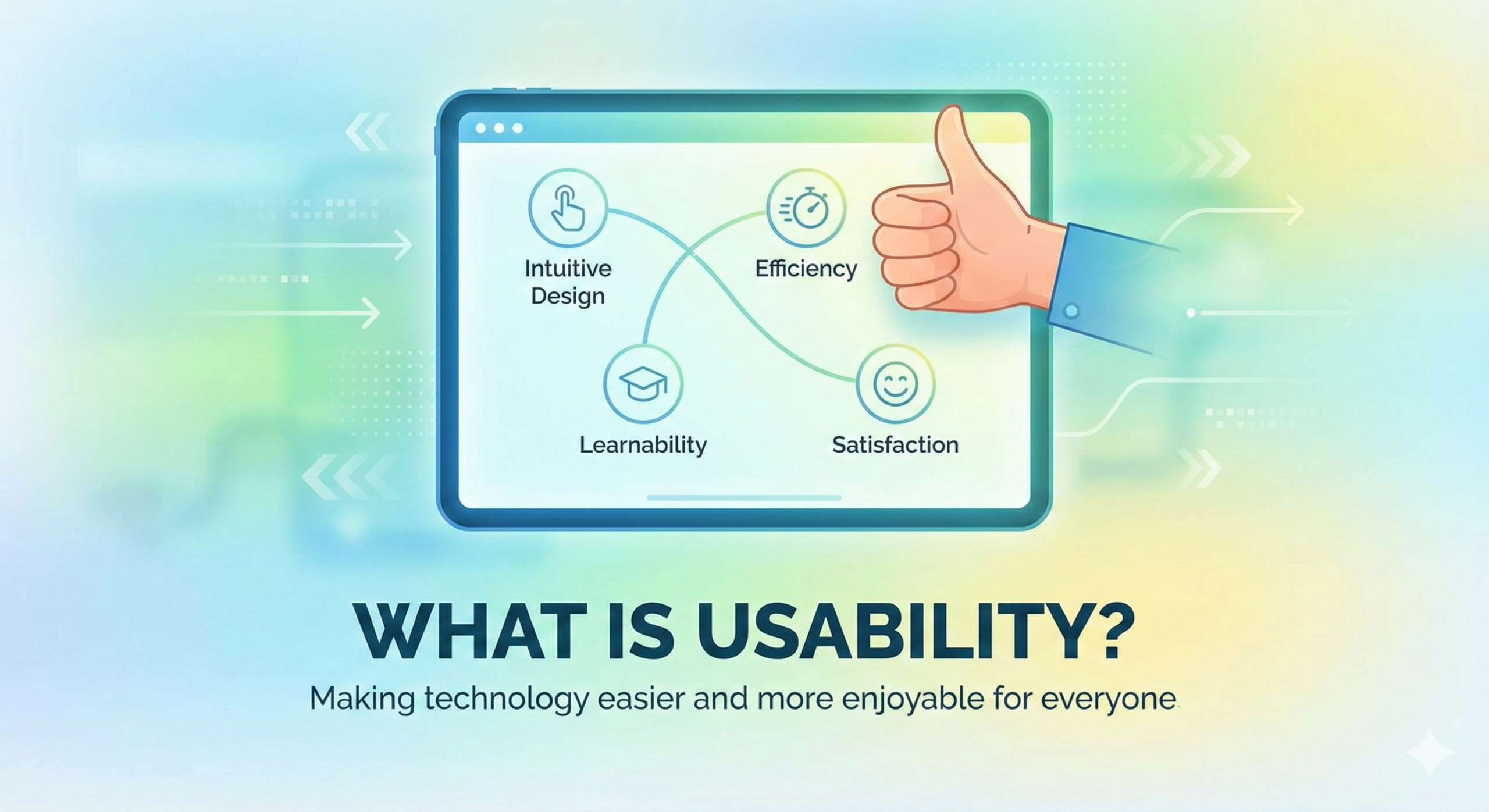
What is Usability
In the field of medical devices, international standards and regulatory requirements related to usability are being strengthened. On February 3, 2016, the FDA issued guidance called “Applying Human Factors and Usability Engineering to Medical Devices.” This guidance replaces the July 18, 2000, guidance “Medical Device Use-Safety: Incorporating Human Factors Engineering into Risk Management.” Additionally, in December 2022, the FDA issued a draft complementary guidance titled “Content of Human Factors Information in Medical Device Marketing Submissions,” which clarifies submission documentation through a risk-based approach.
Historically, the FDA has used the term “human factors” rather than “usability” because the term usability suggests “ease of use.” What the FDA requires is not “ease of use” but “safety.” Making something deliberately difficult to use can also be an important aspect of usability. For example, disposable lighters are designed so that children cannot easily operate them. In the United States since 1994, and in Europe since 2006, regulations for child-resistant lighters have been enforced, requiring safety mechanisms such as greater force needed for the activation button or multiple operations required. This usability design is intended to prevent small children from lighting fires and causing accidents. Following the introduction of these regulations, Europe saw a significant reduction in the 1,500-1,900 annual fire accidents caused by children.
Medical device accidents are believed to occur due to the gap between users’ intended use and designers’ design philosophy. This is why medical device design must begin with user requirements, and design validation must be conducted by users in the user environment.
Usability testing is crucial in the design validation of medical devices. The FDA recommends consulting on usability testing protocols before submission (through the Pre-Submission process). Usability testing may involve testing how many of 10 subjects can intuitively operate a device without receiving instructions. However, such evaluation is difficult. For example, it is challenging to explain the rationale for setting a threshold such as passing if 7 out of 10 people can operate the device. FDA guidance recommends determining sample sizes based on the severity of risk, emphasizing practical demonstration of safety over statistical significance.
Another important aspect of usability is the users and use environments. Users may be doctors and nurses, or in some cases, children using devices at home. The use environment is not necessarily limited to medical institutions or laboratories. For example, an AED (Automated External Defibrillator) might be used for the first time by a layperson in a crowded train station concourse, where noise may make it difficult to hear instructions. It might also be used in an ambulance under conditions of severe vibration. Consideration of these diverse users and use environments is required by IEC 62366-1 (Application of Usability Engineering to Medical Devices).
User Interface and Interaction
The interface between the medical device and the user is where usability issues arise. The figure represents a model of the user and device, their respective processes, and the interaction with the user interface between processes. When a user operates a medical device, the user recognizes information output from the device, interprets it, processes the information, and makes decisions. The user responds to the medical device to change certain aspects of operation (changing settings, replacing components, stopping the device, etc.). The device receives user input, responds, and provides feedback to the user. The user considers the feedback and may initiate additional cycles of interaction. This interaction model forms the basis of the FDA guidance and IEC 62366-1.
Addressing Reasonably Foreseeable Misuse
Previously, risk management for medical devices was premised on use according to the instructions for use. However, ISO 14971 (Application of Risk Management to Medical Devices) has clarified that “reasonably foreseeable misuse” must also be included in risk management. While this concept was already included in ISO 14971:2007, ISO 14971:2019, published in December 2019, added a formal definition of this term. “Reasonably foreseeable misuse” is defined as “use of a product or system in a way not intended by the manufacturer, but which can result from readily predictable human behavior.” This misuse can be either intentional or unintentional.
Medical device design must also consider misuse that users are prone to commit. This is closely related to the concept of use error in IEC 62366-1, and integrated application of both standards enables comprehensive safety evaluation. ISO/TR 24971 (Guidance on the Application of ISO 14971) identifies three types of reasonably foreseeable misuse:
- Intentional abnormal use: Intentional or reckless use contrary to instructions
- Off-label use: Intentional use for other medical applications not intended by the manufacturer
- Use error: Unintentional errors that occur due to poorly designed user interfaces or inaccurate, incomplete, or ambiguous instructions for use
Manufacturers must monitor actual usage through post-market surveillance, and when unanticipated misuse is identified, they must update the risk management file and take corrective action as necessary.
Regulatory Trends and Future Outlook
Regulations related to medical device usability are trending toward global strengthening. The European Medical Device Regulation (MDR 2017/745) and In Vitro Diagnostic Regulation (IVDR 2017/746) also effectively require conformity with ISO 14971:2019. Additionally, with the increase in Software as a Medical Device (SaMD) and medical devices using AI/machine learning, usability evaluation is becoming more complex.
To respond to advances in digital health technology, the FDA introduced a risk-based three-tier category classification in its 2022 draft guidance. This reduces documentation requirements for low-risk device modifications, while high-risk devices involving critical tasks require more comprehensive human factors validation testing.
Going forward, it is becoming essential for manufacturers to integrate usability engineering processes from the early stages of design and development, with iterative evaluation and improvement, to develop safe and effective medical devices.

Comment