
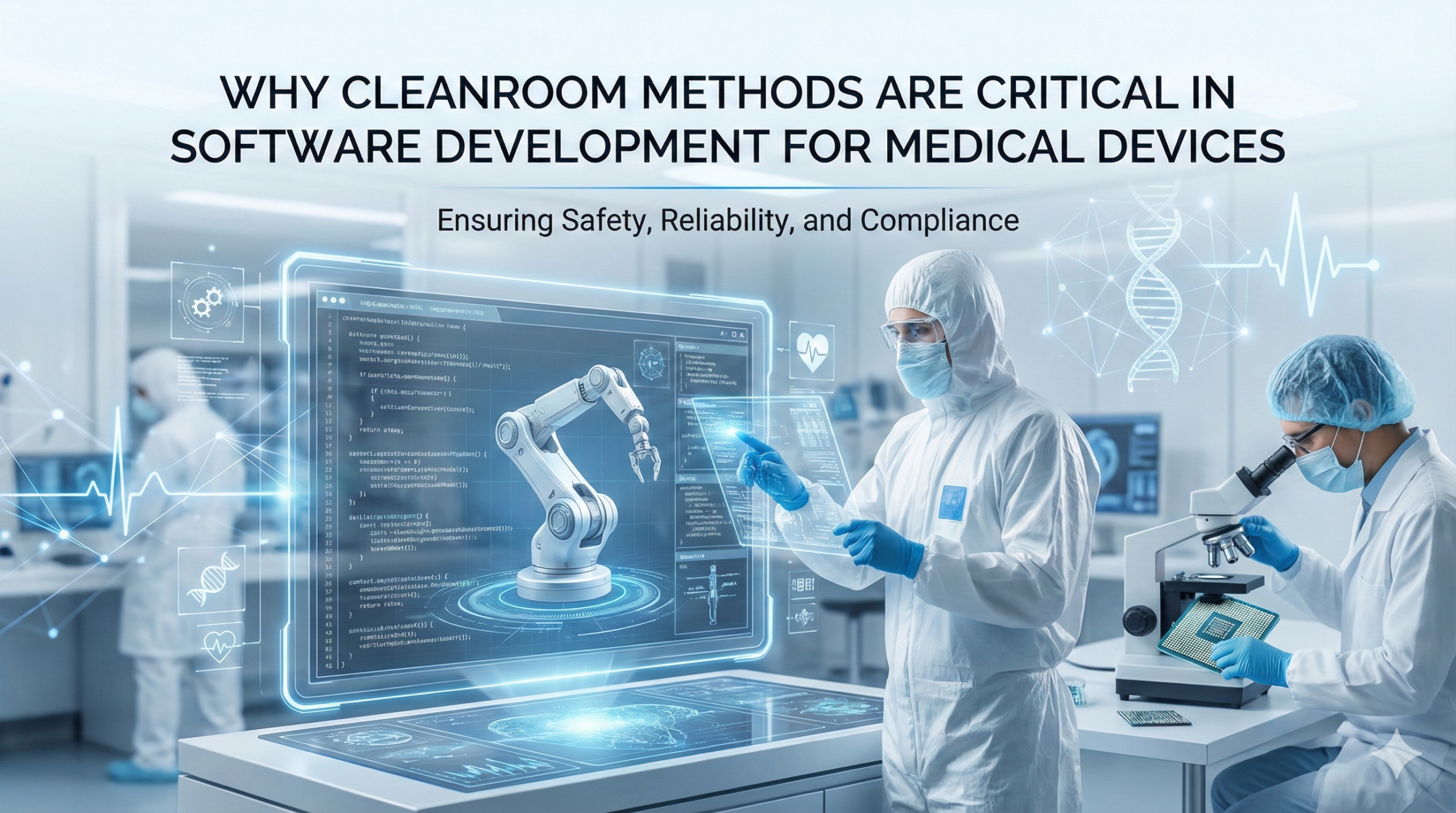
Why Cleanroom Methods Are Critical in Software Development for Medical Devices
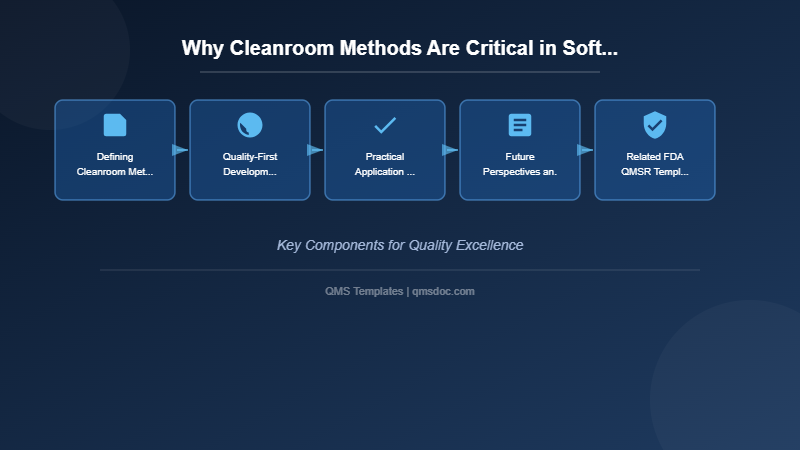
The True Value of Cleanroom Methodology: A Practical Approach to Quality Assurance and Development Efficiency
In the field of software development for medical devices and pharmaceutical computerized systems, the “cleanroom method” is recognized as an exceptionally important methodology. While many may be encountering this approach for the first time, understanding its essence and applying it appropriately can transform a development project into one of significantly higher quality.
In the field of software development for medical devices and pharmaceutical computerized systems, the “cleanroom method” is recognized as an exception…
Defining Cleanroom Methods and Their Foundational Principles
The cleanroom method is a software development methodology proposed in 1987 by Harlan Mills, a researcher at IBM. At its core lies a fundamental principle: to achieve software with minimal defects, developers should minimize self-testing and instead conduct rigorous reviews and verification throughout both the design and implementation stages. This represents a paradigm shift in quality assurance philosophy.
In conventional software development, the typical approach has been for developers to implement features and then conduct testing afterward, identifying and fixing defects as they are discovered. Cleanroom methodology, by contrast, operates from an entirely different conceptual foundation. Rather than viewing software development as an implementation-first, test-afterward process, cleanroom methods advocate for building software with excellence as the goal from the outset, incorporating rigorous reviews and verification by multiple subject matter experts at every step from design through implementation.
A particularly noteworthy characteristic of this methodology is its approach to quality assurance. When significant defects are detected, the decision may be made not to patch or modify the problematic component, but rather to discard it entirely and restart from the design phase. While this might initially appear wasteful, it actually results in substantial cost savings in subsequent development stages and post-release maintenance. Ultimately, this approach leads to optimization of total development costs. This reasoning is particularly crucial in domains such as medical devices and pharmaceutical computerized systems, where exceptionally high standards of quality and reliability are demanded by regulation and patients alike.
IEC 62304 in Relation to Cleanroom Methods: Understanding Their Connection and Distinctions
IEC 62304 is an international standard governing the lifecycle processes for medical device software. This standard establishes detailed requirements for the development processes, quality management practices, and methodologies for verification and validation that software must meet when supplied to the market as part of a medical device. Throughout the entire development flow prescribed by IEC 62304, multiple review processes are emphasized: design reviews, code audits, test plan reviews, and many others. This emphasis on reviews is noteworthy.
The reason IEC 62304 places such emphasis on review processes can be traced to the fundamental philosophy underlying cleanroom methodology—namely, that quality assurance embedded in the pre-release development process is more efficient and economical than problem management after release. In the context of medical devices, quality issues that emerge after release carry the potential for serious patient safety consequences, making the assurance of completeness in earlier stages all the more critical.
Simultaneously, an important clarification must be made: IEC 62304 is fundamentally a process-oriented international standard and does not mandate the adoption of any particular development methodology. Organizations seeking to comply with IEC 62304 requirements need not necessarily adopt classical cleanroom methods in their pure form. Rather, development approaches can be flexibly adapted according to an organization’s structure and development environment. What matters is that quality assurance mechanisms are embedded at every phase from design through implementation and verification, and that the effectiveness of these mechanisms is demonstrated.
Quality-First Development Processes Within Medical Device Regulations
A review of medical device software development requirements across major regulatory jurisdictions reveals a convergence of regulatory intent. The FDA‘s Software Assurance guidance, the comprehensive quality requirements of the EU MDR, and Japan’s PMDA expectations all point in the same direction: software quality issues cannot be resolved solely through post-market updates and patches. Rather, rigorous quality management from the development stage itself is indispensable.
Particularly notable is the body of new guidance published by regulatory authorities including the FDA, EMA, and PIC/S between 2024 and 2025. These documents reveal increasingly stringent quality requirements not only for traditional software but also for computerized systems, data integrity (ALCOA+ principles), and software incorporating artificial intelligence and machine learning. This regulatory evolution strongly supports the importance of quality-first development approaches such as cleanroom methodology.
Practical Application and Industry Trends
In the medical device and pharmaceutical computerized systems industries, there is rapidly increasing attention on development process improvement and enhancement of quality assurance systems. Changes are evident in corporate organizational structures and quality strategies, with a clear shift from reactive quality assurance toward proactive quality assurance built into the design stage itself.
From a business management perspective, this shift is entirely rational. The fundamental logic of cleanroom methods—that investment in quality assurance in earlier stages reduces additional costs and time in later stages—makes it possible to simultaneously achieve development budget efficiency and accelerated time to market. When individual developers carefully examine their work and implement quality assurance at each step, the result is improved development capability and product quality across the entire organization.
Future Perspectives and Continued Evolution
Cleanroom methodology is not merely an antiquated development technique relegated to history. Rather, in domains requiring exceptionally high quality standards—such as medical devices and pharmaceutical computerized systems—it represents an approach that continues to evolve and gain importance. As artificial intelligence and machine learning are increasingly integrated into medical devices, and as regulatory requirements become more stringent, the fundamental principle of quality assurance embedded in development stages will only grow more significant.
How each organization integrates this methodology into its own organizational culture and development processes, and how new technological challenges—such as automation and AI-assisted quality assurance mechanisms—are addressed, will be worthy of continued observation. The efforts and evolution underway in these areas promise to contribute to overall quality improvements throughout the medical device industry.
Related FDA QMSR Templates
Streamline your FDA QMSR compliance with our professionally crafted templates:
Related Articles
- Regulatory Requirements for Medical Device Software Development
- Medical Device Software Development
- Why Usability Engineering Is Necessary for Non-Software Medical Devices
- Differences Between Pharmaceuticals and Medical Devices
- The Importance of Design Control in Medical Devices
- Understanding Risk in Pharmaceuticals and Medical Devices

Comment