
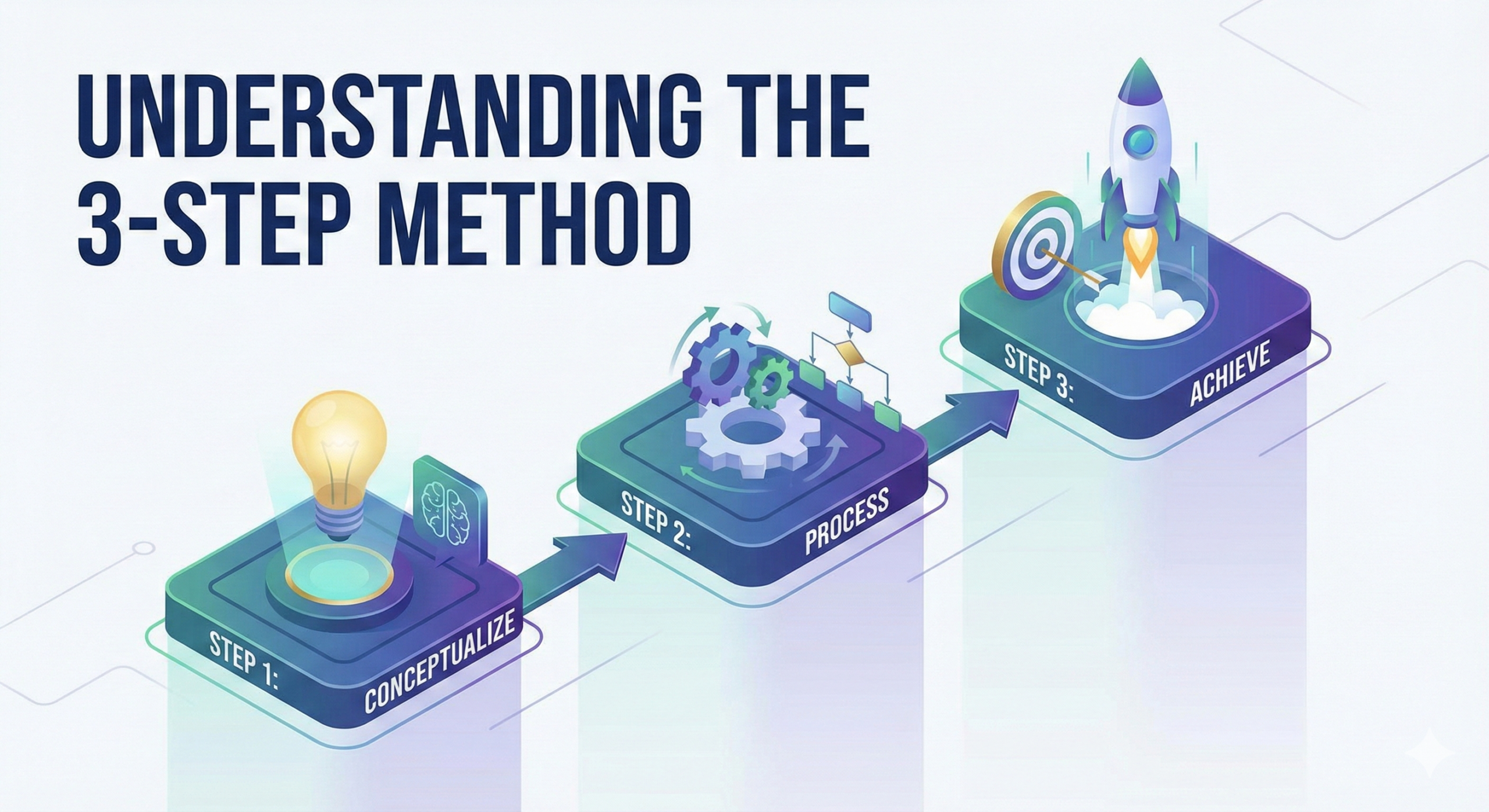
Understanding the 3 Step Method
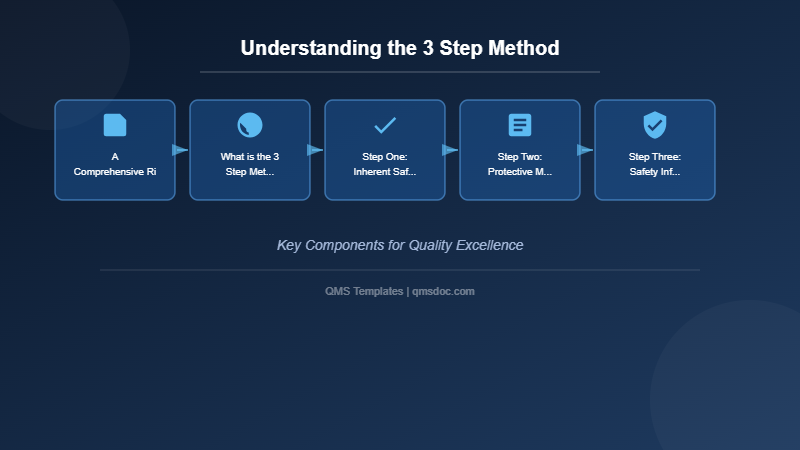
A Comprehensive Risk Control Approach for Beginners
Modern organizations, particularly those in industries handling medical devices and other safety-critical products, are required to continuously identify and manage numerous risks. To implement risk management effectively, the Three Step Method—a widely recognized risk reduction technique—has proven invaluable. This method forms the foundation of international medical device regulations and risk management standards, making it essential knowledge for those entering this field. This article explains the concept with concrete examples for easy understanding.
Modern organizations, particularly those in industries handling medical devices and other safety-critical products, are required to continuously ident…
What is the 3 Step Method?
The 3 Step Method is a risk reduction technique consisting of three distinct steps, as its name suggests. This hierarchical approach is recommended in international standards such as ISO 14971 (Risk Management of Medical Devices) and provides a clear priority order for risk reduction. The three steps are, in order of priority: first, inherent safety design; second, protective measures; and third, safety information. This layered approach enables organizations to achieve risk reduction that is both efficient and cost-effective.
Step One: Inherent Safety Design
Managing risks begins with considering inherent safety design. This means that all products and systems—whether medical devices, construction equipment, or industrial machinery—are designed and manufactured with safety as a primary consideration from the outset. Inherent safety design represents an approach that eliminates or reduces hazards at the design stage itself, before the product reaches the user.
Consider a concrete example: the design of safety-engineered injection needles. Inherent safety design to prevent needlestick injuries involves incorporating a mechanism that sheathes the needle as an integral part of the product design. When safety is ensured at this stage, subsequent risks are substantially mitigated. Inherent safety design is prioritized above other risk reduction methods and is considered the most effective approach. This is because preventive measures implemented at the design stage are more reliable and sustainable than those applied after manufacturing.
Step Two: Protective Measures
Complete elimination of risk through inherent safety design alone is often impossible. Therefore, the second step addresses remaining risks through protective measures. Rather than modifying the product itself, this step involves implementing measures to protect the product’s operating environment and its users.
Examples of protective measures include healthcare professionals wearing appropriate personal protective equipment (PPE) in medical settings, installing guards around machine hazard points, or positioning emergency stop buttons on equipment. These interventions protect users from unexpected accidents. However, it is important to note that protective measures depend on human behavior and intervention, and therefore do not provide the same level of certainty as inherent safety design. For this reason, protective measures are applied as a principle only to residual risks that cannot be addressed through inherent safety design.
Step Three: Safety Information
The final step involves safety information. This encompasses instructions for use, proper usage methods, procedures for managing actual risk incidents, and preventive training. By ensuring that all stakeholders—including end users—share this information, organizations and end users can reduce overall risk. Safety information serves to support and reinforce the two preceding steps.
Safety information includes product instructions for use, labeling, warning statements, training programs, and technical support. For medical devices, this information is provided alongside information necessary for clinical decision-making. Additionally, post-market safety information—data regarding safety performance obtained after a medical device has entered clinical use—should be continuously collected, evaluated, and shared with relevant parties. Safety information functions as a complementary tool following the first two steps and achieves its maximum effectiveness only when inherent safety design and protective measures function properly.
Evolution of Risk Management and the Current Regulatory Landscape
Medical device safety regulations continue to evolve worldwide. Requirements specified in the European Medical Device Regulation (MDR) and In Vitro Diagnostic Regulation (IVDR), U.S. FDA regulations, Japan’s Pharmaceuticals and Medical Devices Agency (PMDA) framework under the Pharmaceutical Affairs Law, regulations in China and South Korea, and other major market regulations are becoming progressively more stringent. Additionally, new regulations are emerging to address novel technologies, including artificial intelligence (AI) and machine learning (ML) applications in medical devices, remote monitoring devices, and cybersecurity requirements.
Within this evolving regulatory environment, the hierarchical risk reduction approach exemplified by the 3 Step Method is expected to increase in robustness and adaptability. This method transcends the status of a simple “methodology”—it represents a fundamental thought process through which organizations handling medical devices can establish sustainable quality management systems that address both safety and regulatory compliance simultaneously.
Conclusion
The 3 Step Method provides a clear decision-making pathway in risk management. By prioritizing inherent safety design, complementing it with protective measures, and supporting the overall framework with safety information, organizations can manage risks efficiently and effectively. By understanding and appropriately applying such risk control techniques, organizations achieve safer, more compliant, and ultimately more mature operations. The 3 Step Method is positioned as an important concept applied throughout the entire product lifecycle, from the initial stages of medical device development through post-market surveillance.
Related Articles
- Understanding the Three-Step Method
- Understanding Amendment Methods in Regulatory Requirements: The Case of Partial Amendments
- What is the Three-Step Method?
- What is the 3-step method?
- Understanding CFR: The Foundation of U.S. Regulatory Framework
- Understanding the “Typewriter Excuse” in FDA 21 CFR Part 11 Compliance
