
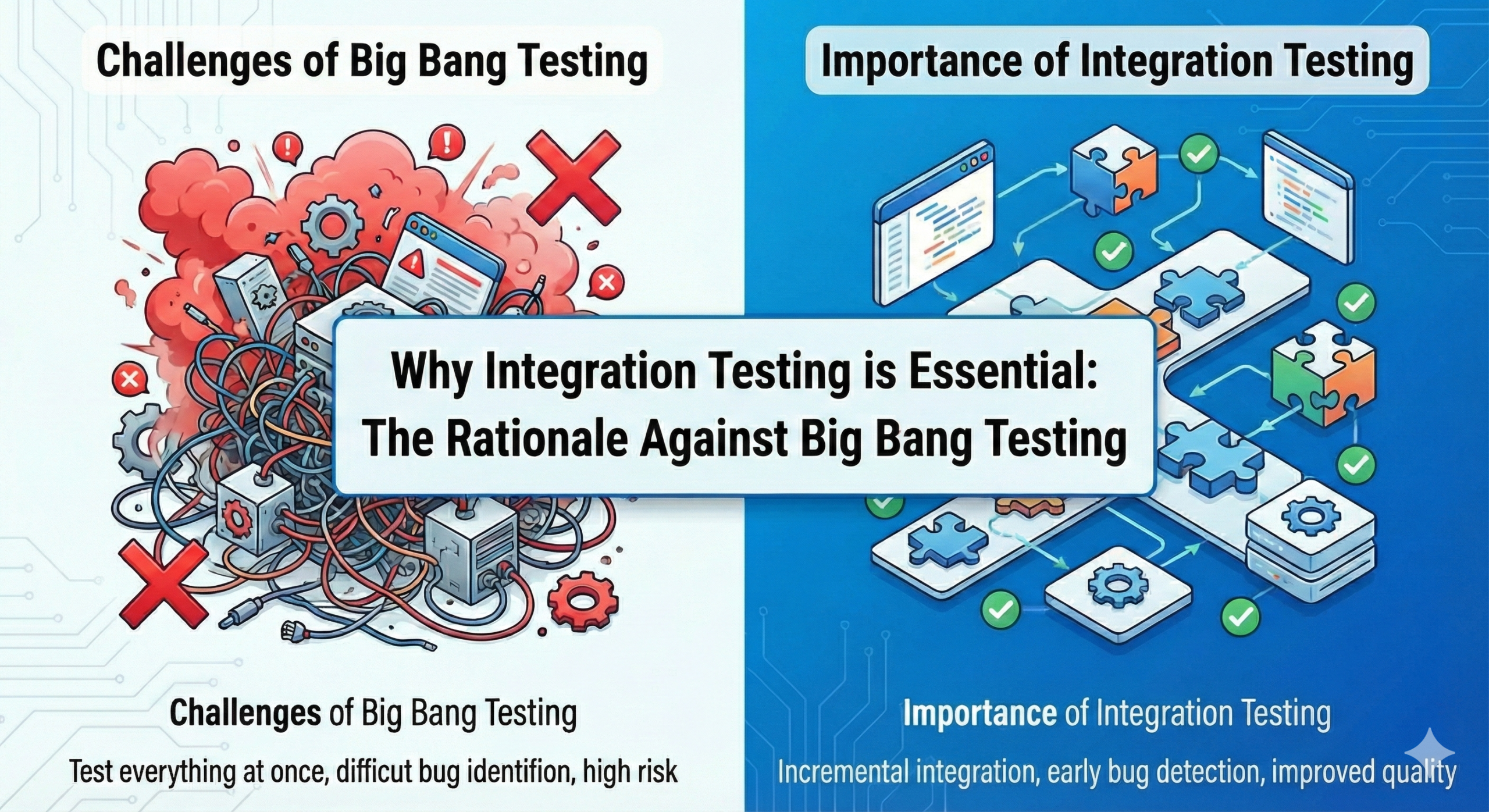
Why Integration Testing is Essential: The Rationale Against Big Bang Testing
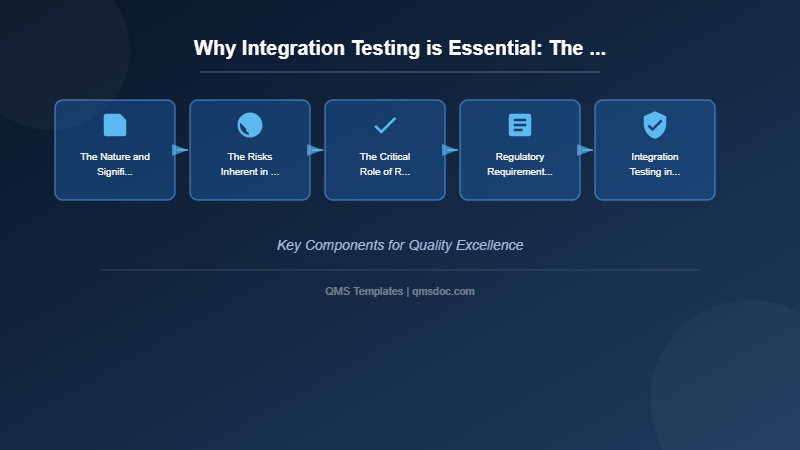
In the development of medical devices and pharmaceutical software, integration testing is an indispensable process for ensuring quality assurance and meeting regulatory requirements. Some practitioners may wonder whether Big Bang testing—integrating all modules simultaneously—would be sufficiently adequate. However, this perspective represents a critical misunderstanding from both regulatory compliance and scientific validation standpoints in the medical device industry.
In the development of medical devices and pharmaceutical software, integration testing is an indispensable process for ensuring quality assurance and …
The Nature and Significance of Integration Testing
Integration testing is a process whereby individual software modules that comprise a larger system are progressively combined, and the functionality of interfaces and interactions between modules is verified to operate correctly. IEC 62304, the international standard for medical device software development, positions integration testing as a mandatory verification activity following unit testing. It is explicitly designated as an essential requirement for ensuring the efficacy and safety of medical devices.
The integration testing process is inherently sequential. Newly added or modified modules are progressively integrated with existing systems and subjected to systematic testing. When defects are identified, they are corrected and retesting is performed following remediation. This iterative approach enables early detection of potential issues and bugs that could have far-reaching impacts across the entire software system, thereby preventing larger-scale failures from occurring downstream.
The Risks Inherent in Big Bang Testing
Big Bang testing refers to an approach in which all modules are integrated simultaneously, followed by comprehensive system-wide testing. While this approach may superficially appear to shorten development timelines, it harbors significant technical and regulatory deficiencies.
The most critical limitation is the extreme difficulty in identifying the root cause of errors. When multiple modules are integrated concurrently, pinpointing which interface between modules is responsible for a failure, or determining which modification within a specific module has affected existing functionality, becomes extraordinarily complex. The debugging and root cause analysis processes demand substantial time investment, and the net result is frequently the extension of overall project timelines—the opposite of the intended efficiency gain.
More importantly from a regulatory perspective, medical device authorities such as the FDA and regulatory bodies overseeing EU MDR/IVDR explicitly mandate staged and traceable verification processes. Big Bang testing makes it exceedingly difficult to scientifically demonstrate which changes produced which effects, thereby undermining the ability to discharge accountability obligations during regulatory audits and inspections. This represents a significant compliance risk factor in medical device approval submissions.
The Critical Role of Regression Testing
Integration testing derives particular importance through regression testing—the systematic verification that existing functionality remains uncompromised. Regression, in this context, refers to the phenomenon wherein modifications or corrections to specific elements unintentionally impact other elements, resulting in degraded system performance or functionality relative to previous states.
In medical device development, software modifications frequently generate cascading effects. For instance, when a machine learning model is updated to enhance algorithmic precision, the data processing workflows in other modules may exhibit unexpected behavior. Alternatively, the application of security patches may inadvertently compromise the normal operation of existing functionality.
Regression detection is realized precisely through staged integration testing. By progressively integrating modules and verifying functionality at each stage, problems arising from the interaction between newly implemented features and existing functionality can be systematically identified. Without this detection mechanism, the risk to patient safety in the post-market environment substantially increases.
Regulatory Requirements and Positioning in International Standards
IEC 62304, Section 8.2.4.2, explicitly mandates software unit integration testing as an essential process for maintaining the quality attributes of medical device software. Similarly, the FDA’s Software Validation Guidance (2002) and the more recent Computer Software Assurance for Production and Quality System Software Guidance (2023) both emphasize staged integration verification and traceability. Additionally, the FDA’s AI/ML Software Validation Guidance (2023) addresses validation requirements for artificial intelligence and machine learning components in medical device software.
EU MDR (2017 revision) requires detailed documentation of software verification activities in the Technical File. This requirement signifies that regulatory authorities must be able to provide scientifically grounded explanations during post-market modifications or adverse event investigations. Big Bang testing renders the fulfillment of this accountability requirement problematic.
Furthermore, IEC 81001-5-1 (Cybersecurity of Medical Devices) emphasizes the necessity of integration testing when security updates are deployed. Demonstrating that security patches do not affect existing functionality necessitates a staged and traceable verification process.
Integration Testing in Contemporary Testing Strategies
Contemporary medical device development increasingly incorporates Continuous Integration (CI) and Continuous Deployment (CD) methodologies. Even within these agile development paradigms, integration testing remains a core quality management process. Indeed, in agile environments where development cycles are compressed, the implementation of automated integration testing frameworks represents a strategic investment that enables the simultaneous achievement of quality maintenance and regulatory compliance objectives.
Moreover, as medical device software incorporating artificial intelligence and machine learning has become more prevalent, guidance documents issued from 2024 through 2025—including EU GMP Annex 22 (Guidelines for the Production of Medicinal Products for Human Use) and FDA AI/ML guidance—explicitly mandate model integration validation, post-retraining verification, and impact assessments on existing functionality. Against this backdrop, the scientific and regulatory value of integration testing demonstrates an upward trajectory.
Conclusion
Integration testing is an indispensable process for ensuring software quality, achieving regulatory compliance, and ultimately guaranteeing patient safety. While Big Bang testing may initially appear operationally efficient, its inherent limitations—particularly regarding the difficulty of error detection, the complexity of root cause identification, and the compromised ability to discharge regulatory accountability—render it effectively impermissible in medical device development contexts.
Quality assurance in the medical device industry must prioritize long-term system reliability, regulatory alignment, and the provision of safety to patients over short-term operational efficiency. The methodical and seemingly unglamorous process of integration testing forms the foundation upon which the scientific rigor and safety assurances underlying the software systems we depend upon are constructed.
Related Articles
- Limitations of Sterility Testing
- What is Unscripted Testing?
- To What Extent Should Cybersecurity Testing Be Conducted? (Part 1 of 3)
- To what extent should cybersecurity testing be implemented (1/3)
- The Three Essential Elements of Regulatory Compliance and Quality Improvement
- Understanding the “Typewriter Excuse”: Essential Perspectives on Data Integrity
